



AD
2-Bromo-5-chloro-3-nitropyridine(CAS: 75806-86-9)
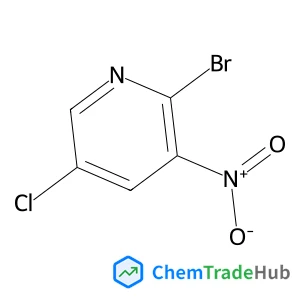
CAS Number
Related Products
![Naphtho[1,2-c]furan-1,3-dione](https://static.chemtradehub.com/structs/534/5343-99-7-5dbe.webp)
Naphtho[1,2-c]furan-1,3-dione
CAS Number: 5343-99-7
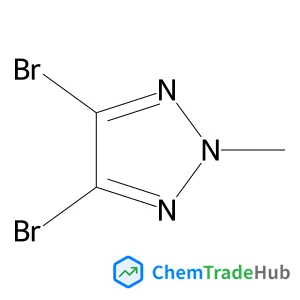
4,5-Dibromo-2-methyl-2H-1,2,3-triazole
CAS Number: 28938-17-2
![1-[Chloro(1-pyrrolidinyl)methylene]pyrrolidinium tetrafluoroborate](https://static.chemtradehub.com/structs/115/115007-14-2-7aa4.webp)
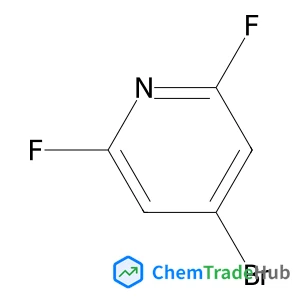
4-Bromo-2,6-difluoropyridine
CAS Number: 903513-58-6
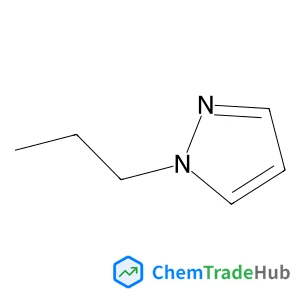
1-propyl-1H-pyrazole
CAS Number: 32500-67-7
![N~5~-[N-(Mesitylsulfonyl)carbamimidoyl]-N~2~-{[(2-methyl-2-propanyl)oxy]carbonyl}-L-ornithine](https://static.chemtradehub.com/structs/682/68262-71-5-07ff.webp)
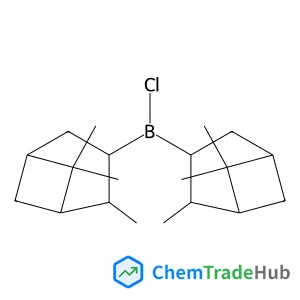
(-)-DIP-chloride (~60% in Heptane)
CAS Number: 85116-37-6

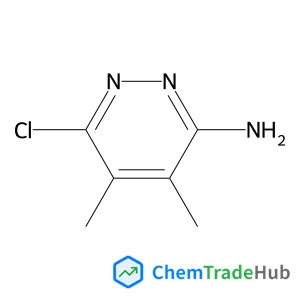
6-Chloro-4,5-dimethyl-3-pyridazinamine
CAS Number: 76593-36-7
Other Suppliers for 2-Bromo-5-chloro-3-nitropyridine



Basic Information
Molecular Formula
C5H2BrClN2O2
Molecular Weight
237.44 g/mol
Physical State
Solid
Physical Properties
Melting Point
75.0 to 79.0 deg-C
Boiling Point
250.3°C at 760 mmHg
Density
1.936
Flash Point
105.2°C
Chemical Identifiers
SMILES
C1=C(C=NC(=C1[N+](=O)[O-])Br)Cl
InChIKey
VFMIDVIAQMFGGP-UHFFFAOYSA-N
Database References
MDL Number
MFCD07368982
FAQ
2-Bromo-5-chloro-3-nitropyridine (CAS: 75806-86-9) falls under multiple regulatory frameworks. It is classified according to GHS (Globally Harmonized System of Classification and Labelling of Chemicals) as a hazardous substance. Companies must comply with REACH (Registration, Evaluation, Authorization and Restriction of Chemicals) regulations in the EU for its production and trade. The FDA and EPA also have specific guidelines for handling and disposal in the US. Always consult the latest regulatory documents for detailed compliance requirements.
In the synthesis of organic compounds, 2-Bromo-5-chloro-3-nitropyridine (CAS: 75806-86-9) can be replaced by similar aromatic compounds with different functional groups. For instance, 2-chloro-5-nitropyridine or 3-bromopyridine can serve as alternatives, depending on the desired properties. These alternatives offer similar reactivity and can be used as precursors in various chemical reactions.
2-Bromo-5-chloro-3-nitropyridine (CAS: 75806-86-9) is increasingly being used in medicinal chemistry and material science research. Recent trends indicate a growing interest in its application for synthesizing bioactive compounds and as a building block in the development of advanced polymers. Market trends suggest an increasing demand as researchers explore its potential in drug discovery and functional materials.
Waste containing 2-Bromo-5-chloro-3-nitropyridine (CAS: 75806-86-9) should be disposed of according to local and national regulations. Collect waste in a suitable container, ensuring it is labeled as hazardous. Incineration is a common method for disposal, but it must be done in an appropriate incinerator to avoid environmental pollution. Alternatively, professional waste disposal services can handle the waste safely. Always follow safety protocols to prevent exposure and environmental contamination.
Safety Notice
Please verify product specifications and safety data before use. Contact the supplier for detailed safety information.
Always follow proper handling procedures

Contact Information
Contact Person
Jin Jinle (National Unified Telephone Line)
hnjjlchem@126.com
Telephone
10106090
Visit Website
https://www.jinjinlechem.com/Address
Changsha Kaifu District Tongtai Street Zhongshan Road 589 Kaifu Wangdawei Square C District 3rd Office Building 2905