



AD
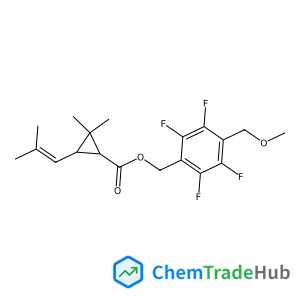
2,3,5,6-Tetrafluoro-4-(methoxymethyl)benzyl 2,2-dimethyl-3-(2-methylprop-1-en-1-yl)cyclopropanecarboxylate(CAS: 271241-14-6)
CAS Number
Related Products
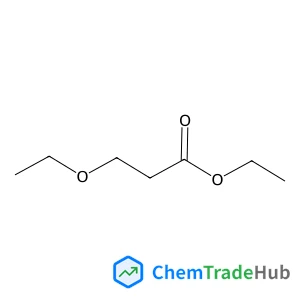
Ethyl 3-ethoxypropanoate
CAS Number: 763-69-9
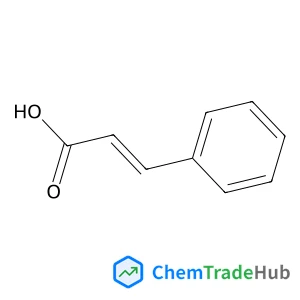
trans-Cinnamic acid
CAS Number: 140-10-3
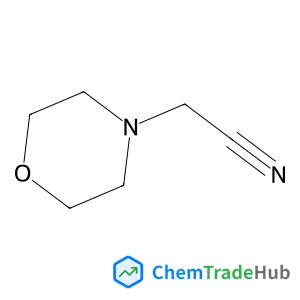
4-Morpholinylacetonitrile
CAS Number: 5807-02-3
![4-{[(2-amino-4-hydroxypteridin-6-yl)methyl]amino}benzoic acid](https://static.chemtradehub.com/structs/119/119-24-4-8084.webp)
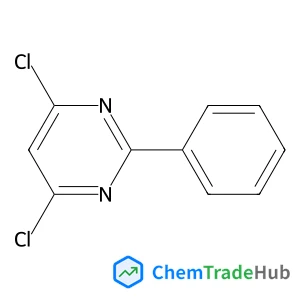
4,6-Dichloro-2-phenylpyrimidine
CAS Number: 3740-92-9
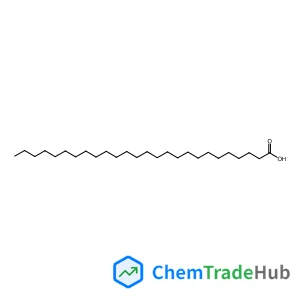
Hexacosanoic acid
CAS Number: 506-46-7
Other Suppliers for 2,3,5,6-Tetrafluoro-4-(methoxymethyl)benzyl 2,2-dimethyl-3-(2-methylprop-1-en-1-yl)cyclopropanecarboxylate





Basic Information
Molecular Formula
C19H22F4O3
Molecular Weight
374.37 g/mol
Physical Properties
Boiling Point
352.4 °C at 760 mmHg
Density
1.255
Flash Point
161.4 °C
Chemical Identifiers
SMILES
CC(=CC1C(C1(C)C)C(=O)OCC2=C(C(=C(C(=C2F)F)COC)F)F)C
InChIKey
OOWCJRMYMAMSOH-UHFFFAOYSA-N
Database References
MDL Number
MFCD09752840
FAQ
This compound is a crystalline solid with a molecular weight of approximately 528.5 g/mol. It has a low solubility in water but is more soluble in organic solvents like dichloromethane and ethyl acetate. It exhibits good stability under normal conditions but is sensitive to strong bases and reducing agents. Its reactivity is moderate towards nucleophilic substitution and electrophilic addition reactions.
This compound is synthesized using a multi-step process involving the protection of the benzyl group, followed by the introduction of the fluorinated moiety, and subsequent derivatization with the cyclopropanecarboxylate group. Commonly, organocatalysts such as phosphoric acid are used, and the reaction yields are typically around 75-85%. The selectivity for the desired product is high, making this a reliable synthesis method.
This compound is used in the pharmaceutical and polymer industries. It serves as an intermediate in the synthesis of pharmaceutical compounds, particularly in the development of new drugs. Additionally, it is used in the polymer industry for the development of novel materials with specific functional groups for various applications such as coatings and adhesives.
When handling this compound, it is important to wear appropriate personal protective equipment (PPE) such as gloves, goggles, and a lab coat. Work should be conducted in a well-ventilated area or a fume hood to minimize exposure to airborne particles. Spills should be cleaned up immediately, and proper disposal methods should be followed. Always refer to the Safety Data Sheet (SDS) for detailed handling instructions and emergency procedures.
Safety Notice
Please verify product specifications and safety data before use. Contact the supplier for detailed safety information.
Always follow proper handling procedures

Contact Information
Contact Person
Anpel Experimental
shanpel@anpel.com.cn
Mobile
15618996369
Visit Website
https://www.anpel.com.cn/Address
No. 59 Yehé Road, Songjiang District, Shanghai