



AD
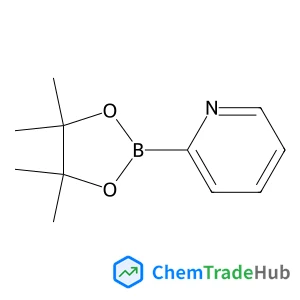
2-(4,4,5,5-Tetramethyl-1,3,2-dioxaborolan-2-yl)pyridine(CAS: 874186-98-8)
CAS Number
Related Products
![Naphtho[1,2-c]furan-1,3-dione](https://static.chemtradehub.com/structs/534/5343-99-7-5dbe.webp)
Naphtho[1,2-c]furan-1,3-dione
CAS Number: 5343-99-7
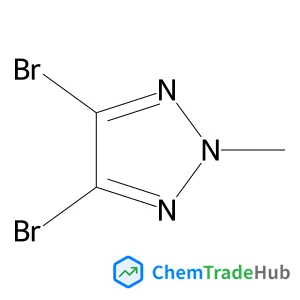
4,5-Dibromo-2-methyl-2H-1,2,3-triazole
CAS Number: 28938-17-2
![1-[Chloro(1-pyrrolidinyl)methylene]pyrrolidinium tetrafluoroborate](https://static.chemtradehub.com/structs/115/115007-14-2-7aa4.webp)
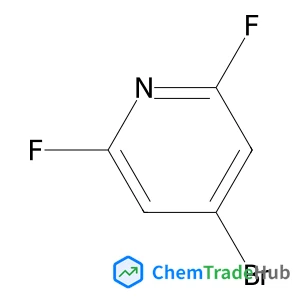
4-Bromo-2,6-difluoropyridine
CAS Number: 903513-58-6
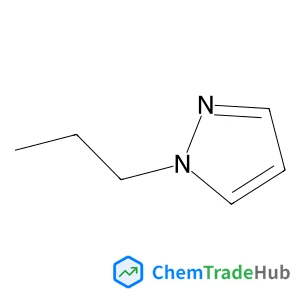
1-propyl-1H-pyrazole
CAS Number: 32500-67-7
![N~5~-[N-(Mesitylsulfonyl)carbamimidoyl]-N~2~-{[(2-methyl-2-propanyl)oxy]carbonyl}-L-ornithine](https://static.chemtradehub.com/structs/682/68262-71-5-07ff.webp)
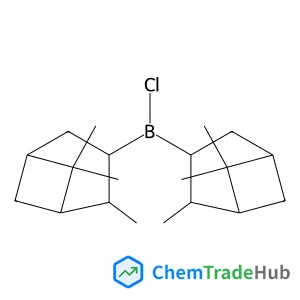
(-)-DIP-chloride (~60% in Heptane)
CAS Number: 85116-37-6
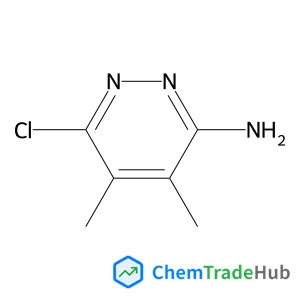
6-Chloro-4,5-dimethyl-3-pyridazinamine
CAS Number: 76593-36-7
Other Suppliers for 2-(4,4,5,5-Tetramethyl-1,3,2-dioxaborolan-2-yl)pyridine


Basic Information
Molecular Formula
C11H16BNO2
Molecular Weight
205.07 g/mol
Physical State
Solid
Chemical Identifiers
SMILES
B1(OC(C(O1)(C)C)(C)C)C2=CC=CC=N2
InChIKey
SOQIDYYUSMPIDR-UHFFFAOYSA-N
Database References
MDL Number
MFCD04039342
FAQ
2-(4,4,5,5-Tetramethyl-1,3,2-dioxaborolan-2-yl)pyridine (CAS: 874186-98-8) falls under various regulatory guidelines including REACH regulations in the European Union, which require manufacturers and importers to register substances above one tonne per year. It also adheres to GHS (Globally Harmonized System of Classification and Labelling of Chemicals) classification, which includes health and environmental hazards. Additionally, it may be subject to FDA and EPA regulations, particularly for applications involving food contact or environmental releases.
Alternatives to 2-(4,4,5,5-Tetramethyl-1,3,2-dioxaborolan-2-yl)pyridine (CAS: 874186-98-8) in synthesis include other boronic acid derivatives like phenylboronic acid and 2-pyridineboronic acid. These alternatives can be used in similar reactions such as Suzuki coupling. Isomers and analogs, such as 2-(2,2,3,3-Tetramethyl-1,3,2-dioxaborolan-2-yl)pyridine, may also be considered based on specific reaction requirements.
The market for 2-(4,4,5,5-Tetramethyl-1,3,2-dioxaborolan-2-yl)pyridine (CAS: 874186-98-8) is growing due to its applications in organic synthesis, particularly in the Suzuki coupling reaction. Research trends focus on exploring its use in catalysts and as a building block for complex molecule synthesis. Additionally, there is increasing interest in its potential use in pharmaceutical and materials science applications.
Waste containing 2-(4,4,5,5-Tetramethyl-1,3,2-dioxaborolan-2-yl)pyridine (CAS: 874186-98-8) should be collected in appropriate containers and disposed of in accordance with local and national regulations. For hazardous waste, professional disposal services should be utilized. Environmental protection measures include ensuring proper containment to prevent leaks and spills, and adhering to incineration or chemical treatment methods that comply with environmental standards to minimize environmental impact.
Safety Notice
Please verify product specifications and safety data before use. Contact the supplier for detailed safety information.
Always follow proper handling procedures

Contact Information
Contact Person
Jin Jinle (National Unified Telephone Line)
hnjjlchem@126.com
Telephone
10106090
Visit Website
https://www.jinjinlechem.com/Address
Changsha Kaifu District Tongtai Street Zhongshan Road 589 Kaifu Wangdawei Square C District 3rd Office Building 2905