AD
4-(4-Bromophenyl)-1,2,3,6-tetrahydropyridine(CAS: 91347-99-8)
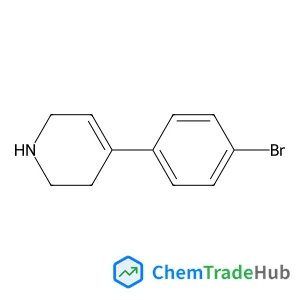
CAS Number
Related Products
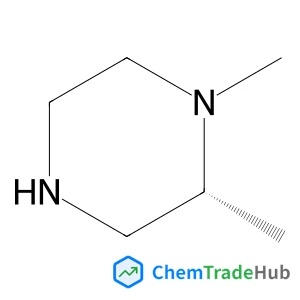
(2R)-1,2-Dimethylpiperazine
CAS Number: 623586-02-7
![(2S)-4-Hydroxy-7-(hydroxymethyl)-2-(2-hydroxy-2-propanyl)-2,3-dihydro-5H-furo[3,2-g]chromen-5-one](https://static.chemtradehub.com/structs/496/49624-66-0-7116.webp)
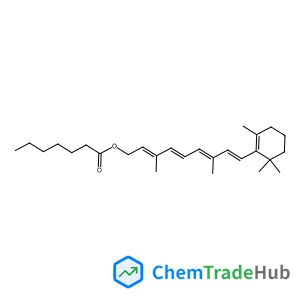
O~15~-Heptanoylretinol
CAS Number: 88641-44-5
![1-Methoxy-2-[1-(4-methoxyphenyl)propyl]benzene](https://static.chemtradehub.com/structs/334/33451-22-8-2ef2.webp)
CAS Number: 1350524-27-4
Other Suppliers for 4-(4-Bromophenyl)-1,2,3,6-tetrahydropyridine





Basic Information
Molecular Formula
C11H12BrN
Molecular Weight
238.12 g/mol
Physical State
White to Yellow Solid
Physical Properties
Boiling Point
313.7°C at 760 mmHg
Density
1.367
Flash Point
143.5°C
Chemical Identifiers
SMILES
C1CNCC=C1C2=CC=C(C=C2)Br
InChIKey
FDRGGAPHXGEHPI-UHFFFAOYSA-N
Database References
MDL Number
MFCD04113543
FAQ
4-(4-Bromophenyl)-1,2,3,6-tetrahydropyridine is a white to off-white crystalline solid with a molecular weight of approximately 278.04 g/mol. It has limited water solubility and is soluble in organic solvents like ethanol and acetone. The compound is moderately reactive, showing basic properties due to the presence of a nitrogen-containing heterocycle. It is stable under normal conditions but should be stored in a cool, dry place away from strong acids and oxidizers.
4-(4-Bromophenyl)-1,2,3,6-tetrahydropyridine is typically synthesized via a bromination reaction of 4-(4-pyridyl)butan-1-ol using N-bromosuccinimide (NBS) and a suitable organic solvent like dichloromethane. The reaction is catalyzed by a peroxide and proceeds under mild conditions. The process yields a mixture of stereoisomers, and purification is achieved through recrystallization or column chromatography.
4-(4-Bromophenyl)-1,2,3,6-tetrahydropyridine is primarily used in the pharmaceutical industry for the synthesis of various drugs due to its structural properties. It is also used in the polymer industry for the development of novel materials and in the sensor industry for its ability to act as a chromophore. Additionally, it has applications in semiconductor manufacturing as an intermediate in the production of photoresists.
Proper personal protective equipment (PPE) should be worn when handling 4-(4-Bromophenyl)-1,2,3,6-tetrahydropyridine, including gloves, safety goggles, and a lab coat. The compound should be handled in a fume hood to avoid inhalation or skin contact. Spills should be cleaned up with appropriate absorbent materials and disposed of according to local regulations. Always consult the Safety Data Sheet (SDS) for detailed handling instructions and emergency procedures.
Safety Notice
Please verify product specifications and safety data before use. Contact the supplier for detailed safety information.
Always follow proper handling procedures