



AD
N-(4-(4,4,5,5-tetramethyl-1,3,2-dioxaborolan-2-yl)phenyl)benzamide(CAS: 935660-75-6)
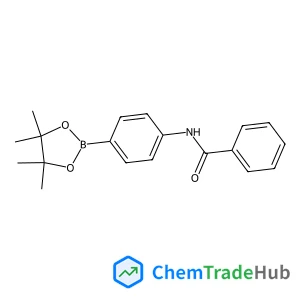
CAS Number
Related Products
![3-[4-Fluoro-2-(trifluoromethyl)phenyl]propanoic acid](https://static.chemtradehub.com/structs/916/916420-73-0-ee37.webp)

2-(4-Fluorobenzyl)-5-pyrimidinamine
CAS Number: 1152557-45-3
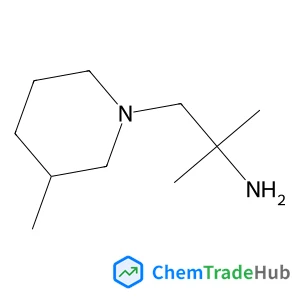
![Methyl [4-cyano-3-(3-thienyl)-1H-pyrazol-1-yl]acetate](https://static.chemtradehub.com/structs/209/2098083-01-1-68bf.webp)
![3-[4-Cyclopentyl-5-(methylsulfanyl)-4H-1,2,4-triazol-3-yl]-1-propanamine hydroiodide (1:1)](https://static.chemtradehub.com/structs/119/1197609-28-1-10f2.webp)
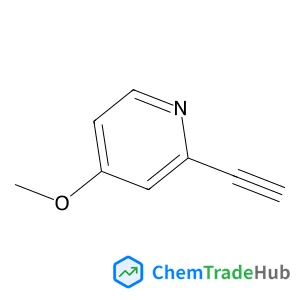
2-Ethynyl-4-methoxypyridine
CAS Number: 1211533-95-7
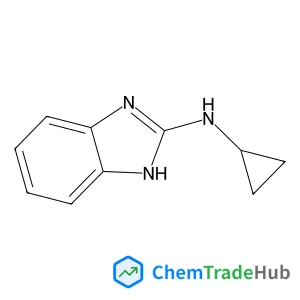
N-Cyclopropyl-1H-benzimidazol-2-amine
CAS Number: 941266-08-6
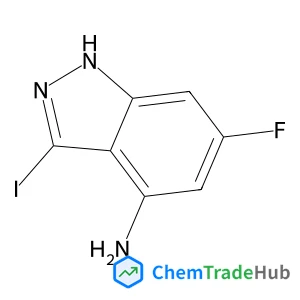
4-AMINO-6-FLUORO-3-IODO (1H)INDAZOLE
CAS Number: 885523-02-4
Other Suppliers for N-(4-(4,4,5,5-tetramethyl-1,3,2-dioxaborolan-2-yl)phenyl)benzamide







Basic Information
Molecular Formula
C19H22BNO3
Molecular Weight
323.2 g/mol
Physical Properties
Density
1.13
Chemical Identifiers
SMILES
B1(OC(C(O1)(C)C)(C)C)C2=CC=C(C=C2)NC(=O)C3=CC=CC=C3
InChIKey
BRERQYZGASSZJR-UHFFFAOYSA-N
Database References
MDL Number
MFCD14706697
FAQ
N-(4-(4,4,5,5-tetramethyl-1,3,2-dioxaborolan-2-yl)phenyl)benzamide (CAS: 935660-75-6) is subject to various regulatory guidelines including GHS classification for hazardous materials, REACH regulations in the EU, and FDA and EPA requirements for safety and environmental protection. It is essential to consult the latest regulatory updates for specific guidelines applicable to the compound.
There are several alternatives to N-(4-(4,4,5,5-tetramethyl-1,3,2-dioxaborolan-2-yl)phenyl)benzamide (CAS: 935660-75-6) in synthesis, including various benzamides and boronic acids. Common alternatives include p-tolyl boronic acid and other boronate esters, which can be used as effective reagents in similar reactions such as Suzuki-Miyaura couplings.
The market for N-(4-(4,4,5,5-tetramethyl-1,3,2-dioxaborolan-2-yl)phenyl)benzamide (CAS: 935660-75-6) is driven by its applications in pharmaceuticals and materials science. Research trends focus on its use in organic synthesis, particularly in Suzuki-Miyaura cross-coupling reactions. The compound is also gaining attention for its potential in developing new materials with unique properties. Demand is expected to grow with advancements in these fields.
Waste containing N-(4-(4,4,5,5-tetramethyl-1,3,2-dioxaborolan-2-yl)phenyl)benzamide (CAS: 935660-75-6) should be collected and disposed of according to local regulations. Proper waste handling involves neutralization of any acidic or basic residues, followed by incineration or professional waste disposal. Environmental protection precautions include ensuring that the waste is not released into the environment and that all workers are protected with appropriate personal protective equipment.
Safety Notice
Please verify product specifications and safety data before use. Contact the supplier for detailed safety information.
Always follow proper handling procedures
Contact Information
3641133981@qq.com