



AD
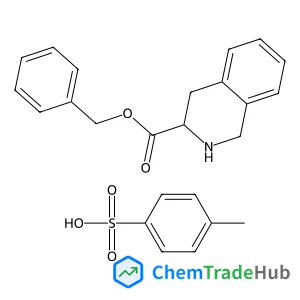
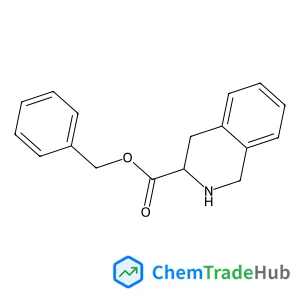
Benzyl (3S)-1,2,3,4-tetrahydro-3-isoquinolinecarboxylate 4-methylbenzenesulfonate (1:1)(CAS: 77497-97-3)
CAS Number
Related Products
![(2S)-2-{[(9H-Fluoren-9-ylmethoxy)carbonyl]amino}-4-[(2-methyl-2-propanyl)oxy]-4-oxobutanoic acid](https://static.chemtradehub.com/structs/719/71989-14-5-7c0a.webp)
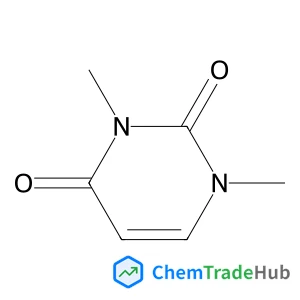
1,3-Dimethyl-2,4(1H,3H)-pyrimidinedione
CAS Number: 874-14-6
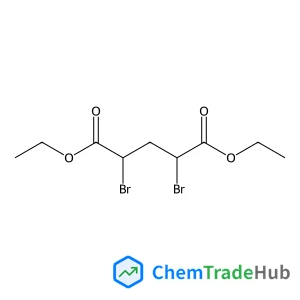
diethyl 2,4-dibromopentanedioate
CAS Number: 870-78-0
Other Suppliers for Benzyl (3S)-1,2,3,4-tetrahydro-3-isoquinolinecarboxylate 4-methylbenzenesulfonate (1:1)




Basic Information
Molecular Formula
C24H25NO5S
Molecular Weight
439.53 g/mol
Physical State
。
Physical Properties
Melting Point
145-150 °C (lit.)
Chemical Identifiers
SMILES
CC1=CC=C(C=C1)S(=O)(=O)O.C1C(NCC2=CC=CC=C21)C(=O)OCC3=CC=CC=C3
InChIKey
PSMBIFNNFMRIMV-NTISSMGPSA-N
Database References
MDL Number
MFCD00799478
FAQ
Benzyl (3S)-1,2,3,4-tetrahydro-3-isoquinolinecarboxylate 4-methylbenzenesulfonate (1:1) must adhere to GHS classification, which includes health, environmental, and physical hazards. It is also regulated under REACH in the EU, requiring registration if manufactured or imported. FDA and EPA have specific requirements for the handling and disposal of such chemicals in the USA, focusing on safety and environmental protection.
Several alternatives can be explored in the synthesis of Benzyl (3S)-1,2,3,4-tetrahydro-3-isoquinolinecarboxylate 4-methylbenzenesulfonate (1:1). Common alternatives include using other carboxylic acid derivatives, isomers, or different sulfonate analogs. Researchers might also consider using biocatalytic routes or green chemistry methods to achieve similar functionalities.
Market trends for Benzyl (3S)-1,2,3,4-tetrahydro-3-isoquinolinecarboxylate 4-methylbenzenesulfonate (1:1) are growing, driven by increasing demand in pharmaceuticals and agrochemicals. Research is focusing on the development of more sustainable synthesis methods and exploring its potential in medicinal chemistry and drug discovery. Economic trends show stable pricing, with fluctuations due to supply chain issues and market demand.
Waste containing Benzyl (3S)-1,2,3,4-tetrahydro-3-isoquinolinecarboxylate 4-methylbenzenesulfonate (1:1) should be collected in sealed containers and disposed of through professional waste disposal services. Incineration is an option for hazardous waste, but it must be done under controlled conditions to minimize environmental impact. Proper environmental precautions include ensuring no release into the air, water, or soil to prevent ecological harm.
Safety Notice
Please verify product specifications and safety data before use. Contact the supplier for detailed safety information.
Always follow proper handling procedures
Contact Information
john.chiang@xialichem.com