



AD
4-Methyl-2,6-dinitrophenol(CAS: 609-93-8)
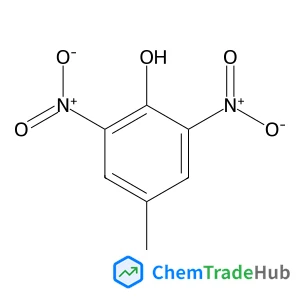
CAS Number
Related Products

Bis(4-fluorophenyl)methanol
CAS Number: 365-24-2
![(2R,3R,4R,5R)-2-(4-Aminopyrrolo[2,1-f][1,2,4]triazin-7-yl)-3,4-bis(benzyloxy)-5-[(benzyloxy)methyl]tetrahydro-2-furancarbonitrile (non-preferred name)](https://static.chemtradehub.com/structs/135/1355357-49-1-fb2c.webp)
![7'-Benzyl-6'-methyl-3',4'-dihydro-8'h-spiro[cyclohexane-1,2'-pyrano[3,2-g]chromen]-8'-one oxime](https://static.chemtradehub.com/structs/101/1014086-04-4-1f9d.webp)
![(4S)-3-{(2R,5S)-5-(4-Fluorophenyl)-2-[(S)-[(4-fluorophenyl)amino]{4-[(trimethylsilyl)oxy]phenyl}methyl]-5-[(trimethylsilyl)oxy]pentanoyl}-4-phenyl-1,3-oxazolidin-2-one](https://static.chemtradehub.com/structs/272/272778-12-8-869d.webp)
![Benzyl {(1S)-2-[(3R)-3-hydroxy-1-pyrrolidinyl]-2-oxo-1-phenylethyl}carbamate](https://static.chemtradehub.com/structs/164/1643682-74-9-e86a.webp)
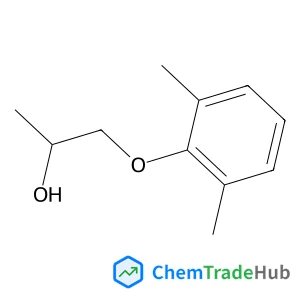
1-(2,6-Dimethylphenoxy)-2-propanol
CAS Number: 61102-09-8
Other Suppliers for 4-Methyl-2,6-dinitrophenol





Basic Information
Molecular Formula
C7H6N2O5
Molecular Weight
198.13 g/mol
Physical Properties
Melting Point
78.0 to 82.0 deg-C
Boiling Point
335.43°C (rough estimate)
Density
1.5928 (rough estimate)
Flash Point
117.7 °C
Chemical Identifiers
SMILES
CC1=CC(=C(C(=C1)[N+](=O)[O-])O)[N+](=O)[O-]
InChIKey
HOYRZHJJAHRMLL-UHFFFAOYSA-N
Database References
MDL Number
MFCD00007121
Beilstein Registry Number
1978786
FAQ
4-Methyl-2,6-dinitrophenol (CAS: 609-93-8) is regulated under the Globally Harmonized System of Classification and Labelling of Chemicals (GHS) as a hazardous chemical. It falls under Category 2 for skin corrosion/irritation and is classified as harmful to the aquatic environment. In the European Union, it is subject to the REACH regulation, requiring registration for quantities above 1 tonne per annum. Additionally, it is regulated by the FDA and EPA for specific uses and must adhere to their guidelines, such as occupational exposure limits and safe handling practices.
There are several alternatives to 4-Methyl-2,6-dinitrophenol (CAS: 609-93-8) in synthesis, depending on the specific requirements of the reaction. Common alternatives include 2,4-dinitrophenol and 2,6-dinitrophenol, which can be used in place of 4-Methyl-2,6-dinitrophenol when the methyl group is not necessary. Other alternatives may include isomers or similar compounds that offer similar reactivity but with different physical or chemical properties.
The market for 4-Methyl-2,6-dinitrophenol (CAS: 609-93-8) is driven by its use in various industries, including pharmaceuticals, dyes, and intermediates for other chemical processes. Research trends focus on its applications in organic synthesis, particularly as an oxidizing agent and intermediate. Market trends indicate a steady demand, with price fluctuations influenced by supply chain dynamics and regulatory changes. Emerging research explores its use in specific chemical reactions and environmental remediation.
Waste containing 4-Methyl-2,6-dinitrophenol (CAS: 609-93-8) should be handled with caution due to its hazardous nature. It should be collected in appropriate containers and stored in a secure, well-ventilated area. Proper waste disposal should be managed by a professional waste disposal service that specializes in hazardous waste. Incineration is a common method for disposal, provided it is conducted in a controlled environment to prevent the release of harmful substances. Environmental protection measures include ensuring the waste does not contaminate soil or water during disposal. Compliance with local and national regulations is essential.
Safety Notice
Please verify product specifications and safety data before use. Contact the supplier for detailed safety information.
Always follow proper handling procedures

Contact Information
Contact Person
Manager Chen
2885409035@qq.com
Mobile
18186386804
Telephone
0714-5333089
Visit Website
https://www.yongstandards.com/Address
No. 176 Hangzhou West Road, Huangshi City, Hubei Province