



AD
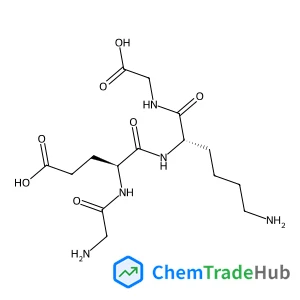
Glycyl-L-alpha-glutamyl-L-lysylglycine(CAS: 960608-17-7)
CAS Number
Related Products
![N-[(9H-Fluoren-9-ylmethoxy)carbonyl]-O-trityl-L-threonine](https://static.chemtradehub.com/structs/133/133180-01-5-6c21.webp)
![N-[(Benzyloxy)carbonyl]phenylalanine](https://static.chemtradehub.com/structs/244/2448-45-5-d531.webp)
N-[(Benzyloxy)carbonyl]phenylalanine
CAS Number: 2448-45-5
![{4-[4-(4-Methoxyphenyl)-1,3-thiazol-2-yl]-1-piperazinyl}(phenyl)methanone](https://static.chemtradehub.com/structs/302/302905-01-7-bdd9.webp)
CAS Number: 110659-38-6
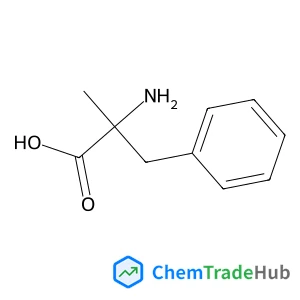
alpha-Methyl-L-phenylalanine
CAS Number: 23239-35-2
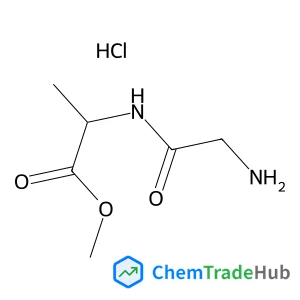
H-Gly-ala-ome hcl
CAS Number: 59095-76-0
Other Suppliers for Glycyl-L-alpha-glutamyl-L-lysylglycine




Basic Information
Molecular Formula
C15H27N5O7
Molecular Weight
389.41 g/mol
Chemical Identifiers
SMILES
C(CCN)C[C@@H](C(=O)NCC(=O)O)NC(=O)[C@H](CCC(=O)O)NC(=O)CN
InChIKey
CUVSTAMIHSSVKL-UWVGGRQHSA-N
Database References
FAQ
Glycyl-L-alpha-glutamyl-L-lysylglycine (CAS: 960608-17-7) is subject to the GHS classification, which categorizes it based on its health and environmental hazards. In the EU, it falls under the REACH regulations, requiring manufacturers and importers to register substances. For FDA and EPA requirements, safe handling and disposal guidelines must be followed, especially concerning its potential for skin and eye irritation. Further, it adheres to OSHA’s Hazard Communication Standard (HCS) for workplace safety.
While Glycyl-L-alpha-glutamyl-L-lysylglycine (CAS: 960608-17-7) is a specific compound, there are alternatives such as other dipeptides or amino acid derivatives that can be used in synthesis. Common substitutes include L-glutathione, L-arginyl-L-glutamyl-L-lysine, and L-cysteinyl-L-glutamyl-L-lysine. These alternatives may offer similar or different functionalities depending on the experimental needs.
The market and research trends for Glycyl-L-alpha-glutamyl-L-lysylglycine (CAS: 960608-17-7) are focused on its applications in pharmaceuticals and biotechnology. Recent studies highlight its potential in therapeutic areas such as inflammation and immune modulation. Market demand is growing due to its increasing use in clinical trials and research. Emerging trends include the development of its analogs and derivatives to enhance its biological activities.
Waste containing Glycyl-L-alpha-glutamyl-L-lysylglycine (CAS: 960608-17-7) should be collected in appropriate containers to prevent leakage. Proper incineration or professional waste disposal methods are recommended. Environmental protection precautions include ensuring compliance with local regulations for hazardous waste disposal. Adequate personal protective equipment should be used during handling and disposal to prevent exposure. Additionally, neutralization or chemical treatment may be necessary to reduce the compound’s toxicity before disposal.
Safety Notice
Please verify product specifications and safety data before use. Contact the supplier for detailed safety information.
Always follow proper handling procedures
Contact Information
Contact Person
Manager Ma
sales@apeptide.com
Mobile
17321195801
Telephone
021-60871011
Visit Website
https://www.apeptides.comAddress
No. 1369 Kangqiao East Road, Pudong High-tech Zone, C Building, Floor 2, Warehouse Thriving Industrial Park