



AD
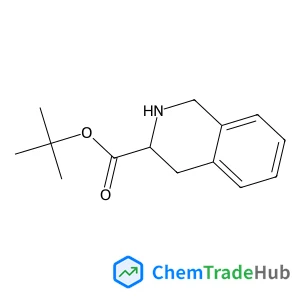
2-Methyl-2-propanyl (3S)-1,2,3,4-tetrahydro-3-isoquinolinecarboxylate(CAS: 77497-74-6)
CAS Number
Related Products
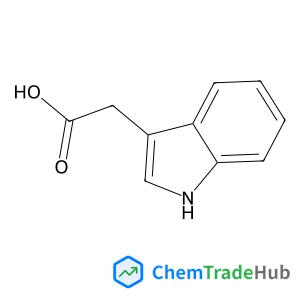
Indoleacetic Acid
CAS Number: 87-51-4
Fmoc-D-1-Naphthylalanine
CAS Number: 138774-49-3
![2,4,6-Tris[(dimethylamino)methyl]phenol](https://static.chemtradehub.com/structs/90-/90-72-2-4020.webp)
2,4,6-Tris[(dimethylamino)methyl]phenol
CAS Number: 90-72-2
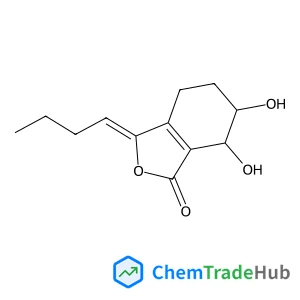
Senkyunolide I
CAS Number: 94596-28-8
(R)-Glycidyl
CAS Number: 13826-06-5
Other Suppliers for 2-Methyl-2-propanyl (3S)-1,2,3,4-tetrahydro-3-isoquinolinecarboxylate






Basic Information
Molecular Formula
C14H19NO2
Molecular Weight
233.31 g/mol
Physical Properties
Water Solubility
Soluble in water.
Chemical Identifiers
SMILES
CC(C)(C)OC(=O)C1CC2=CC=CC=C2CN1
InChIKey
KRSUDBIZXKOKGA-LBPRGKRZSA-N
Database References
MDL Number
MFCD04114841
FAQ
The compound 2-Methyl-2-propanyl (3S)-1,2,3,4-tetrahydro-3-isoquinolinecarboxylate (CAS: 77497-74-6) is regulated under the GHS system, which categorizes it based on its health and environmental hazards. In the EU, it falls under the REACH regulations, requiring manufacturers and importers to register substances above a certain tonnage threshold. Additionally, FDA and EPA may have specific requirements for its use and disposal in pharmaceutical and agricultural applications.
Yes, there are alternatives to 2-Methyl-2-propanyl (3S)-1,2,3,4-tetrahydro-3-isoquinolinecarboxylate (CAS: 77497-74-6) in synthesis. Common alternatives include related isoquinoline derivatives or isomers such as 2-methyl-2-propanyl (3R)-1,2,3,4-tetrahydro-3-isoquinolinecarboxylate. Other substitutes may include synthetic intermediates like 3-aminomethyltetrahydroisoquinoline, which can be used as a replacement in similar chemical processes.
The market for 2-Methyl-2-propanyl (3S)-1,2,3,4-tetrahydro-3-isoquinolinecarboxylate (CAS: 77497-74-6) is driven by its applications in pharmaceuticals and agrochemicals. Research trends are focused on exploring its potential as a precursor in drug synthesis and as an active ingredient in crop protection products. There is also increasing interest in its use as a chiral auxiliary in asymmetric synthesis.
Waste containing 2-Methyl-2-propanyl (3S)-1,2,3,4-tetrahydro-3-isoquinolinecarboxylate (CAS: 77497-74-6) should be collected in appropriate containers and stored in a well-ventilated area. For disposal, it should be handed to a licensed waste management facility. Environmental protection measures include ensuring no spills and proper containment to prevent contamination. Hazardous waste regulations should be strictly followed to ensure environmental safety.
Safety Notice
Please verify product specifications and safety data before use. Contact the supplier for detailed safety information.
Always follow proper handling procedures
Contact Information
1532021142@qq.com