



AD
1-(Trideuteriomethyl)piperazine(CAS: 1093380-08-5)
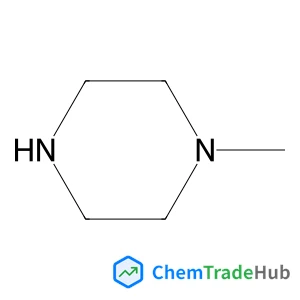
CAS Number
Related Products

(9Z)-9-Tetradecenoic acid
CAS Number: 544-64-9

Gomisin K1
CAS Number: 75629-20-8
![2-Methyl-2-propanyl (1R,5R)-5-hydroxy-3-azabicyclo[4.1.0]heptane-3-carboxylate](https://static.chemtradehub.com/structs/230/2305079-71-2-b0dc.webp)
![2-Oxa-7-azaspiro[3.5]nonane acetate (1:1)](https://static.chemtradehub.com/structs/131/1313369-52-6-2eb1.webp)
![4-Nitrophenyl N-[(benzyloxy)carbonyl]-D-phenylalaninate](https://static.chemtradehub.com/structs/257/2578-85-0-6c76.webp)

3-Methylbutyl salicylate
CAS Number: 87-20-7
![4-{[4-(4-Chlorophenyl)-1,3-thiazol-2-yl]amino}phenol hydrochloride (1:1)](https://static.chemtradehub.com/structs/117/1177741-83-1-b09e.webp)
![2-[4-(5-Amino-2-pyridinyl)-1-piperazinyl]-1-ethanol](https://static.chemtradehub.com/structs/101/1017221-34-9-ca8d.webp)
Other Suppliers for 1-(Trideuteriomethyl)piperazine





Basic Information
Molecular Formula
C5H12N2
Molecular Weight
103.18 g/mol
Chemical Identifiers
SMILES
CN1CCNCC1
InChIKey
PVOAHINGSUIXLS-FIBGUPNXSA-N
Database References
MDL Number
MFCD03428305
FAQ
1-(Trideuteriomethyl)piperazine (CAS: 1093380-08-5) is subject to various regulatory guidelines. In terms of hazard communication, it should follow the Globally Harmonized System of Classification and Labelling of Chemicals (GHS), which includes appropriate safety data sheets (SDS) and labeling. For European manufacturers and importers, it must comply with the Registration, Evaluation, Authorisation, and Restriction of Chemicals (REACH) regulation. In the United States, it is regulated by the Occupational Safety and Health Administration (OSHA) and the Environmental Protection Agency (EPA).
In synthesis, 1-(Trideuteriomethyl)piperazine (CAS: 1093380-08-5) is often used as a deuteration reagent; however, alternative reagents like trimethylsilyldiazomethane (TMS-Diazomethane) can be used for similar purposes. Other options include using heavy water or deuterated solvents, depending on the specific needs of the synthesis process.
The market for 1-(Trideuteriomethyl)piperazine (CAS: 1093380-08-5) is primarily driven by its use in deuteration reactions and as a research tool in pharmaceutical and chemical synthesis. Recent trends include increased focus on deuteration for drug development to improve metabolic stability and safety. Research is expanding into the use of deuterated compounds for studying biological processes and drug interactions.
Waste containing 1-(Trideuteriomethyl)piperazine (CAS: 1093380-08-5) should be managed according to local regulations. Typically, it should be collected in appropriate containers and disposed of through a professional waste disposal service. Environmental precautions include ensuring no spillage and proper ventilation during handling. Incineration is a common method for disposing of such wastes, but it should be conducted in a manner that complies with environmental protection standards to prevent the release of harmful substances into the environment.
Safety Notice
Please verify product specifications and safety data before use. Contact the supplier for detailed safety information.
Always follow proper handling procedures
Contact Information
chenling@zzstandard.com