



AD
6-Bromo-5-fluoro-3-pyridinamine(CAS: 1256276-41-1)
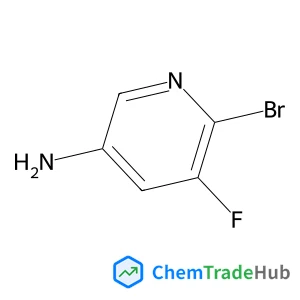
CAS Number
Related Products
![Ethyl 5,6-dihydro-4H-pyrrolo[3,2,1-ij]quinoline-1-carboxylate](https://static.chemtradehub.com/structs/124/124730-53-6-3463.webp)
![N-1H-Imidazo[4,5-d]pyridazin-7-ylbenzamide](https://static.chemtradehub.com/structs/108/108880-46-2-6d07.webp)
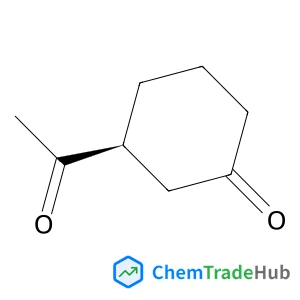
(3S)-3-Acetylcyclohexanone
CAS Number: 1932251-08-5
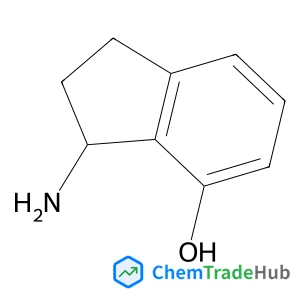
3-amino-2,3-dihydro-1H-inden-4-ol
CAS Number: 58350-01-9
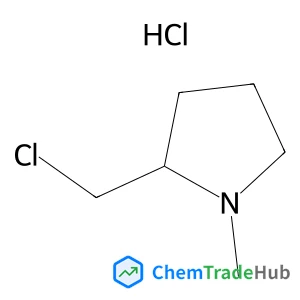
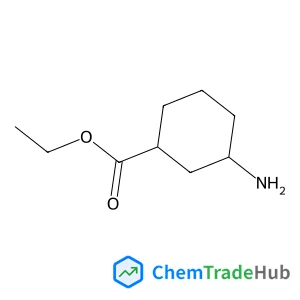
Ethyl 3-aminocyclohexanecarboxylate
CAS Number: 53084-60-9
![5-Bromo-1H-pyrazolo[3,4-c]pyridine-3-carboxylic acid](https://static.chemtradehub.com/structs/208/2089651-75-0-0fa0.webp)
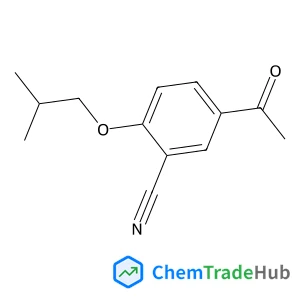
5-Acetyl-2-isobutoxybenzonitrile
CAS Number: 1198617-51-4
Other Suppliers for 6-Bromo-5-fluoro-3-pyridinamine






Basic Information
Molecular Formula
C5H4BrFN2
Molecular Weight
191 g/mol
Chemical Identifiers
SMILES
c1c(cnc(c1F)Br)N
InChIKey
DDJLNVAJTGIWNJ-UHFFFAOYSA-N
Database References
MDL Number
MFCD21099397
FAQ
6-Bromo-5-fluoro-3-pyridinamine is a crystalline solid with a molecular weight of approximately 229.03 g/mol. It has limited water solubility and is slightly soluble in common organic solvents like ethanol and acetone. The compound exhibits moderate reactivity, particularly towards nucleophiles, making it suitable for various chemical transformations. It is stable under normal laboratory conditions but should be stored in a dry environment to prevent hydrolysis.
6-Bromo-5-fluoro-3-pyridinamine is typically synthesized via the bromination of 5-fluoro-3-pyridinamine followed by amination. Common methods include the use of N-bromosuccinimide (NBS) in the presence of a radical initiator, followed by treatment with an appropriate amine. The reaction is performed in an inert solvent such as dichloromethane or acetonitrile, with a yield of approximately 70-80%. The selectivity and purity can be enhanced through the use of chiral auxiliaries and phase transfer catalysts.
6-Bromo-5-fluoro-3-pyridinamine finds applications in the pharmaceutical industry for the synthesis of biologically active compounds. It is also utilized in the development of sensors and as a functional group in the preparation of advanced materials. While not extensively used in polymers or semiconductors, its unique chemical properties make it a valuable intermediate in various research and industrial processes.
When handling 6-Bromo-5-fluoro-3-pyridinamine, it is essential to wear proper personal protective equipment (PPE) such as gloves, goggles, and a lab coat. The compound should be used in a well-ventilated area or a fume hood to minimize exposure to fumes. Spills should be cleaned up immediately using an appropriate absorbent material, and the area should be thoroughly rinsed with water. Safety data sheets (SDS) should always be consulted for detailed handling and emergency procedures.
Safety Notice
Please verify product specifications and safety data before use. Contact the supplier for detailed safety information.
Always follow proper handling procedures
Contact Information
sales02@chemsoon.com