



AD
(3S)-1,2,3,4-Tetrahydro-3-isoquinolinylmethanol(CAS: 18881-17-9)
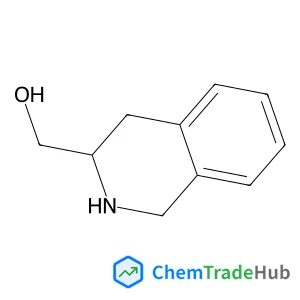
CAS Number
Related Products
![3-[4-Fluoro-2-(trifluoromethyl)phenyl]propanoic acid](https://static.chemtradehub.com/structs/916/916420-73-0-ee37.webp)
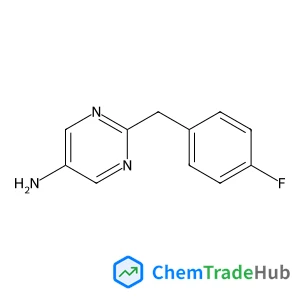
2-(4-Fluorobenzyl)-5-pyrimidinamine
CAS Number: 1152557-45-3
![Methyl [4-cyano-3-(3-thienyl)-1H-pyrazol-1-yl]acetate](https://static.chemtradehub.com/structs/209/2098083-01-1-68bf.webp)
![3-[4-Cyclopentyl-5-(methylsulfanyl)-4H-1,2,4-triazol-3-yl]-1-propanamine hydroiodide (1:1)](https://static.chemtradehub.com/structs/119/1197609-28-1-10f2.webp)
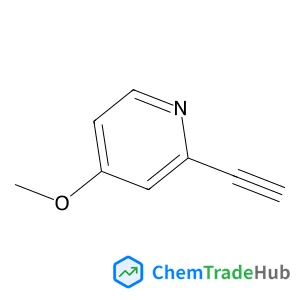
2-Ethynyl-4-methoxypyridine
CAS Number: 1211533-95-7
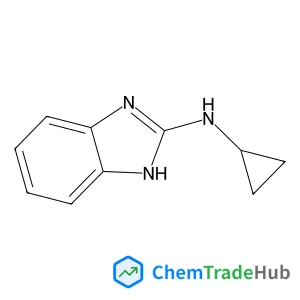
N-Cyclopropyl-1H-benzimidazol-2-amine
CAS Number: 941266-08-6
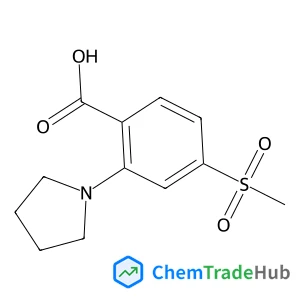
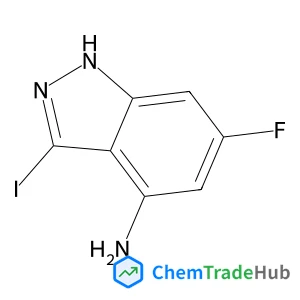
4-AMINO-6-FLUORO-3-IODO (1H)INDAZOLE
CAS Number: 885523-02-4
Other Suppliers for (3S)-1,2,3,4-Tetrahydro-3-isoquinolinylmethanol







Basic Information
Molecular Formula
C10H13NO
Molecular Weight
163.22 g/mol
Physical Properties
Melting Point
113.0 to 117.0 deg-C
Boiling Point
307.9℃ at 760 mmHg
Flash Point
147℃
Chemical Identifiers
SMILES
C1C(NCC2=CC=CC=C21)CO
InChIKey
ZSKDXMLMMQFHGW-JTQLQIEISA-N
Database References
MDL Number
MFCD01631316
FAQ
(3S)-1,2,3,4-Tetrahydro-3-isoquinolinylmethanol is a colorless or white crystalline solid with a molecular weight of approximately 203.25 g/mol. It is slightly soluble in water but soluble in organic solvents like ethanol and acetone. Chemically, it is relatively stable but reactive towards strong bases. It has a characteristic isoquinoline ring structure, which contributes to its unique physicochemical properties, making it suitable for various applications.
(3S)-1,2,3,4-Tetrahydro-3-isoquinolinylmethanol can be prepared via a multi-step synthesis starting from isoquinoline. Commonly, isoquinoline is converted to its N-methyl derivative using methanol, followed by a reduction step to introduce the tetrahydro ring structure. This process often involves the use of a reducing agent like lithium aluminum hydride (LAH) or sodium borohydride. The yield and selectivity of the synthesis can be optimized using appropriate catalysts and reaction conditions.
(3S)-1,2,3,4-Tetrahydro-3-isoquinolinylmethanol finds applications in various industries. In pharmaceuticals, it serves as a precursor for the synthesis of active pharmaceutical ingredients (APIs) due to its unique chemical structure. It also has potential uses in polymer synthesis, where its properties can be exploited to create functional polymers. Additionally, it can be utilized in sensors and semiconductors, leveraging its electronic properties.
When handling (3S)-1,2,3,4-Tetrahydro-3-isoquinolinylmethanol, it is crucial to take appropriate safety measures. Always wear personal protective equipment (PPE) such as gloves, safety goggles, and a lab coat. Work in a well-ventilated area or a fume hood to minimize exposure. Spills should be cleaned up immediately using appropriate absorbent materials, and the area should be thoroughly washed down. Consult the Safety Data Sheet (SDS) for detailed safety information and emergency procedures.
Safety Notice
Please verify product specifications and safety data before use. Contact the supplier for detailed safety information.
Always follow proper handling procedures
Contact Information
3641133981@qq.com