AD
1,3,5,6-Tetrahydroxy-2-methyl-9,10-anthraquinone(CAS: 80368-74-7)
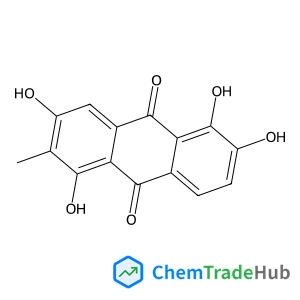
CAS Number
Related Products
![3-Hydroxy-5-[(E)-2-(4-hydroxyphenyl)vinyl]phenyl beta-D-glucopyranoside](https://static.chemtradehub.com/structs/272/27208-80-6-025b.webp)
![4-{[(1R)-6,7-Dimethoxy-2-methyl-1,2,3,4-tetrahydro-1-isoquinolinyl]methyl}-2-{[(1R)-1-(4-hydroxybenzyl)-6-methoxy-2-methyl-1,2,3,4-tetrahydro-7-isoquinolinyl]oxy}phenol](https://static.chemtradehub.com/structs/258/2586-96-1-df2d.webp)
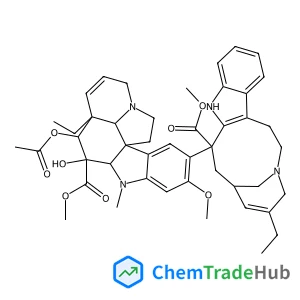
3',4'-Anhydrovinblastine
CAS Number: 38390-45-3
![2,3,9,10-Tetramethoxy-5,8,13,13a-tetrahydro-6H-isoquinolino[3,2-a]isoquinoline](https://static.chemtradehub.com/structs/100/10097-84-4-8e05.webp)
![(1R,2S,8R,9R,15S,17S,18R,21R,24R,26R,27R)-5,15-Dihydroxy-2,9,26-trimethyl-3,19,23,28-tetraoxaoctacyclo[16.9.1.1~18,27~.0~1,5~.0~2,24~.0~8,17~.0~9,14~.0~21,26~]nonacosa-11,13-diene-4,10,22,29-tetrone](https://static.chemtradehub.com/structs/760/76045-38-0-af88.webp)
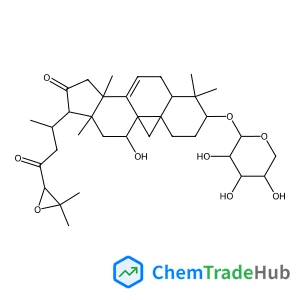
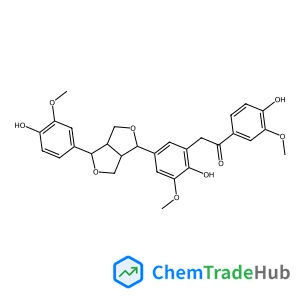
Herpetone
CAS Number: 951677-22-8
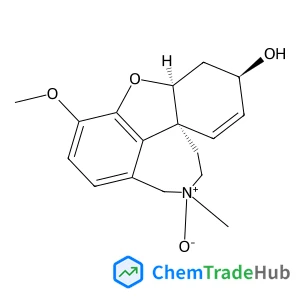
Galanthamine N-Oxide
CAS Number: 134332-50-6
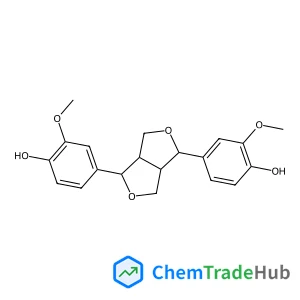
(+)-Epipinoresinol
CAS Number: 24404-50-0
Other Suppliers for 1,3,5,6-Tetrahydroxy-2-methyl-9,10-anthraquinone





Basic Information
Molecular Formula
C15H10O6
Molecular Weight
286.24 g/mol
Physical State
Powder
Chemical Identifiers
SMILES
Cc1c(cc2c(c1O)C(=O)c3ccc(c(c3C2=O)O)O)O
InChIKey
JCZGUFVZKUDRMM-UHFFFAOYSA-N
Database References
MDL Number
MFCD18448254
FAQ
The compound 1,3,5,6-Tetrahydroxy-2-methyl-9,10-anthraquinone falls under the scope of several regulatory guidelines. It is classified under the Globally Harmonized System of Classification and Labelling of Chemicals (GHS) as a specific substance. In the European Union, it is regulated under REACH (Registration, Evaluation, Authorisation and Restriction of Chemicals) and may require a safety data sheet (SDS). Additionally, the U.S. Environmental Protection Agency (EPA) and the FDA may have specific requirements for its handling, storage, and use.
While 1,3,5,6-Tetrahydroxy-2-methyl-9,10-anthraquinone is a specific compound, alternatives such as 1,3-dihydroxyanthraquinone and 1,4-dihydroxyanthraquinone can be used in similar syntheses. Common alternative reagents include anthraquinones with different substitution patterns or related polyhydroxybenzenes. These alternatives can offer similar functionality in some applications but may require different synthesis conditions and handling procedures.
The market for 1,3,5,6-Tetrahydroxy-2-methyl-9,10-anthraquinone is primarily driven by its use in the textile industry for dyeing and in pharmaceuticals. Research trends are focusing on its use in advanced materials and as a potential precursor for the synthesis of valuable intermediates. The trend also includes exploring its properties in anti-inflammatory and antioxidant applications. Market demand is expected to grow with increasing focus on sustainable and biocompatible materials.
Waste containing 1,3,5,6-Tetrahydroxy-2-methyl-9,10-anthraquinone should be managed according to local and international regulations. Collection of the waste should be done in sealed containers to prevent spillage. The waste should be neutralized if necessary and then incinerated or disposed of in a hazardous waste facility. Proper environmental protection measures, such as ensuring no release into water bodies, should be followed. Always consult the latest safety data sheet (SDS) and local waste management guidelines for specific procedures.
Safety Notice
Please verify product specifications and safety data before use. Contact the supplier for detailed safety information.
Always follow proper handling procedures