



AD
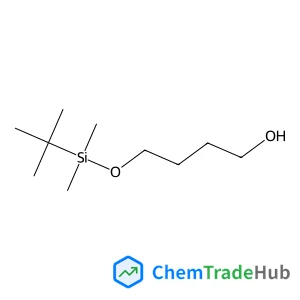
4-((tert-Butyldimethylsilyl)oxy)butan-1-ol(CAS: 87184-99-4)
CAS Number
Related Products
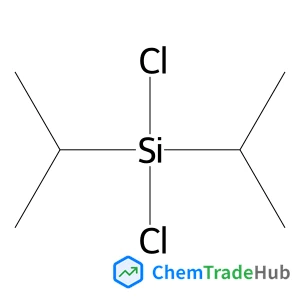
Dichloro(diisopropyl)silane
CAS Number: 7751-38-4
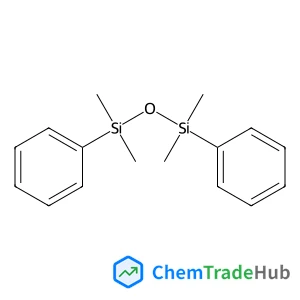
![3-{[Dimethyl(2-methyl-2-propanyl)silyl]oxy}-1-propanol](https://static.chemtradehub.com/structs/738/73842-99-6-084c.webp)
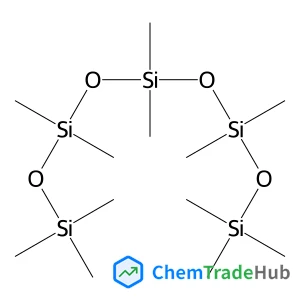
Dodecamethylpentasiloxane
CAS Number: 141-63-9
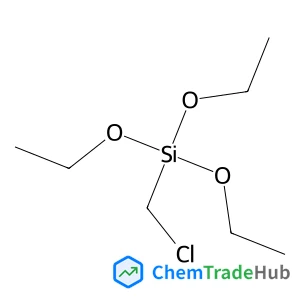
(Chloromethyl)(triethoxy)silane
CAS Number: 15267-95-5
![1,2-Ethanediylbis[chloro(dimethyl)silane]](https://static.chemtradehub.com/structs/135/13528-93-3-260b.webp)
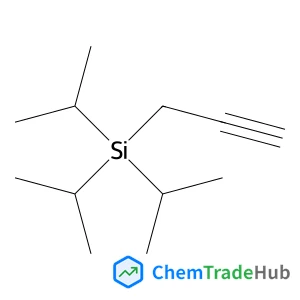
Triisopropyl(2-propyn-1-yl)silane
CAS Number: 144272-12-8
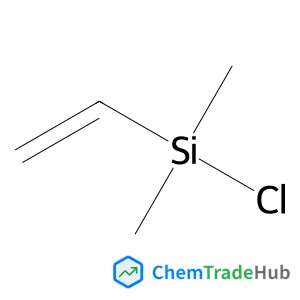
Chloro(dimethyl)vinylsilane
CAS Number: 1719-58-0
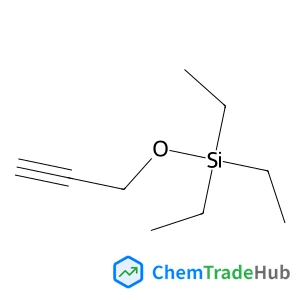
Triethyl(2-propyn-1-yloxy)silane
CAS Number: 61157-25-3
Other Suppliers for 4-((tert-Butyldimethylsilyl)oxy)butan-1-ol





Basic Information
Molecular Formula
C10H24O2Si
Molecular Weight
204.39 g/mol
Physical Properties
Boiling Point
63-66 °C/0.3 mmHg(lit.)
Density
0.888 g/mL at 25 °C(lit.)
Water Solubility
Slightly Soluble in water.(2.0 g/L) (25°C). Soluble in Dichloromethane, Ethyl Acetate, Methanol
Chemical Identifiers
SMILES
CC(C)(C)[Si](C)(C)OCCCCO
InChIKey
IJEMXJANZPVITP-UHFFFAOYSA-N
Database References
MDL Number
MFCD04974070
FAQ
4-((tert-Butyldimethylsilyl)oxy)butan-1-ol (CAS: 87184-99-4) falls under the Global Harmonized System (GHS) for classification and labeling of chemicals. It is regulated under REACH in the European Union, which requires manufacturers and importers to register the substance if it meets certain tonnage thresholds. In the United States, the Environmental Protection Agency (EPA) and the Food and Drug Administration (FDA) may have additional requirements related to the handling, storage, and transportation of this compound.
Are there alternatives to 4-((tert-Butyldimethylsilyl)oxy)butan-1-ol (CAS: 87184-99-4) in synthesis?
In the synthesis of various organic compounds, 4-((tert-Butyldimethylsilyl)oxy)butan-1-ol (CAS: 87184-99-4) is often used as a protective group. Alternatives include other silyl ethers such as tert-butyldimethylsilyl chloride or t-butyldiphenylsilyl chloride. These can be used depending on the specific needs of the reaction and the desired outcome.
The research trends for 4-((tert-Butyldimethylsilyl)oxy)butan-1-ol (CAS: 87184-99-4) are focused on its use as a protective group in organic synthesis, particularly in the pharmaceutical and polymer industries. There is an increasing demand for efficient and selective protecting groups, which has driven research to explore new applications and modifications of this compound. Market trends suggest growing interest in sustainable and biocompatible materials, which may influence future research directions.
How should waste containing 4-((tert-Butyldimethylsilyl)oxy)butan-1-ol (CAS: 87184-99-4) be handled?
Waste containing 4-((tert-Butyldimethylsilyl)oxy)butan-1-ol (CAS: 87184-99-4) should be collected in appropriate containers and stored in a well-ventilated area, away from sources of ignition. Incineration or professional waste disposal services should be used for disposal, adhering to local and national regulations. Environmental precautions include ensuring no spillage or release into the environment, and using appropriate personal protective equipment during handling and disposal procedures.
Safety Notice
Please verify product specifications and safety data before use. Contact the supplier for detailed safety information.
Always follow proper handling procedures