



AD
4-amino-2-methylsulfanyl-pyrimidine-5-carbaldehyde(CAS: 770-31-0)
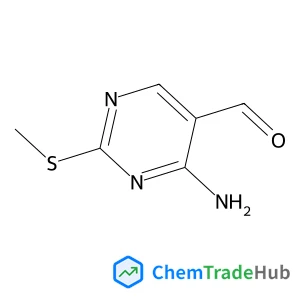
CAS Number
Related Products
![N-{2-[4-(Dimethylamino)phenyl]ethyl}-3-ethyl-5-fluoro-1H-indole-2-carboxamide](https://static.chemtradehub.com/structs/868/868273-09-0-ce16.webp)
![4-Chloro-5H-pyrrolo[3,2-d]pyrimidine](https://static.chemtradehub.com/structs/849/84905-80-6-5b90.webp)
4-Chloro-5H-pyrrolo[3,2-d]pyrimidine
CAS Number: 84905-80-6
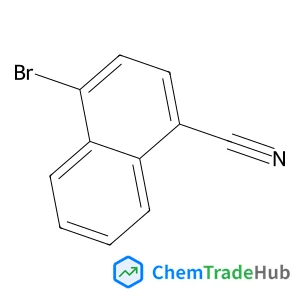
4-Bromonaphthalene-1-carbonitrile
CAS Number: 92616-49-4
![N-[(3R)-1-Benzyl-3-pyrrolidinyl]-5-chloro-3-ethyl-1H-indole-2-carboxamide (2E)-2-butenedioate (1:1)](https://static.chemtradehub.com/structs/868/868273-12-5-c243.webp)
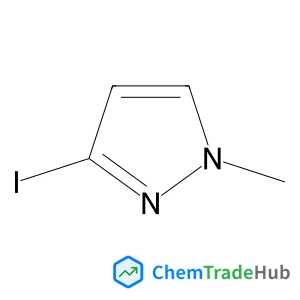
3-Iodo-1-methyl-1H-pyrazole
CAS Number: 92525-10-5
![2,4-Dichloro-7H-pyrrolo[2,3-d]pyrimidine](https://static.chemtradehub.com/structs/902/90213-66-4-1a7f.webp)
![5-Chloro-3-ethyl-N-{2-[4-(1-piperidinyl)phenyl]ethyl}-1H-indole-2-carboxamide](https://static.chemtradehub.com/structs/868/868273-06-7-90e4.webp)
Other Suppliers for 4-amino-2-methylsulfanyl-pyrimidine-5-carbaldehyde






Basic Information
Molecular Formula
C6H7N3OS
Molecular Weight
169.21 g/mol
Physical Properties
Melting Point
185-189°C
Boiling Point
379.7°C at 760 mmHg
Density
1.4
Chemical Identifiers
SMILES
CSC1=NC=C(C(=N1)N)C=O
InChIKey
FGONQMFYFJRAIG-UHFFFAOYSA-N
Database References
MDL Number
MFCD08669438
FAQ
The compound is subject to the Globally Harmonized System of Classification and Labelling of Chemicals (GHS), REACH regulations, and FDA/EPA requirements. GHS provides guidelines for classification and labeling based on health, environmental, and physical hazards. REACH regulations in the EU require manufacturers and importers to register chemicals, assess their safety, and manage risks. FDA and EPA have specific guidelines for the safe handling, storage, and disposal of hazardous chemicals, including this compound.
While 4-amino-2-methylsulfanyl-pyrimidine-5-carbaldehyde is a valuable intermediate in organic synthesis, alternatives may include related compounds like 2-(aminomethyl)-5-chloropyrimidine or 2-amino-4-chloropyrimidine. These alternatives may offer similar functional groups but with different reactivity. Other substitutes could be isomers or analogs, such as 4-amino-pyrimidine-5-carbaldehyde, which can serve as useful equivalents in certain synthetic routes.
Research trends for 4-amino-2-methylsulfanyl-pyrimidine-5-carbaldehyde (CAS: 770-31-0) indicate increasing interest in its use as a key intermediate in the synthesis of pharmaceuticals and agrochemicals. The compound is particularly valued for its ability to facilitate the introduction of methylthio and carboxaldehyde functionalities, which are common in bioactive molecules. Market demand is driven by advancements in drug discovery and crop protection technologies.
Waste containing 4-amino-2-methylsulfanyl-pyrimidine-5-carbaldehyde (CAS: 770-31-0) should be handled according to hazardous waste management guidelines. Collect waste in appropriate containers, ensuring it is sealed and labeled with the correct hazard symbols and identification. Incineration or professional waste disposal should be used to ensure safe destruction. Environmental protection measures include monitoring air emissions and liquid effluents to prevent contamination. Always follow local and national regulations for waste management and disposal.
Safety Notice
Please verify product specifications and safety data before use. Contact the supplier for detailed safety information.
Always follow proper handling procedures

Contact Information
2968933435@qq.com
Telephone
0551-64651822
Fax
0551-64651822
Visit Website
http://www.xhbiotech.com