



AD
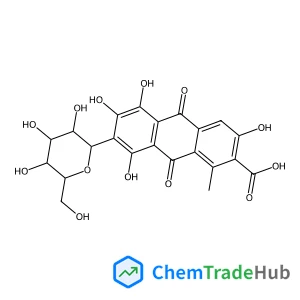
Aluminium calcium (1S)-1,5-anhydro-1-(7-carboxylato-8-methyl-1,3,4,6-tetraoxido-9,10-dioxo-9,10-dihydro-2-anthracenyl)-D-glucitol (1:1:1)(CAS: 1390-65-4)
CAS Number
Related Products
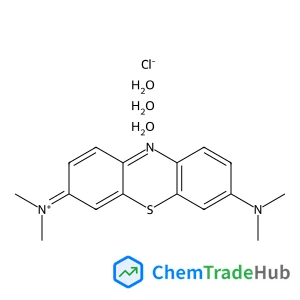
![Sodium 3-({[(1E,4E)-4-({4-[(4-ethoxyphenyl)amino]phenyl}{4-[ethyl(3-sulfonatobenzyl)amino]-2-methylphenyl}methylene)-3-methyl-2,5-cyclohexadien-1-ylidene](ethyl)ammonio}methyl)benzenesulfonate](https://static.chemtradehub.com/structs/610/6104-58-1-ca5a.webp)
![2-Naphthalenecarboxylic acid,3-hydroxy-4-[(2-hydroxy-4-sulfo-1-naphthalenyl)azo]-](https://static.chemtradehub.com/structs/373/3737-95-9-4fcb.webp)
![2-{(E)-[4-(Dimethylamino)phenyl]diazenyl}benzoic acid](https://static.chemtradehub.com/structs/493/493-52-7-b026.webp)
Other Suppliers for Aluminium calcium (1S)-1,5-anhydro-1-(7-carboxylato-8-methyl-1,3,4,6-tetraoxido-9,10-dioxo-9,10-dihydro-2-anthracenyl)-D-glucitol (1:1:1)



Basic Information
Molecular Formula
C22H15AlCaO13
Molecular Weight
492.4 g/mol
Physical State
Red powder
Physical Properties
Melting Point
138–140℃ (darkens)
Boiling Point
907.6 °C at 760 mmHg
Density
1.0000
Flash Point
316.1 °C
Chemical Identifiers
SMILES
CC1=C2C(=CC(=C1C(=O)O)O)C(=O)C3=C(C2=O)C(=C(C(=C3O)O)C4C(C(C(C(O4)CO)O)O)O)O
InChIKey
NRRCIUMXCVOIJX-ZCRVBCRXSA-I
Database References
MDL Number
MFCD00167028
FAQ
Aluminium calcium (1S)-1,5-anhydro-1-(7-carboxylato-8-methyl-1,3,4,6-tetraoxido-9,10-dioxo-9,10-dihydro-2-anthracenyl)-D-glucitol (1:1:1) is a complex organometallic compound with a molecular structure combining aluminium, calcium, and a glucitol derivative linked to anthracenyl groups. It exhibits unique chemical properties due to its multidentate ligands and metal coordination, making it relevant in advanced chemical research. The compound is primarily studied for its potential applications in pharmaceuticals and materials science.
This compound is primarily used in pharmaceutical research as a potential drug delivery agent and in the development of metal-based therapies. Its unique structure also finds applications in industrial chemistry for creating specialized materials and in organic synthesis as a ligand. It is studied for its role in catalytic processes and as a precursor for functionalized compounds in research settings.
Safety data for this compound is limited, but as a metal complex, it requires careful handling. Precautions include avoiding inhalation, skin contact, and ingestion, with protective measures such as gloves and ventilation. It is generally considered safe when used in controlled laboratory conditions, but adherence to safety standards and proper disposal is essential. Always consult specific safety data sheets (SDS) for detailed information.
Store this compound in a cool, dry place (ideally below 25°C), away from light, and in airtight containers to prevent moisture and air exposure. It should be kept in a chemically inert environment to maintain stability. Avoid contact with incompatible substances and ensure proper labeling. For long-term storage, a desiccated cabinet may be necessary to preserve its structural integrity.
Safety Notice
Please verify product specifications and safety data before use. Contact the supplier for detailed safety information.
Always follow proper handling procedures
Contact Information
Contact Person
Manager Tian
tianmi0406@126.com