



AD
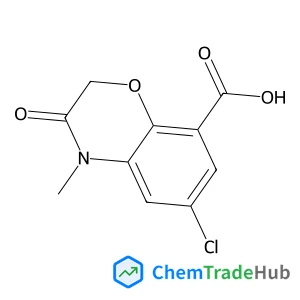
Azasetron Impurity 1(CAS: 123040-79-9)
CAS Number
Related Products
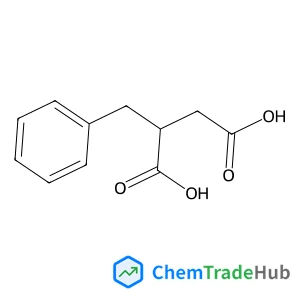
(2S)-2-Benzylsuccinic acid
CAS Number: 3972-36-9
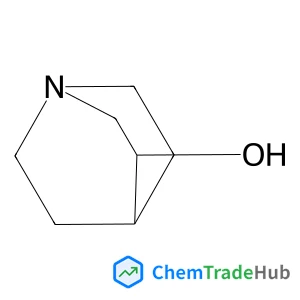
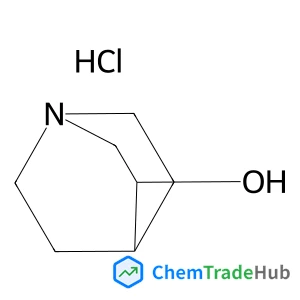
(3S)-Quinuclidin-3-ol
CAS Number: 34583-34-1
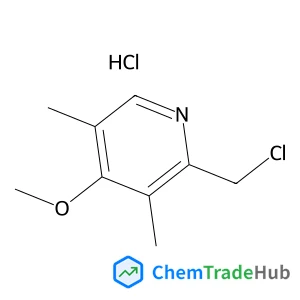
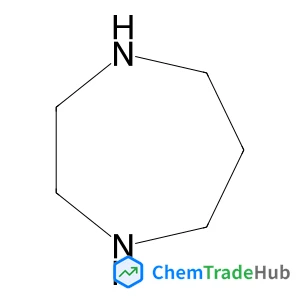
1,4-Diazepane
CAS Number: 505-66-8
![(4aS,7aS)-Octahydro-1H-pyrrolo[3,4-b]pyridine](https://static.chemtradehub.com/structs/151/151213-40-0-b507.webp)
Other Suppliers for Azasetron Impurity 1






Basic Information
Molecular Formula
C10H8ClNO4
Molecular Weight
241.63 g/mol
Physical Properties
Melting Point
241-243 ºC
Boiling Point
556°C at 760 mmHg
Chemical Identifiers
SMILES
CN1C(=O)COC2=C(C=C(C=C21)Cl)C(=O)O
InChIKey
ZTIKBJABRWRXFK-UHFFFAOYSA-N
Database References
MDL Number
MFCD09031399
FAQ
Azasetron Impurity 1 (CAS: 123040-79-9) is subject to regulatory guidelines such as REACH in the EU, which requires registration, evaluation, authorization, and restriction of chemical substances. In the US, it must comply with the Toxic Substances Control Act (TSCA) and other relevant FDA and EPA requirements for safety and environmental protection. GHS classification is also important for handling and storage, including proper labeling with hazard warnings and storage precautions.
In synthesis, alternatives to Azasetron Impurity 1 (CAS: 123040-79-9) may include other azasetron-related impurities or structurally similar compounds that can serve as intermediates. Common substitutes include isomers or analogs with similar functional groups. For instance, 5-hydroxyazasetron or 6-methylazasetron can be used as alternatives depending on the specific synthesis requirements. Care should be taken to ensure these substitutes meet the necessary purity and regulatory standards.
Market and research trends for Azasetron Impurity 1 (CAS: 123040-79-9) are closely linked to its use in the development and production of azasetron drugs, primarily for antiemetic purposes. Research is focused on improving drug efficacy and reducing side effects. Market trends show increasing demand for high-purity impurities that meet stringent regulatory standards, driving innovation in purification techniques and analytical methods. The pharmaceutical industry is also exploring more sustainable and cost-effective synthesis routes.
Waste containing Azasetron Impurity 1 (CAS: 123040-79-9) should be handled according to hazardous waste disposal regulations. Collect waste liquids in appropriate containers, labeled with the correct hazardous waste code. Incineration is a common method for disposal, but professional waste disposal services should be used for large quantities or hazardous waste. Environmental precautions include minimizing contact with waste and ensuring proper containment to prevent leaks or spills. Follow local and federal guidelines for waste management and disposal to ensure compliance with environmental and safety standards.
Safety Notice
Please verify product specifications and safety data before use. Contact the supplier for detailed safety information.
Always follow proper handling procedures
Contact Information
Contact Person
Miss Zhou
sales2@sino-strong.com.cn