



AD
2-nitro-4-(trifluoromethyl)benzonitrile(CAS: 778-94-9)

CAS Number
Related Products
![2-[(Benzyloxy)methyl]oxirane](https://static.chemtradehub.com/structs/896/89616-40-0-99e6.webp)
2-[(Benzyloxy)methyl]oxirane
CAS Number: 89616-40-0
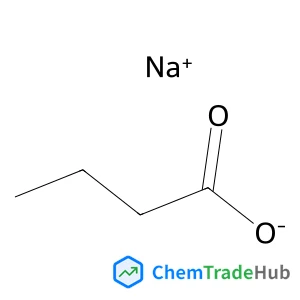
Sodium butyrate
CAS Number: 156-54-7


![4,4'-(2,2-Propanediyl)bis(2,6-dibromophenol) - 2,2'-{2,2-propanediylbis[(2,6-dibromo-4,1-phenylene)oxymethylene]}dioxirane (1:1)](https://static.chemtradehub.com/structs/689/68928-70-1-def5.webp)

Magnesium sulfate hydrate (1:1:1)
CAS Number: 14168-73-1


Magnesium tert-Butoxide
CAS Number: 32149-57-8

Dibenzyl (E)-1,2-diazenedicarboxylate
CAS Number: 2449-05-0
Other Suppliers for 2-nitro-4-(trifluoromethyl)benzonitrile




Basic Information
Molecular Formula
C8H3F3N2O2
Molecular Weight
216.12 g/mol
Physical Properties
Melting Point
44-47 °C (lit.)
Boiling Point
156-158 °C/18 mmHg(lit.)
Density
1.5604 (estimate)
Chemical Identifiers
SMILES
C1=CC(=C(C=C1C(F)(F)F)[N+](=O)[O-])C#N
InChIKey
BQCWLXXZTCLGSZ-UHFFFAOYSA-N
Database References
MDL Number
MFCD00014684
Beilstein Registry Number
1882259
FAQ
2-nitro-4-(trifluoromethyl)benzonitrile (CAS: 778-94-9) falls under the classification of a hazardous chemical. Regulatory guidelines include the Globally Harmonized System of Classification and Labelling of Chemicals (GHS), which applies in terms of physical hazards, health hazards, and environmental hazards. In the European Union, it is regulated under the Registration, Evaluation, Authorisation and Restriction of Chemicals (REACH) regulation. Additionally, for use in the United States, it is managed under the Toxic Substances Control Act (TSCA) and the Occupational Safety and Health Administration (OSHA) standards for workplace safety.
There are several alternatives to 2-nitro-4-(trifluoromethyl)benzonitrile in synthetic chemistry. Commonly used analogs include 2-(trifluoromethyl)benzonitrile or related substituted benzonitriles. For some applications, analogous compounds like 3-nitro-4-(trifluoromethyl)benzonitrile or 4-(trifluoromethyl)benzonitrile can serve as effective substitutes. These alternatives may offer similar functionality but with different electronic properties, which can be advantageous depending on the specific chemical reaction conditions.
The market for 2-nitro-4-(trifluoromethyl)benzonitrile (CAS: 778-94-9) is influenced by its widespread use in the synthesis of pharmaceuticals and agrochemicals. Recent research trends have focused on exploring its potential in medicinal chemistry, particularly in the development of new drugs. Market trends indicate a steady demand, driven by ongoing pharmaceutical and agricultural research. However, due to its hazardous nature, there is also a growing focus on developing safer alternatives and more sustainable synthetic routes.
Waste containing 2-nitro-4-(trifluoromethyl)benzonitrile (CAS: 778-94-9) should be managed according to environmental protection regulations. It is advisable to collect waste in sealed, labeled containers and ensure proper segregation from other waste streams. Disposal methods include incineration, chemical neutralization, or professional hazardous waste disposal services. Handling procedures should comply with GHS guidelines and local regulatory requirements to prevent environmental contamination and ensure worker safety. Proper waste management is crucial for minimizing the ecological impact of this compound.
Safety Notice
Please verify product specifications and safety data before use. Contact the supplier for detailed safety information.
Always follow proper handling procedures

Contact Information
Contact Person
Ms. Fe
3485543679@qq.com
Mobile
18662920632
Telephone
0513-66017275
Visit Website
https://www.raien.cn/Address
Yongdong Road No.5, Building 2, Unit 70, Nantong Development Zone