



AD
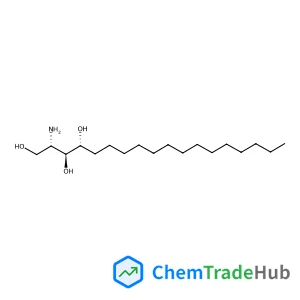
Phytosphingosine(CAS: 554-62-1)
CAS Number
Related Products
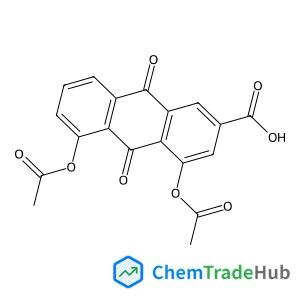
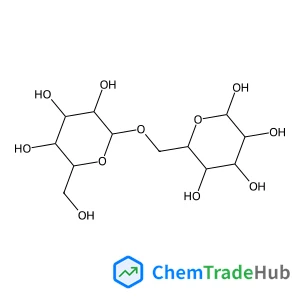
6-O-alpha-D-Glucopyranosyl-D-glucose
CAS Number: 499-40-1
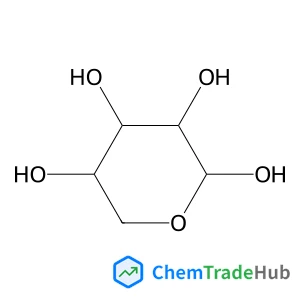
beta-L-Ribopyranose
CAS Number: 87-72-9
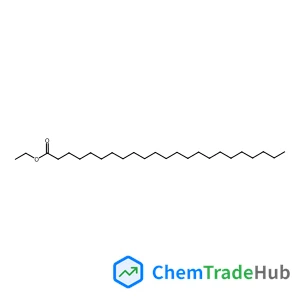
Ethyl tricosanoate
CAS Number: 18281-07-7
![8-{(1R)-1-[(3,5-Difluorophenyl)amino]ethyl}-N,N-dimethyl-2-(4-morpholinyl)-4-oxo-4H-chromene-6-carboxamide](https://static.chemtradehub.com/structs/162/1627494-13-6-1acf.webp)
![(4aR,4bS,6aS,7S,9aS,9bS,11aR)-N-[2,5-Bis(trifluoromethyl)phenyl]-4a,6a-dimethyl-2-oxo-2,4a,4b,5,6,6a,7,8,9,9a,9b,10,11,11a-tetradecahydro-1H-indeno[5,4-f]quinoline-7-carboxamide](https://static.chemtradehub.com/structs/164/164656-23-9-50bb.webp)
Other Suppliers for Phytosphingosine




Basic Information
Molecular Formula
C18H39NO3
Molecular Weight
317.51 g/mol
Physical State
No data available
Physical Properties
Melting Point
102°C(lit.)
Boiling Point
483.7±40.0 °C at 760 mmHg
Flash Point
246.4±27.3 °C
Chemical Identifiers
SMILES
CCCCCCCCCCCCCC[C@H]([C@H]([C@H](CO)N)O)O
InChIKey
AERBNCYCJBRYDG-KSZLIROESA-N
Database References
MDL Number
MFCD02259274
FAQ
Phytosphingosine (CAS: 554-62-1) is regulated by the Globally Harmonized System of Classification and Labeling of Chemicals (GHS), which requires hazard communication including safety data sheets (SDS) and appropriate labeling. It falls under the scope of REACH regulations for substances in the European Union, requiring registration with the European Chemicals Agency (ECHA). In the USA, the FDA and EPA require reporting of its use in cosmetic and pharmaceutical products, adhering to good manufacturing practices (GMP) and environmental regulations.
While Phytosphingosine (CAS: 554-62-1) is a valuable compound, alternatives such as other ceramides (e.g., Ceramide NP) or analogs like sphingosine can be used in synthesis. These alternatives offer similar properties and can serve as effective substitutes depending on the specific application. Common synthetic routes often involve using sphingosine and palmitic acid as starting materials.
Phytosphingosine (CAS: 554-62-1) is gaining significant attention in the market due to its skin-repairing properties, making it a key ingredient in cosmetic and pharmaceutical products. Research trends indicate a growing demand for natural and bioactive compounds in dermatology and skincare. Emerging studies are exploring its role in wound healing and anti-inflammatory applications, reflecting a positive market outlook.
Waste containing Phytosphingosine (CAS: 554-62-1) should be collected in appropriate, labeled containers and disposed of according to local regulations. For small quantities, neutralization and incineration are common disposal methods. Professional waste disposal services should be utilized for larger volumes or hazardous waste. Environmental precautions include preventing spills and ensuring proper storage to avoid contamination of soil and water.
Safety Notice
Please verify product specifications and safety data before use. Contact the supplier for detailed safety information.
Always follow proper handling procedures
Contact Information
Contact Person
Wen Jun
wen.jun@e-biochem.com
Mobile
18018625233
Visit Website
http://www.e-biochem.com/Address
No. 3408 Xiupu Road, Pudong New Area, Shanghai