



AD
2-Hydroxy-3-(3-methyl-2-buten-1-yl)-1,4-naphthoquinone(CAS: 84-79-7)
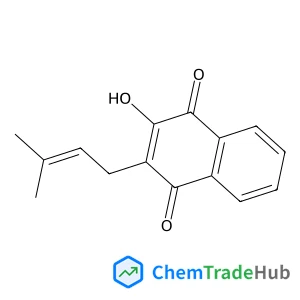
CAS Number
Related Products
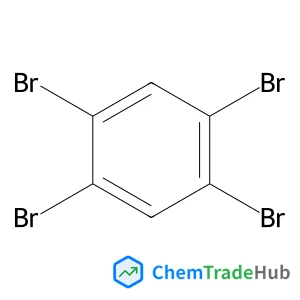
1,2,4,5-Tetrabromobenzene
CAS Number: 636-28-2
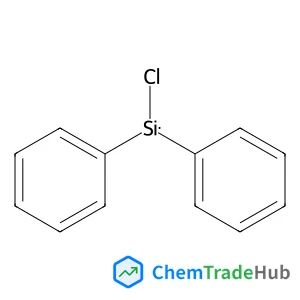
Chloro(diphenyl)silane
CAS Number: 1631-83-0
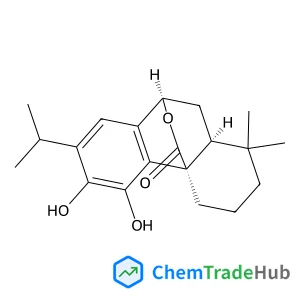
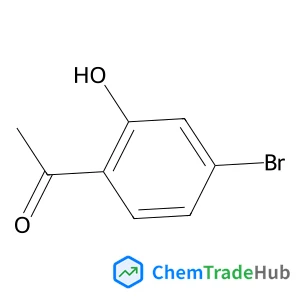
1-(4-Bromo-2-hydroxyphenyl)ethanone
CAS Number: 30186-18-6
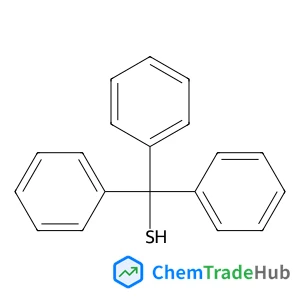
Triphenylmethanethiol
CAS Number: 3695-77-0
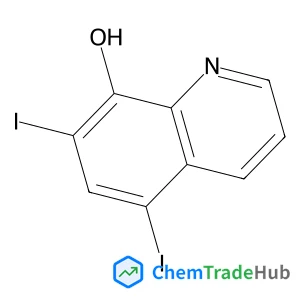
5,7-Diiodo-8-quinolinol
CAS Number: 83-73-8
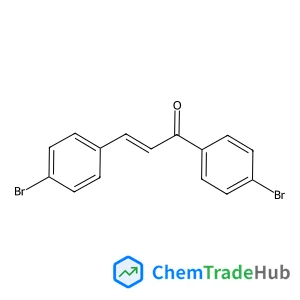
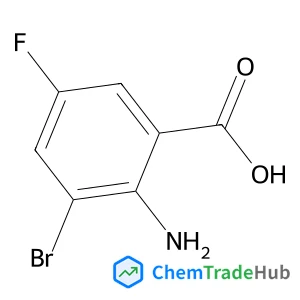
2-Amino-3-bromo-5-fluorobenzoic acid
CAS Number: 259269-84-6
Other Suppliers for 2-Hydroxy-3-(3-methyl-2-buten-1-yl)-1,4-naphthoquinone




Basic Information
Molecular Formula
C15H14O3
Molecular Weight
242.27 g/mol
Physical State
Yellow powder
Physical Properties
Melting Point
141-143 °C (lit.)
Boiling Point
398.6°C at 760 mmHg
Density
1.2077 (rough estimate)
Chemical Identifiers
SMILES
CC(=CCC1=C(O)C(=O)c2c(C1=O)cccc2)C
InChIKey
CIEYTVIYYGTCCI-UHFFFAOYSA-N
Database References
MDL Number
MFCD00001679
Beilstein Registry Number
2051889
FAQ
2-Hydroxy-3-(3-methyl-2-buten-1-yl)-1,4-naphthoquinone is a crystalline compound with a molecular weight of approximately 283.35 g/mol. It has poor water solubility but is soluble in common organic solvents like ethanol and acetone. This compound exhibits good reactivity, particularly in redox reactions, making it useful in various synthetic applications.
2-Hydroxy-3-(3-methyl-2-buten-1-yl)-1,4-naphthoquinone is typically synthesized via a multistep process involving the reaction of 3-methyl-1-butyne with 1,4-naphthoquinone, followed by hydroxylation. Common catalysts include palladium-based complexes, and the reaction yields around 85% of the target compound with good selectivity.
2-Hydroxy-3-(3-methyl-2-buten-1-yl)-1,4-naphthoquinone finds applications in pharmaceuticals, where it is used as a precursor for drug synthesis, and in the semiconductor industry, where it serves as a dopant material. It is also utilized in polymer and sensor applications due to its unique chemical properties.
When handling 2-Hydroxy-3-(3-methyl-2-buten-1-yl)-1,4-naphthoquinone, it is essential to use appropriate personal protective equipment (PPE) such as gloves, goggles, and a lab coat. Work should be performed in a well-ventilated area or a fume hood. In case of spillage, the area should be flushed with water, and the spill should be cleaned up with appropriate absorbent materials. Always refer to the Safety Data Sheet (SDS) for detailed handling and storage information.
Safety Notice
Please verify product specifications and safety data before use. Contact the supplier for detailed safety information.
Always follow proper handling procedures
Contact Information
Contact Person
Liu
2148545164@qq.com