AD
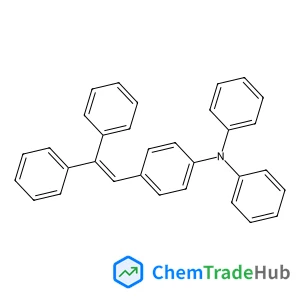
4-(2,2-diphenylethenyl)-N,N-diphenylaniline(CAS: 89114-90-9)
CAS Number
Related Products
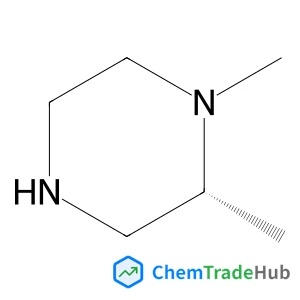
(2R)-1,2-Dimethylpiperazine
CAS Number: 623586-02-7
![(2S)-4-Hydroxy-7-(hydroxymethyl)-2-(2-hydroxy-2-propanyl)-2,3-dihydro-5H-furo[3,2-g]chromen-5-one](https://static.chemtradehub.com/structs/496/49624-66-0-7116.webp)
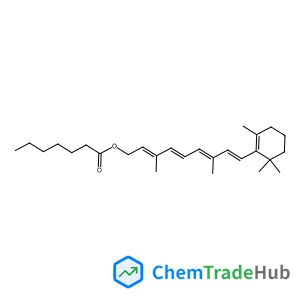
O~15~-Heptanoylretinol
CAS Number: 88641-44-5
![1-Methoxy-2-[1-(4-methoxyphenyl)propyl]benzene](https://static.chemtradehub.com/structs/334/33451-22-8-2ef2.webp)
CAS Number: 1350524-27-4
Other Suppliers for 4-(2,2-diphenylethenyl)-N,N-diphenylaniline



Basic Information
Molecular Formula
C32H25N
Molecular Weight
423.56 g/mol
EINECS
421-390-2
Physical Properties
Melting Point
100-101°C
Boiling Point
558.8±29.0 °C(Predicted)
Density
1.143±0.06 g/cm3(Predicted)
Chemical Identifiers
SMILES
C1=CC=C(C=C1)C(=CC2=CC=C(C=C2)N(C3=CC=CC=C3)C4=CC=CC=C4)C5=CC=CC=C5
InChIKey
NIZIGUQDQIALBQ-UHFFFAOYSA-N
Database References
MDL Number
MFCD00269981
FAQ
4-(2,2-diphenylethenyl)-N,N-diphenylaniline (CAS: 89114-90-9) is subject to various regulatory guidelines. Under the Globally Harmonized System of Classification and Labelling of Chemicals (GHS), it may be classified based on its physical and chemical properties. In the European Union, it is regulated under REACH for registration, evaluation, authorization, and restriction of chemicals. For use in the United States, it may fall under the jurisdiction of the FDA for pharmaceutical applications and the EPA for environmental protection and safety.
Yes, there are alternatives to 4-(2,2-diphenylethenyl)-N,N-diphenylaniline (CAS: 89114-90-9) in synthesis, such as other anilines or substituted anilines that can be used for similar applications. Common alternative reagents include 2,2'-diphenylethylenediamine and related compounds. These alternatives can offer similar or different functional properties based on the specific requirements of the synthesis.
The market for 4-(2,2-diphenylethenyl)-N,N-diphenylaniline (CAS: 89114-90-9) is driven by its use in organic synthesis, pharmaceuticals, and dyes. Research trends indicate a focus on developing more efficient synthesis methods and exploring its applications in new fields such as materials science and photovoltaic technology. Market trends suggest steady demand with potential for growth in emerging applications.
Waste containing 4-(2,2-diphenylethenyl)-N,N-diphenylaniline (CAS: 89114-90-9) should be collected in appropriate containers and disposed of according to local regulations. Incineration is a common method for disposal, but professional waste disposal services may be necessary for handling larger quantities or when environmental protection is a concern. Proper environmental precautions, including the use of personal protective equipment, should be taken during handling and disposal to prevent contamination and ensure safety.
Safety Notice
Please verify product specifications and safety data before use. Contact the supplier for detailed safety information.
Always follow proper handling procedures