



AD
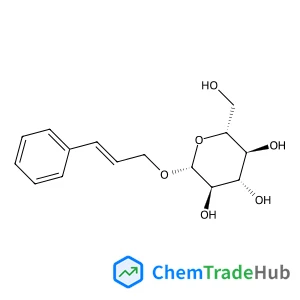
(2E)-3-Phenyl-2-propen-1-yl beta-D-glucopyranoside(CAS: 85026-55-7)
CAS Number
Related Products
![Imidazolium compounds, 1-[2-(carboxymethoxy)ethyl]-1-(carboxymethyl)-4,5-dihydro-2-norcoco alkyl, hydroxides, sodium salts](https://static.chemtradehub.com/structs/686/68650-39-5-80bb.webp)
![5-[1-Hydroxy-2-(2,4,5-trifluorophenyl)ethylidene]-2,2-dimethyl-1,3-dioxane-4,6-dione](https://static.chemtradehub.com/structs/764/764667-64-3-57f2.webp)

1H,1H-Perfluorohexan-1-ol
CAS Number: 423-46-1
![3-Hydroxy-5-[(E)-2-(4-hydroxyphenyl)vinyl]phenyl beta-D-glucopyranoside](https://static.chemtradehub.com/structs/272/27208-80-6-025b.webp)
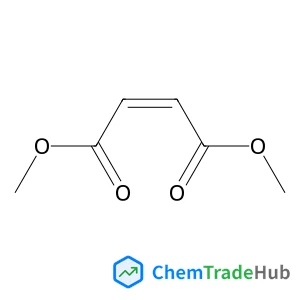
Dimethyl (2Z)-2-butenedioate
CAS Number: 624-48-6
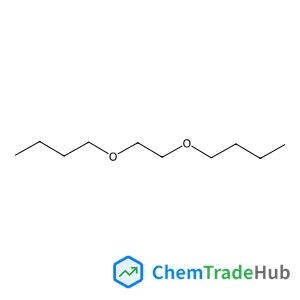
1-(2-Butoxyethoxy)butane
CAS Number: 112-48-1
Other Suppliers for (2E)-3-Phenyl-2-propen-1-yl beta-D-glucopyranoside

Basic Information
Molecular Formula
C15H20O6
Molecular Weight
296.32 g/mol
Physical State
Powder
Physical Properties
Melting Point
75-81 °C
Boiling Point
542.4 °C at 760 mmHg
Density
1.36
Flash Point
180 °C
Chemical Identifiers
SMILES
c1ccc(cc1)/C=C/CO[C@H]2[C@@H]([C@H]([C@@H]([C@H](O2)CO)O)O)O
InChIKey
KHPCPRHQVVSZAH-GUNCLKARSA-N
Database References
MDL Number
MFCD23103373
FAQ
This compound, with the CAS number 85026-55-7, is a naturally occurring glycoside derived from plant sources. It is characterized by a beta-D-glucopyranoside sugar moiety linked to a phenylpropenyl group through an ether bond. The compound exhibits specific stereochemistry, with the (2E) configuration indicating the double bond is in the trans form. It is commonly used in biochemical research and has potential applications in drug development due to its structural complexity and reactivity.
The compound is primarily used in pharmaceutical research for studying its biological activity and potential therapeutic applications. It also finds use in organic synthesis as a building block for more complex molecules. Additionally, it is relevant in the food industry for its natural occurrence in certain plant extracts and is utilized in research related to natural products and their medicinal properties.
As a naturally occurring compound, (2E)-3-Phenyl-2-propen-1-yl beta-D-glucopyranoside is generally considered safe in appropriate concentrations. However, proper handling is necessary, especially in laboratory settings, to avoid skin and eye contact. It should be stored in a well-ventilated area and handled with gloves and safety goggles. Safety standards for this compound are typically aligned with those for similar organic compounds, emphasizing personal protective equipment and safe disposal practices.
This compound should be stored in a cool, dry, and dark place, ideally at temperatures below 25°C. It is sensitive to moisture and light, so it should be kept in a sealed container with desiccant and away from direct sunlight. To maintain stability, it is recommended to store it in a container made of inert material, such as glass or polyethylene, and to avoid exposure to air and potential contaminants.
Safety Notice
Please verify product specifications and safety data before use. Contact the supplier for detailed safety information.
Always follow proper handling procedures

Contact Information
1438980033@qq.com
Mobile
18702762251
Telephone
027-59322506
Fax
QQ联系更方便:QQ:1438980033、1400848833
Visit Website
http://www.qf-api.com