



AD
Didymin(CAS: 14259-47-3)
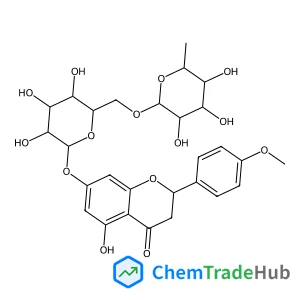
CAS Number
Related Products
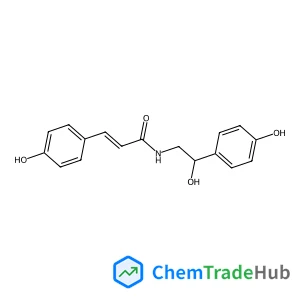
N-trans-p-Coumaroyloctopamine
CAS Number: 66648-45-1
![4-Methoxy-9-[(3-methyl-2-buten-1-yl)oxy]-7H-furo[3,2-g]chromen-7-one](https://static.chemtradehub.com/structs/254/2543-94-4-bdf7.webp)
![(1S)-1,5-Anhydro-1-[2-(3,4-dihydroxyphenyl)-5-hydroxy-7-methoxy-4-oxo-4H-chromen-6-yl]-D-glucitol](https://static.chemtradehub.com/structs/698/6980-25-2-6af2.webp)
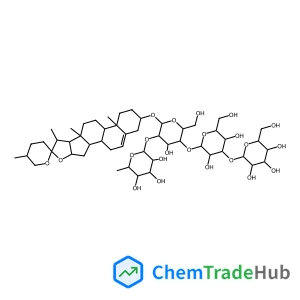
Zingiberensis saponin I
CAS Number: 91653-50-8
![7-[(6-Deoxy-alpha-L-mannopyranosyl)oxy]-5-hydroxy-2-(4-hydroxy-3-methoxyphenyl)-4-oxo-4H-chromen-3-yl 2-O-beta-D-glucopyranosyl-beta-D-glucopyranoside](https://static.chemtradehub.com/structs/413/41328-75-0-438e.webp)
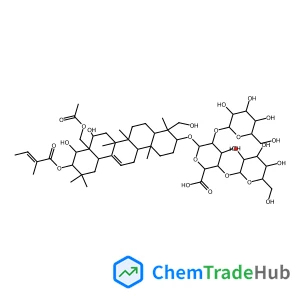
Isoescin IA
CAS Number: 219944-39-5
![7-Hydroxy-3,8-dimethoxy-5,10-dioxo-5,10-dihydrochromeno[5,4,3-cde]chromen-2-yl beta-D-glucopyranoside](https://static.chemtradehub.com/structs/518/51803-68-0-dcd0.webp)
![3,9-Dihydroxy-1-methoxy-2-(3-methyl-2-buten-1-yl)-6H-[1]benzofuro[3,2-c]chromen-6-one](https://static.chemtradehub.com/structs/230/23013-84-5-825f.webp)
Other Suppliers for Didymin




Basic Information
Molecular Formula
C28H34O14
Molecular Weight
594.57 g/mol
Physical State
Powder
Physical Properties
Melting Point
211-213°C
Boiling Point
896.6 ℃ at 760 mmHg
Chemical Identifiers
SMILES
CC1C(C(C(C(O1)OCC2C(C(C(C(O2)OC3=CC(=C4C(=O)CC(OC4=C3)C5=CC=C(C=C5)OC)O)O)O)O)O)O)O
InChIKey
RMCRQBAILCLJGU-HIBKWJPLSA-N
Database References
MDL Number
MFCD00151177
FAQ
Didymin, with the CAS number 14259-47-3, is a synthetic compound used primarily in pharmaceutical and industrial applications. It has the chemical formula C17H16N2O2 and is known for its ability to form complexes with metal ions. Didymin is typically a white to off-white crystalline solid with moderate solubility in organic solvents. It exhibits stability under normal conditions but may degrade when exposed to extreme temperatures or moisture.
Didymin (CAS: 14259-47-3) is mainly used in pharmaceuticals as a ligand for metal-based drugs, enhancing their efficacy and bioavailability. It also finds applications in industrial processes, particularly in catalysis and material synthesis. In research settings, Didymin is utilized for studying coordination chemistry and as a reagent in various organic reactions. Additionally, it is sometimes used in the food industry as a flavor enhancer, though this application is less common.
Didymin (CAS: 14259-47-3) is generally considered safe when handled properly, but it should be used with caution. It is not classified as highly toxic, but prolonged exposure may cause irritation to the skin and eyes. Safety data sheets recommend using protective gloves and goggles when working with Didymin. It is important to follow standard safety protocols to ensure safe handling and minimize any potential health risks.
Didymin (CAS: 14259-47-3) should be stored in a cool, dry, and well-ventilated area away from direct sunlight. It is best kept in a sealed container to prevent moisture absorption and contamination. Storage at temperatures below 25°C is recommended to maintain its stability and prevent degradation. Avoid exposure to incompatible substances to ensure long-term safety and effectiveness.
Safety Notice
Please verify product specifications and safety data before use. Contact the supplier for detailed safety information.
Always follow proper handling procedures
Contact Information
sales@bioarethusa.com