



AD
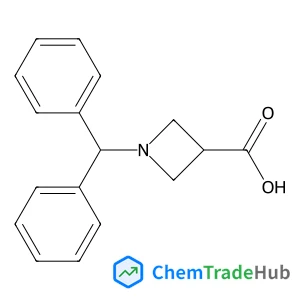
1-(Diphenylmethyl)-3-azetidinecarboxylic acid(CAS: 36476-87-6)
CAS Number
Related Products
![[(3R,11S,17S,20S,25aS)-11-(4-Carbamimidamidobutyl)-3-carbamoyl-20-(1H-indol-3-ylmethyl)-1,9,12,15,18,21-hexaoxodocosahydro-7H-pyrrolo[2,1-g][1,2,5,8,11,14,17,20]dithiahexaazacyclotricosin-17-yl]acetic
acid](https://static.chemtradehub.com/structs/188/188627-80-7-15c6.webp)
![[1-(Ethylsulfonyl)-3-azetidinylidene]acetonitrile](https://static.chemtradehub.com/structs/118/1187595-85-2-c54e.webp)
![O-(2-Methyl-2-propanyl)-N-{[(2-methyl-2-propanyl)oxy]carbonyl}-L-serine](https://static.chemtradehub.com/structs/137/13734-38-8-481c.webp)
![(3S,6S,9R,12S,15S,23S)-15-[(N-Acetyl-L-norleucyl)amino]-9-benzyl-6-{3-[(diaminomethylene)amino]propyl}-12-(1H-imidazol-5-ylmethyl)-3-(1H-indol-3-ylmethyl)-2,5,8,11,14,17-hexaoxo-1,4,7,10,13,18-hexaaza
cyclotricosane-23-carboxamide](https://static.chemtradehub.com/structs/121/121062-08-6-a5f3.webp)
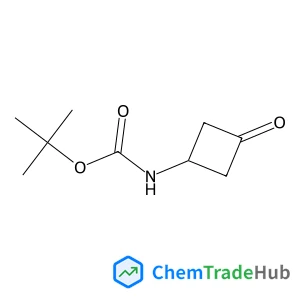
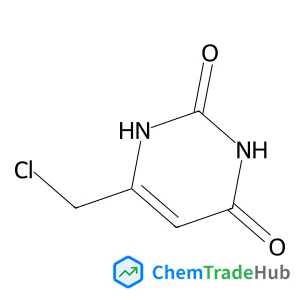
Other Suppliers for 1-(Diphenylmethyl)-3-azetidinecarboxylic acid







Basic Information
Molecular Formula
C17H17NO2
Molecular Weight
267.33 g/mol
Physical State
White to Yellow Solid
Physical Properties
Melting Point
198°C(dec.)(lit.)
Boiling Point
410.2 ℃ at 760 mmHg
Density
1.235
Flash Point
201.9℃
Chemical Identifiers
SMILES
C1C(CN1C(C2=CC=CC=C2)C3=CC=CC=C3)C(=O)O
InChIKey
BRSCYENHLCPOAU-UHFFFAOYSA-N
Database References
MDL Number
MFCD01566539
FAQ
What regulatory guidelines apply to 1-(Diphenylmethyl)-3-azetidinecarboxylic acid (CAS: 36476-87-6)?
1-(Diphenylmethyl)-3-azetidinecarboxylic acid (CAS: 36476-87-6) is subject to various regulatory guidelines such as GHS for classification and labeling, REACH for registration, evaluation, and authorization of chemicals in the European Union, and FDA/EPA requirements for safety and environmental protection. Companies using or manufacturing this compound must comply with these regulations and follow proper handling and disposal practices.
Alternatives to 1-(Diphenylmethyl)-3-azetidinecarboxylic acid (CAS: 36476-87-6) in synthesis include other azetidine derivatives or similar compounds, which can serve as functional analogs. Common reagents and alternative compounds often used include substituted azetidines and their derivatives, which can be effective substitutes depending on the specific application and desired properties.
The market for 1-(Diphenylmethyl)-3-azetidinecarboxylic acid (CAS: 36476-87-6) is driven by its applications in pharmaceuticals, agrochemicals, and other industries. Research trends focus on developing new derivatives with improved properties, such as enhanced biological activity or better pharmacokinetic profiles. The compound's unique structure makes it a subject of interest in exploring new chemical spaces and applications.
Waste containing 1-(Diphenylmethyl)-3-azetidinecarboxylic acid (CAS: 36476-87-6) should be handled according to specific waste management guidelines, including collection in appropriate containers, labeling with hazardous waste symbols, and safe transport to an authorized treatment facility. Proper disposal methods may include incineration or professional chemical waste disposal services to ensure environmental safety and compliance with regulations.
Safety Notice
Please verify product specifications and safety data before use. Contact the supplier for detailed safety information.
Always follow proper handling procedures