AD
Tetrakis(acetonitrile)palladium Bis(tetrafluoroborate)(CAS: 21797-13-7)
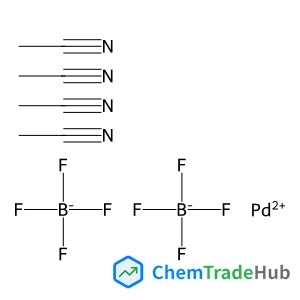
CAS Number
Related Products
![(2R)-2,7,8-Trimethyl-2-[(4R,8R)-4,8,12-trimethyltridecyl]-6-chromanol](https://static.chemtradehub.com/structs/54-/54-28-4-155c.webp)
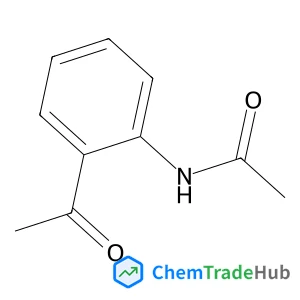
N-(2-Acetylphenyl)acetamide
CAS Number: 5234-26-4
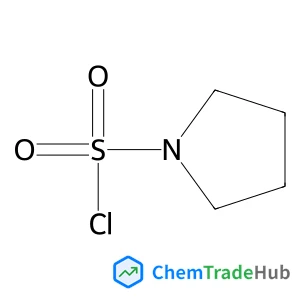
1-Pyrrolidinesulfonyl chloride
CAS Number: 1689-02-7
![3-Hexyl-2-[3-(3-hexyl-1,3-benzoxazol-2(3H)-ylidene)-1-propen-1-yl]-1,3-benzoxazol-3-ium iodide](https://static.chemtradehub.com/structs/532/53213-82-4-e483.webp)

4-Bromoaniline hydrochloride (1:1)
CAS Number: 624-19-1

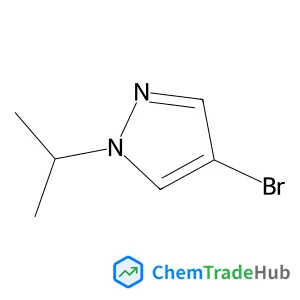
4-Bromo-1-isopropyl-1H-pyrazole
CAS Number: 313735-62-5

Other Suppliers for Tetrakis(acetonitrile)palladium Bis(tetrafluoroborate)





Basic Information
Molecular Formula
C8H12B2F8N4Pd
Molecular Weight
30.07 g/mol
Physical Properties
Melting Point
230 °C (dec.) (lit.)
Water Solubility
Soluble in water
Chemical Identifiers
SMILES
[B-](F)(F)(F)F.[B-](F)(F)(F)F.CC#N.CC#N.CC#N.CC#N.[Pd+2]
InChIKey
OTMSDBZUPAUEDD-UHFFFAOYSA-N
Database References
MDL Number
MFCD00043297
FAQ
Tetrakis(acetonitrile)palladium Bis(tetrafluoroborate) is a solid with a crystalline form. Its molecular weight is approximately 624.2 g/mol. It is poorly soluble in water but soluble in organic solvents like acetonitrile. Chemically, it is a complex compound with palladium and tetrafluoroborate ions, showing low reactivity under normal conditions but high catalytic activity in certain reactions.
Tetrakis(acetonitrile)palladium Bis(tetrafluoroborate) is typically synthesized by reacting palladium(II) tetrafluoroborate with acetonitrile in the presence of a fluoride source. The reaction is carried out under anhydrous conditions to avoid hydrolysis. This method provides good yields and high selectivity for the desired product.
Tetrakis(acetonitrile)palladium Bis(tetrafluoroborate) is used in industries such as pharmaceuticals for catalytic reactions in organic synthesis, polymers for improving the efficiency of polymerization processes, and sensors for catalytic reduction reactions. It is also relevant in semiconductor manufacturing for specific catalytic applications.
When handling Tetrakis(acetonitrile)palladium Bis(tetrafluoroborate), it is important to use appropriate personal protective equipment (PPE) such as gloves, goggles, and a lab coat. Work should be conducted in a fume hood due to its potential for generating toxic fumes. Spills should be handled carefully, and the Material Safety Data Sheet (MSDS) should be referenced for specific cleanup procedures. Storage should be in a cool, dry place away from incompatible materials.
Safety Notice
Please verify product specifications and safety data before use. Contact the supplier for detailed safety information.
Always follow proper handling procedures