



AD
DIRECT BLUE 15(CAS: 2429-74-5)
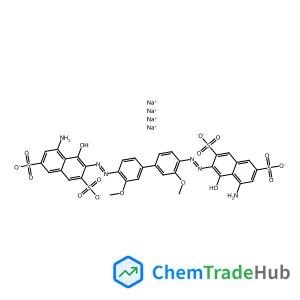
CAS Number
Related Products
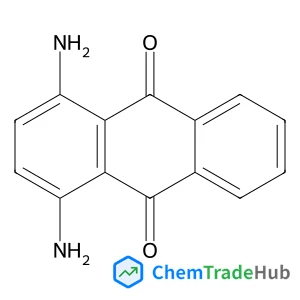
1,4-Diamino-9,10-anthraquinone
CAS Number: 128-95-0
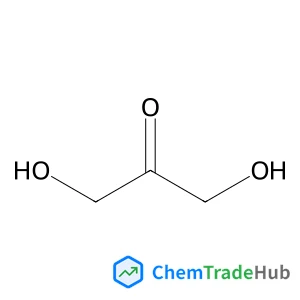
Dihydroxyacetone
CAS Number: 96-26-4
![3-Oxaspiro[5.5]undecane-2,4-dione](https://static.chemtradehub.com/structs/101/1010-26-0-8f72.webp)
3-Oxaspiro[5.5]undecane-2,4-dione
CAS Number: 1010-26-0
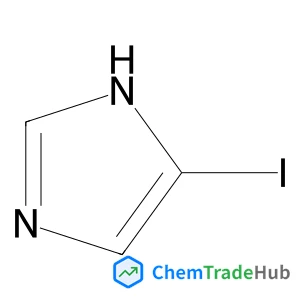
4-Iodo-1H-imidazole
CAS Number: 71759-89-2
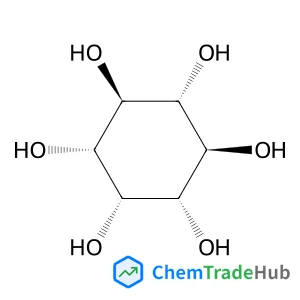
![2-Methyl-N-{[(2-methyl-2-propanyl)oxy]carbonyl}alanine](https://static.chemtradehub.com/structs/309/30992-29-1-b00d.webp)
![(1R,5R)-2,6,6-Trimethylbicyclo[3.1.1]hept-2-ene](https://static.chemtradehub.com/structs/80-/80-56-8-97d7.webp)
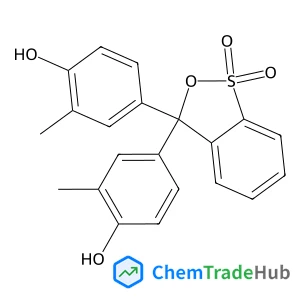
Other Suppliers for DIRECT BLUE 15





Basic Information
Molecular Formula
C34H24N6Na4O16S4
Molecular Weight
992.8 g/mol
Physical Properties
Boiling Point
°Cat760mmHg
Flash Point
°C
Chemical Identifiers
SMILES
COC1=C(C=CC(=C1)C2=CC(=C(C=C2)N=NC3=C(C4=C(C=C(C=C4C=C3S(=O)(=O)[O-])S(=O)(=O)[O-])N)O)OC)N=NC5=C(C6=C(C=C(C=C6C=C5S(=O)(=O)[O-])S(=O)(=O)[O-])N)O.[Na+].[Na+].[Na+].[Na+]
InChIKey
OLSOUGWNONTDCK-UHFFFAOYSA-J
Database References
MDL Number
MFCD00036441
FAQ
DIRECT BLUE 15 (CAS: 2429-74-5) is classified as a hazardous substance under the Globally Harmonized System of Classification and Labelling of Chemicals (GHS). It falls under the category of toxic (T) and is subject to REACH regulations in the European Union. In the United States, it is regulated by the FDA for use in food coloring and by the EPA for environmental protection. Compliance with local regulations is essential for its safe handling and disposal.
Yes, there are several alternatives to DIRECT BLUE 15 (CAS: 2429-74-5) in dye synthesis. Common substitutes include other direct dyes like C.I. Direct Blue 25 and C.I. Direct Blue 60. These alternatives offer similar color properties but may vary in solubility, lightfastness, and cost. Researchers often choose based on specific application requirements and market trends.
The market for DIRECT BLUE 15 (CAS: 2429-74-5) has shown steady growth due to its wide application in textile dyeing. Recent research trends focus on developing more sustainable and eco-friendly dyes to address environmental concerns. Additionally, there is increasing interest in the development of high-performance dyes with improved color stability and reduced environmental impact.
Waste containing DIRECT BLUE 15 (CAS: 2429-74-5) should be collected in designated containers and properly labeled. The waste should be managed according to local regulations, often requiring professional disposal. Incineration is one method, but it must be conducted in an environmentally safe manner. For small-scale operations, neutralization followed by incineration or landfilling may be appropriate, ensuring compliance with environmental protection standards and minimizing environmental impact.
Safety Notice
Please verify product specifications and safety data before use. Contact the supplier for detailed safety information.
Always follow proper handling procedures
Contact Information
Contact Person
Wu Xuejiao
3509784745@qq.com