



AD
(2,4-Dichlorophenyl)(phenyl)methanone(CAS: 19811-05-3)
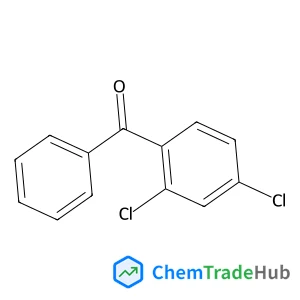
CAS Number
Related Products
![(2R)-2,7,8-Trimethyl-2-[(4R,8R)-4,8,12-trimethyltridecyl]-6-chromanol](https://static.chemtradehub.com/structs/54-/54-28-4-155c.webp)
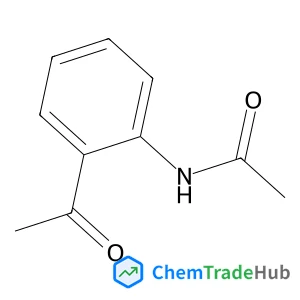
N-(2-Acetylphenyl)acetamide
CAS Number: 5234-26-4
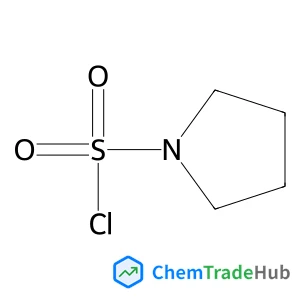
1-Pyrrolidinesulfonyl chloride
CAS Number: 1689-02-7
![3-Hexyl-2-[3-(3-hexyl-1,3-benzoxazol-2(3H)-ylidene)-1-propen-1-yl]-1,3-benzoxazol-3-ium iodide](https://static.chemtradehub.com/structs/532/53213-82-4-e483.webp)
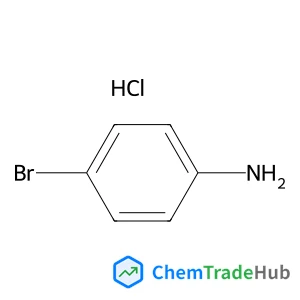
4-Bromoaniline hydrochloride (1:1)
CAS Number: 624-19-1
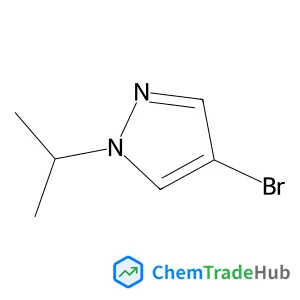
4-Bromo-1-isopropyl-1H-pyrazole
CAS Number: 313735-62-5
Other Suppliers for (2,4-Dichlorophenyl)(phenyl)methanone









Basic Information
Molecular Formula
C13H8Cl2O
Molecular Weight
251.11 g/mol
Physical Properties
Melting Point
45.0 to 49.0 deg-C
Chemical Identifiers
SMILES
C1=CC=C(C=C1)C(=O)C2=C(C=C(C=C2)Cl)Cl
InChIKey
VLTYTTRXESKBKI-UHFFFAOYSA-N
Database References
MDL Number
MFCD00018374
FAQ
The compound (2,4-Dichlorophenyl)(phenyl)methanone (CAS: 19811-05-3) falls under the GHS classification as a hazardous chemical due to its potential hazards. It is regulated under REACH in the European Union, requiring registration and reporting of substances above a certain tonnage. Additionally, the FDA and EPA have specific guidelines for the handling, transportation, and disposal of this compound in the United States, focusing on environmental safety and human health protection.
In the synthesis of (2,4-Dichlorophenyl)(phenyl)methanone (CAS: 19811-05-3), several alternatives can be considered. Analogous compounds such as (2,4-Dichlorophenyl)(phenyl)methanamine or isomers of similar structures can be used to achieve similar functionalities. Common alternative reagents include chloroacetyl chloride or chloroacetic acid, which can serve as effective substitutes in the synthesis process.
The market and research trends for (2,4-Dichlorophenyl)(phenyl)methanone (CAS: 19811-05-3) indicate increasing demand in the pharmaceutical and agrochemical industries due to its potential as a precursor in the synthesis of certain drugs and pesticides. Emerging research focuses on its use in developing novel compounds with improved properties. However, there is a growing emphasis on sustainability and environmental impact, pushing for greener alternatives and better waste management practices.
Waste containing (2,4-Dichlorophenyl)(phenyl)methanone (CAS: 19811-05-3) should be handled with strict adherence to environmental protection guidelines. It is advisable to collect waste liquids in appropriate containers and ensure they are properly labeled. For solid waste, encapsulation or incineration can be used, with professional waste disposal services recommended. Environmental precautions include minimizing the release of harmful substances into the environment and adhering to local regulations for safe disposal.
Safety Notice
Please verify product specifications and safety data before use. Contact the supplier for detailed safety information.
Always follow proper handling procedures
