AD
5-Bromo-2-iodo-3-methoxypyrazine(CAS: 476622-89-6)

CAS Number
Related Products
![(2R)-2,7,8-Trimethyl-2-[(4R,8R)-4,8,12-trimethyltridecyl]-6-chromanol](https://static.chemtradehub.com/structs/54-/54-28-4-155c.webp)

N-(2-Acetylphenyl)acetamide
CAS Number: 5234-26-4
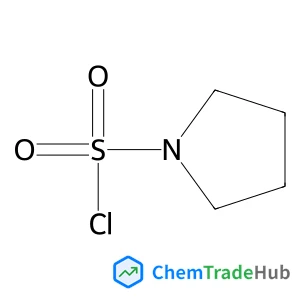
1-Pyrrolidinesulfonyl chloride
CAS Number: 1689-02-7
![3-Hexyl-2-[3-(3-hexyl-1,3-benzoxazol-2(3H)-ylidene)-1-propen-1-yl]-1,3-benzoxazol-3-ium iodide](https://static.chemtradehub.com/structs/532/53213-82-4-e483.webp)

4-Bromoaniline hydrochloride (1:1)
CAS Number: 624-19-1


4-Bromo-1-isopropyl-1H-pyrazole
CAS Number: 313735-62-5


Other Suppliers for 5-Bromo-2-iodo-3-methoxypyrazine






Basic Information
Molecular Formula
C5H4BrIN2O
Molecular Weight
314.91 g/mol
Physical Properties
Melting Point
108-109°C
Chemical Identifiers
SMILES
COC1=NC(=CN=C1I)Br
InChIKey
NUOPFUYHRPYSNY-UHFFFAOYSA-N
Database References
MDL Number
MFCD09909688
FAQ
Regulatory guidelines for 5-Bromo-2-iodo-3-methoxypyrazine (CAS: 476622-89-6) include GHS classification, which categorizes it as a hazardous chemical. Under REACH regulations, it is classified as a substance of very high concern due to its potential carcinogenicity. The FDA and EPA may also have specific requirements for handling and storage, especially in laboratory settings. Compliance with these regulations is essential for safe handling and disposal.
There are several alternatives to 5-Bromo-2-iodo-3-methoxypyrazine (CAS: 476622-89-6) that can be used in synthesis, such as isomeric pyrazines and related heterocycles. Common alternative reagents include bromoiodomethane and other halogenated methanes. These alternatives may offer similar functional groups but with different chemical properties, making them suitable for specific synthetic routes.
The market and research trends for 5-Bromo-2-iodo-3-methoxypyrazine (CAS: 476622-89-6) are focused on its potential applications in pharmaceuticals and agrochemicals. Recent studies have explored its use as a precursor in medicinal chemistry, particularly in the development of new drugs. Research is also investigating its role in flavor and fragrance industries, though the market remains relatively niche due to its complexity and reactivity.
Waste containing 5-Bromo-2-iodo-3-methoxypyrazine (CAS: 476622-89-6) should be collected in appropriate containers and stored in a well-ventilated area. Incineration is a common method for disposal, but professional waste disposal services are recommended for large quantities. Environmental protection precautions include minimizing the release of fumes and ensuring that waste is handled in accordance with local regulations, particularly those related to hazardous waste management.
Safety Notice
Please verify product specifications and safety data before use. Contact the supplier for detailed safety information.
Always follow proper handling procedures