



AD
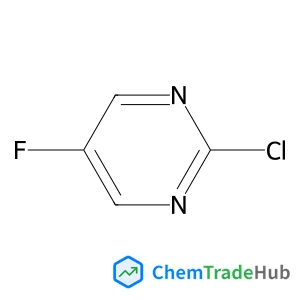
2-Chloro-5-fluoropyrimidine(CAS: 62802-42-0)
CAS Number
Related Products
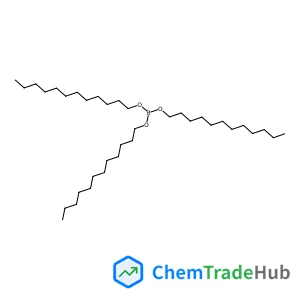
Tridodecyl borate
CAS Number: 2467-15-4
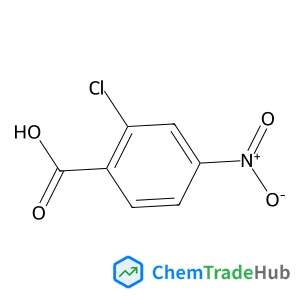
2-Chloro-4-nitrobenzoic Acid
CAS Number: 99-60-5
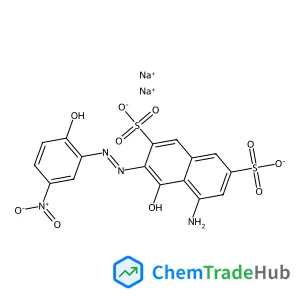
PALATINE CHROME GREEN
CAS Number: 3564-28-1
![[4-(Methylsulfanyl)phenyl]methanol](https://static.chemtradehub.com/structs/344/3446-90-0-3dde.webp)
[4-(Methylsulfanyl)phenyl]methanol
CAS Number: 3446-90-0
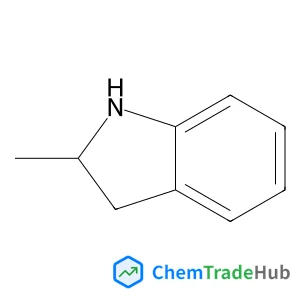
2-Methylindoline
CAS Number: 6872-06-6
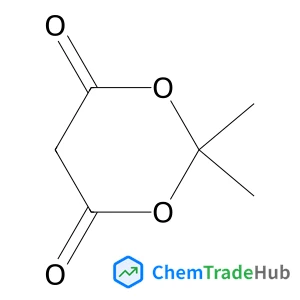
2,2-Dimethyl-1,3-dioxane-4,6-dione
CAS Number: 2033-24-1
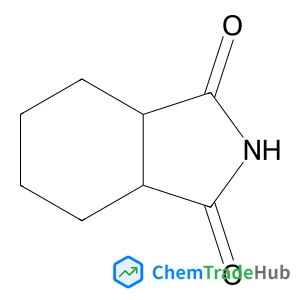
Hexahydro-1H-isoindole-1,3(2H)-dione
CAS Number: 1444-94-6
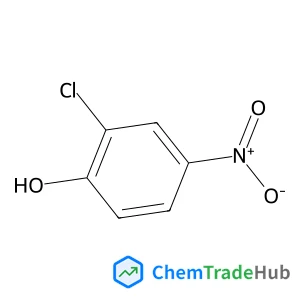
2-Chloro-4-nitrophenol
CAS Number: 619-08-9
Other Suppliers for 2-Chloro-5-fluoropyrimidine




Basic Information
Molecular Formula
C4H2ClFN2
Molecular Weight
132.53 g/mol
Physical State
Colorless to Yellow Liquid
Physical Properties
Boiling Point
94°C/75mmHg(lit.)
Density
1.439 g/mL at 20 °C(lit.)
Chemical Identifiers
SMILES
C1=C(C=NC(=N1)Cl)F
InChIKey
AGYUQBNABXVWMS-UHFFFAOYSA-N
Database References
MDL Number
MFCD03788197
FAQ
2-Chloro-5-fluoropyrimidine is a white to off-white crystalline solid with a molecular weight of approximately 166.01 g/mol. It is slightly soluble in water but soluble in common organic solvents like ethanol and acetone. The compound shows moderate reactivity towards nucleophiles and is prone to substitution reactions. It has a melting point of around 120-125°C and decomposes above 150°C.
2-Chloro-5-fluoropyrimidine can be synthesized via alkylation of 5-bromo-2-chloropyrimidine with 9-fluorenylmethyl chloroformate followed by fluoride attack using potassium fluoride. This method provides good yield and control over the fluorine substitution. Other routes involve the use of trifluoromethylation of 2-chloropyrimidine derivatives.
2-Chloro-5-fluoropyrimidine finds application in the pharmaceutical industry as an intermediate for drug synthesis. It is also used in the development of organic semiconductors and as a reagent in polymer chemistry for its unique electronic properties. Additionally, it is explored in the sensor technology sector for specific chemical detection capabilities.
When handling 2-Chloro-5-fluoropyrimidine, appropriate personal protective equipment (PPE) such as gloves, goggles, and a lab coat should be worn. Work should be conducted in a well-ventilated area or a fume hood to minimize inhalation risk. Spills should be cleaned up using spill kits and decontamination solutions. Always refer to the Safety Data Sheet (SDS) for detailed handling and disposal instructions.
Safety Notice
Please verify product specifications and safety data before use. Contact the supplier for detailed safety information.
Always follow proper handling procedures
Contact Information
hbzlkschem2009@163.com