



AD
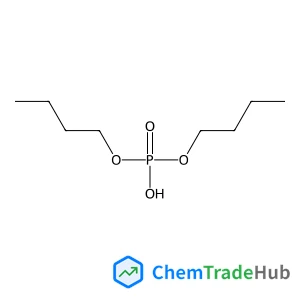
Dibutyl hydrogen phosphate(CAS: 107-66-4)
CAS Number
Related Products
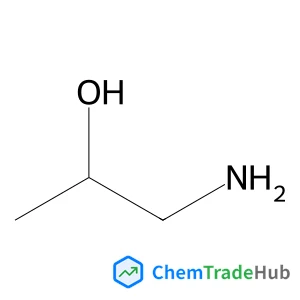
1-Amino-2-propanol
CAS Number: 78-96-6
![1-({1-[(1-Methoxy-2-propanyl)oxy]-2-propanyl}oxy)-2-propanol](https://static.chemtradehub.com/structs/203/20324-33-8-243e.webp)
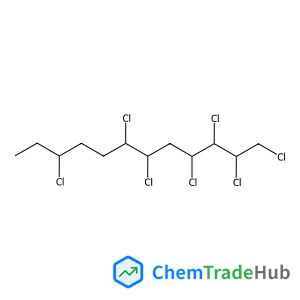
Chlorinated Paraffin
CAS Number: 106232-86-4
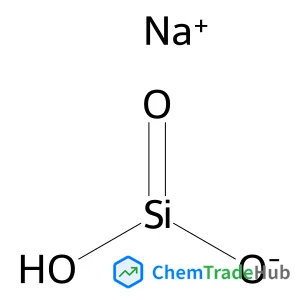
Sodium hydroxy(oxo)silanolate
CAS Number: 1344-09-8
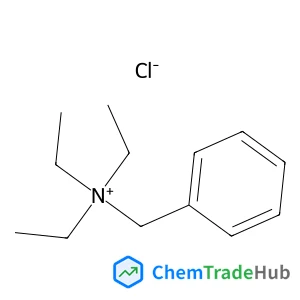
N-Benzyl-N,N-diethylethanaminium chloride
CAS Number: 56-37-1
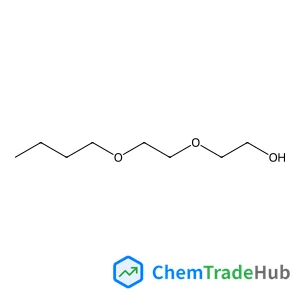
2-(2-Butoxyethoxy)ethanol
CAS Number: 112-34-5
Other Suppliers for Dibutyl hydrogen phosphate




Basic Information
Molecular Formula
C8H19O4P
Molecular Weight
210.21 g/mol
Physical Properties
Melting Point
-13°C(lit.)
Boiling Point
138°C(lit.)
Chemical Identifiers
SMILES
CCCCOP(=O)(O)OCCCC
InChIKey
JYFHYPJRHGVZDY-UHFFFAOYSA-N
Database References
MDL Number
MFCD00015245
Beilstein Registry Number
0607224
FAQ
Dibutyl hydrogen phosphate is a colorless to slightly yellow liquid with a molecular weight of approximately 268.4 g/mol. It has a low melting point of around -7.5°C and a boiling point of approximately 215°C. Dibutyl hydrogen phosphate is slightly soluble in water but miscible with most organic solvents. It is known for its good solubility in alcohols and ethers. Chemically, it is highly reactive towards bases and can undergo hydrolysis to form dibutyl phosphate and water.
Dibutyl hydrogen phosphate can be synthesized by the reaction of butyl chloride with sodium hydrogen phosphate in the presence of a base like sodium hydroxide. The reaction is carried out in an aprotic solvent such as tetrahydrofuran (THF) or dimethylformamide (DMF). The process involves the displacement of the chloride ion by the phosphate ion, forming dibutyl hydrogen phosphate as the major product. The yield and selectivity of the reaction are influenced by the choice of base and the reaction conditions.
Dibutyl hydrogen phosphate finds applications across various industries. It is commonly used in the production of polyurethane foams, as a surfactant in paints and coatings, and in the synthesis of pharmaceuticals. Additionally, it is utilized in the manufacturing of adhesives, explosives, and as a flame retardant in polymers. Its reactivity and solubility properties make it suitable for applications in sensors and semiconductors.
When handling dibutyl hydrogen phosphate, it is important to wear appropriate personal protective equipment (PPE), including gloves, goggles, and a lab coat. Ensure the use of a fume hood to minimize inhalation of fumes. Store the compound in a well-ventilated area, away from sources of heat and ignition. In case of a spill, neutralize the acid with a base if necessary, then clean up using appropriate absorbents. Always refer to the Safety Data Sheet (SDS) for detailed handling and disposal instructions.
Safety Notice
Please verify product specifications and safety data before use. Contact the supplier for detailed safety information.
Always follow proper handling procedures
Contact Information
Contact Person
Manager Zhang
15269161022@163.com