



AD
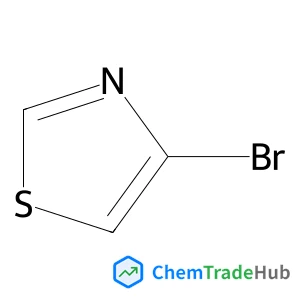
4-Bromo-1,3-thiazole(CAS: 34259-99-9)
CAS Number
Related Products

(1Z,6Z)-Hexanedihydrazonic acid
CAS Number: 1071-93-8

Lithocholic acid
CAS Number: 434-13-9



(3,4-Difluorophenyl)boronic acid
CAS Number: 168267-41-2


3-Bromo-4-fluorocinnamic acid
CAS Number: 160434-49-1

1-Bromonaphthalene
CAS Number: 90-11-9
![7-(3,5-Dimethyl-1,2-oxazol-4-yl)-8-methoxy-1-[(1R)-1-(2-pyridinyl)ethyl]-1,3-dihydro-2H-imidazo[4,5-c]quinolin-2-one](https://static.chemtradehub.com/structs/130/1300031-49-5-dc17.webp)
Other Suppliers for 4-Bromo-1,3-thiazole




Basic Information
Molecular Formula
C3H2BrNS
Molecular Weight
164.03 g/mol
Physical State
Colorless to Yellow Liquid
Physical Properties
Boiling Point
190°C(lit.)
Chemical Identifiers
SMILES
C1=C(N=CS1)Br
InChIKey
VDTIGYKLTROQAH-UHFFFAOYSA-N
Database References
MDL Number
MFCD06657592
Beilstein Registry Number
506871
FAQ
4-Bromo-1,3-thiazole (CAS: 34259-99-9) may be subject to various regulatory guidelines depending on its intended use. It typically requires classification under the Globally Harmonized System of Classification and Labeling of Chemicals (GHS) for workplace safety. Under REACH regulations, it may require registration if manufactured or imported in quantities exceeding certain thresholds. Additionally, it may be regulated by the FDA and EPA for use in pharmaceuticals and pesticides, respectively. Companies should consult relevant regulatory bodies for specific requirements.
Yes, alternatives to 4-Bromo-1,3-thiazole (CAS: 34259-99-9) in synthesis include 4-Methyl-1,3-thiazole and 4-Chloro-1,3-thiazole. These compounds can serve as similar intermediates in various chemical reactions. Other alternatives include using isosteres or related heterocycles that offer similar functional groups or chemical properties.
The market for 4-Bromo-1,3-thiazole (CAS: 34259-99-9) is driven by its use in pharmaceuticals, pesticides, and as a synthetic intermediate. Research trends indicate increasing interest in its application in developing new drugs and agrochemicals. Market demand is expected to grow with the discovery of novel chemical entities that utilize 4-Bromo-1,3-thiazole as a key component.
Waste containing 4-Bromo-1,3-thiazole (CAS: 34259-99-9) should be collected in appropriate containers and stored separately to prevent environmental contamination. For disposal, incineration is a common method due to its high temperature and ability to destroy the compound. Alternatively, professional waste disposal services can be utilized to ensure safe disposal. Always follow local regulations and consult environmental protection guidelines for specific handling instructions.
Safety Notice
Please verify product specifications and safety data before use. Contact the supplier for detailed safety information.
Always follow proper handling procedures
Contact Information
1005221305@qq.com