



AD
Nickel sulfide (NiS2)(CAS: 12035-51-7)
CAS Number
Related Products

Diborylidynevanadium
CAS Number: 12007-37-3

Diborylidynemanganese
CAS Number: 12228-50-1

Copper sulfide (CuS)
CAS Number: 1317-40-4

Holmium trichloride
CAS Number: 10138-62-2

Selenoxonickel
CAS Number: 1314-05-2

MAGNESIUM BORIDE
CAS Number: 12007-25-9

Molybdenum oxide (MoO2)
CAS Number: 18868-43-4

Diborylidynetantalum
CAS Number: 12007-35-1

Other Suppliers for Nickel sulfide (NiS2)




Basic Information
Molecular Formula
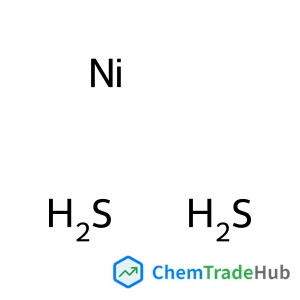
H4NiS2
Molecular Weight
126.86 g/mol
Physical Properties
Boiling Point
°Cat760mmHg
Density
5.8 g/cm3
Flash Point
°C
Water Solubility
Insoluble in water.
Chemical Identifiers
SMILES
S.S.[Ni]
InChIKey
CBJSXTNBQQMXNY-UHFFFAOYSA-N
Database References
MDL Number
MFCD00016267
FAQ
Nickel sulfide (NiS2) (CAS: 12035-51-7) is a crystalline compound with a molecular weight of approximately 112.5 g/mol. It is slightly soluble in water and reacts with acids to form hydrogen sulfide and nickel salts. It is stable under normal conditions but can react with strong oxidizers and acids.
Nickel sulfide (NiS2) (CAS: 12035-51-7) is typically synthesized by reacting nickel sulfate with sodium sulfide in aqueous solution. The synthesis involves careful temperature control to avoid decomposition and requires a reducing atmosphere to prevent oxidation.
Nickel sulfide (NiS2) (CAS: 12035-51-7) is used in the electronics industry for its semiconducting properties, in pharmaceuticals for specific applications, and in polymers for catalytic and thermal stability. It also finds use in sensors as a sensing material.
When handling Nickel sulfide (NiS2) (CAS: 12035-51-7), it is important to wear protective gloves, goggles, and a lab coat. Work in a well-ventilated area or a fume hood to avoid inhalation of dust. Spills should be cleaned up using appropriate absorbent materials and the area should be well-ventilated. Always refer to the Safety Data Sheet (SDS) for detailed handling instructions.
Safety Notice
Please verify product specifications and safety data before use. Contact the supplier for detailed safety information.
Always follow proper handling procedures
