AD
4-Quinolinecarbaldehyde(CAS: 4363-93-3)
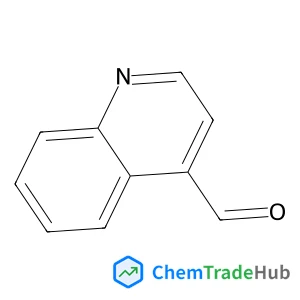
CAS Number
Related Products
![(2R)-2,7,8-Trimethyl-2-[(4R,8R)-4,8,12-trimethyltridecyl]-6-chromanol](https://static.chemtradehub.com/structs/54-/54-28-4-155c.webp)
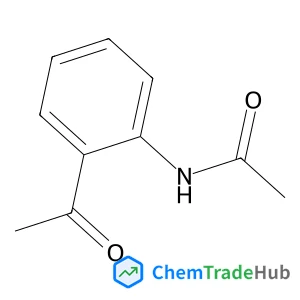
N-(2-Acetylphenyl)acetamide
CAS Number: 5234-26-4
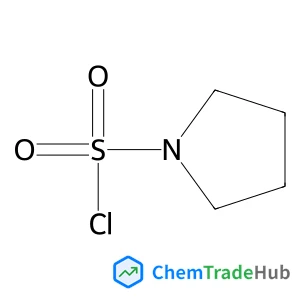
1-Pyrrolidinesulfonyl chloride
CAS Number: 1689-02-7
![3-Hexyl-2-[3-(3-hexyl-1,3-benzoxazol-2(3H)-ylidene)-1-propen-1-yl]-1,3-benzoxazol-3-ium iodide](https://static.chemtradehub.com/structs/532/53213-82-4-e483.webp)
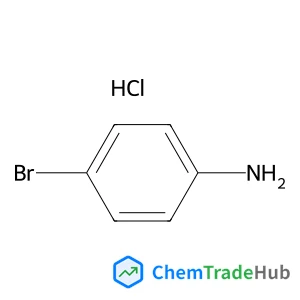
4-Bromoaniline hydrochloride (1:1)
CAS Number: 624-19-1
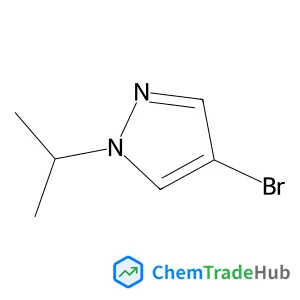
4-Bromo-1-isopropyl-1H-pyrazole
CAS Number: 313735-62-5
Other Suppliers for 4-Quinolinecarbaldehyde









Basic Information
Molecular Formula
C10H7NO
Molecular Weight
157.17 g/mol
Physical Properties
Melting Point
45-52 °C (lit.)
Boiling Point
123°C/4mmHg(lit.)
Water Solubility
Slightly soluble in water.
Chemical Identifiers
SMILES
C1=CC=C2C(=C1)C(=CC=N2)C=O
InChIKey
MGCGJBXTNWUHQE-UHFFFAOYSA-N
Database References
MDL Number
MFCD00006781
Beilstein Registry Number
113072
FAQ
4-Quinolinecarbaldehyde (CAS: 4363-93-3) is regulated under the Globally Harmonized System of Classification and Labelling of Chemicals (GHS) for its health and environmental hazards. In the European Union, it falls under the Registration, Evaluation, Authorization, and Restriction of Chemicals (REACH) legislation. The U.S. Food and Drug Administration (FDA) and Environmental Protection Agency (EPA) have specific safety and environmental discharge guidelines. Companies must ensure compliance with these regulations for handling, storage, and disposal to avoid penalties and protect personnel and the environment.
Yes, there are alternatives to 4-Quinolinecarbaldehyde (CAS: 4363-93-3) in synthesis, such as 3-Quinolinecarbaldehyde and 5-Quinolinecarbaldehyde, which can serve as isomers. Common alternative reagents include substituted hydrazones and Schiff bases. Researchers may also explore using 2-Quinolinecarboxylic acid derivatives as precursors, offering similar functional groups and reactivity patterns.
The market for 4-Quinolinecarbaldehyde (CAS: 4363-93-3) is driven by its applications in the pharmaceutical and agrochemical industries. Recent research trends focus on its use as a precursor for synthesizing functionalized quinolines, which are valuable in drug discovery and plant protection. The trend shows an increasing interest in sustainable synthesis methods and the development of green chemistry approaches to reduce environmental impact.
Waste containing 4-Quinolinecarbaldehyde (CAS: 4363-93-3) should be collected in appropriate containers and incinerated according to local regulations. For large quantities, professional waste disposal services are recommended to ensure safe disposal. Proper environmental protection measures, such as neutralizing any acidic or basic residues, should be taken to prevent contamination. Compliance with GHS and REACH regulations is essential to handle and dispose of this compound responsibly.
Safety Notice
Please verify product specifications and safety data before use. Contact the supplier for detailed safety information.
Always follow proper handling procedures