



AD
Carbic Anhydride(CAS: 129-64-6)
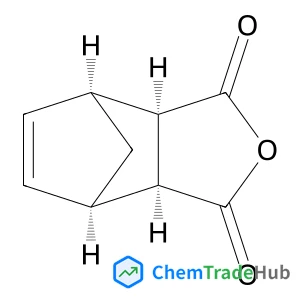
CAS Number
Related Products
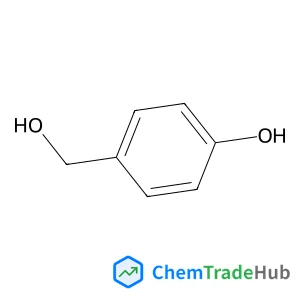
4-(Hydroxymethyl)phenol
CAS Number: 623-05-2
![4-Oxatricyclo[5.2.1.0~2,6~]dec-8-ene-3,5-dione](https://static.chemtradehub.com/structs/826/826-62-0-6a7a.webp)

Iron(2+) di(2,4-cyclopentadienide)
CAS Number: 102-54-5
Other Suppliers for Carbic Anhydride



Basic Information
Molecular Formula
C9H8O3
Molecular Weight
164.16 g/mol
Physical Properties
Melting Point
165-167 °C (lit.)
Boiling Point
251.61°C (rough estimate)
Flash Point
163.8°C
Chemical Identifiers
SMILES
O=C1OC(=O)[C@@H]2[C@H]3C[C@H](C=C3)[C@@H]21
InChIKey
KNDQHSIWLOJIGP-UMRXKNAASA-N
Database References
MDL Number
MFCD00151106
Beilstein Registry Number
83657
FAQ
Carbic Anhydride (CAS: 129-64-6) is subject to various regulatory guidelines. In the United States, it is regulated by the U.S. Environmental Protection Agency (EPA) under the Toxic Substances Control Act (TSCA). In the European Union, it falls under the Registration, Evaluation, Authorization and Restriction of Chemicals (REACH) regulations. Additionally, it adheres to the Globally Harmonized System of Classification and Labelling of Chemicals (GHS), which includes specific hazard communication standards and safety data sheets (SDS) requirements.
Several alternatives to Carbic Anhydride (CAS: 129-64-6) can be used in synthesis, depending on the specific reaction conditions. Common alternatives include carbonic acid, sodium carbonate, and calcium carbonate. These reagents may offer similar functional group transformations but with different reaction kinetics and product yields. It is important to evaluate the specific application to determine the most suitable alternative.
The market for Carbic Anhydride (CAS: 129-64-6) is driven by its use in the production of carbonated beverages and as a reagent in various chemical syntheses. Research trends are focused on developing more efficient and environmentally friendly production methods and exploring its potential in new applications such as catalysts and adsorbents. Market demand is expected to remain steady, with ongoing efforts to address environmental concerns and improve sustainability.
Waste containing Carbic Anhydride (CAS: 129-64-6) should be collected in appropriate containers and stored until disposal. It is recommended to neutralize any acidic residues and neutralize the solution before disposal. For large quantities or hazardous waste, professional waste disposal services should be used. Environmental protection precautions include proper labeling, personal protective equipment (PPE), and adherence to local and national regulations for waste management.
Safety Notice
Please verify product specifications and safety data before use. Contact the supplier for detailed safety information.
Always follow proper handling procedures
Contact Information
Contact Person
Mr. Zhu Mr. Zhou