



AD
Ytterbium(3+) trichloride(CAS: 10361-91-8)
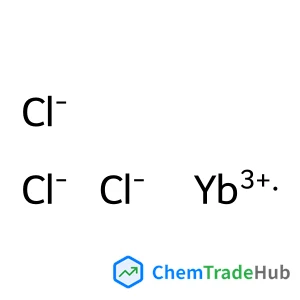
CAS Number
Related Products
![2-[(Aminooxy)sulfonyl]-1,3,5-trimethylbenzene](https://static.chemtradehub.com/structs/360/36016-40-7-8b96.webp)
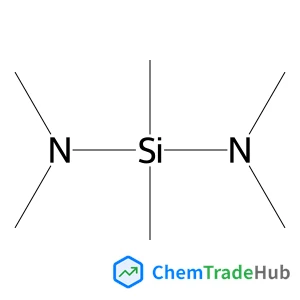
N,N,N',N',1,1-Hexamethylsilanediamine
CAS Number: 3768-58-9
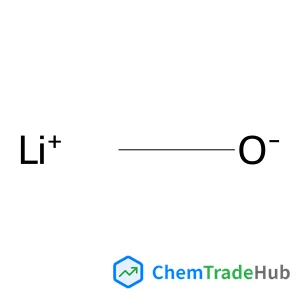
Lithium methanolate
CAS Number: 865-34-9

Bromo(3-pentanyl)magnesium
CAS Number: 4852-26-0
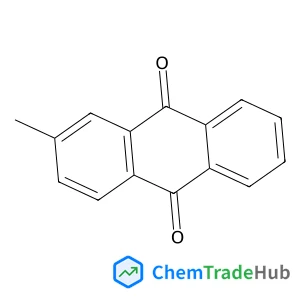
2-Methylanthraquinone
CAS Number: 84-54-8
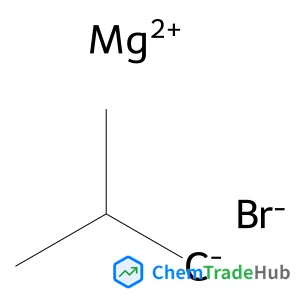
Isobutylmagnesium Bromide
CAS Number: 926-62-5
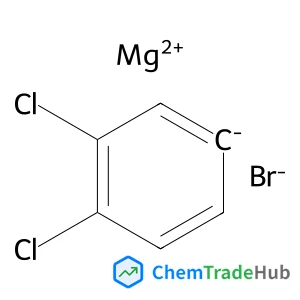
Bromo(3,4-dichlorophenyl)magnesium
CAS Number: 79175-35-2
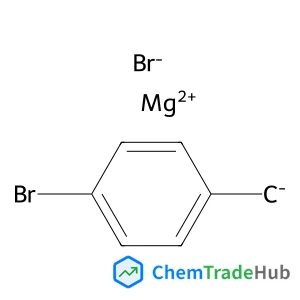
4-Bromobenzylmagnesium bromide
CAS Number: 92206-72-9
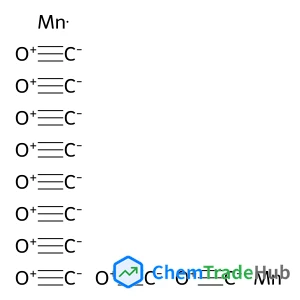
Carbon monooxide - manganese (5:1)
CAS Number: 10170-69-1
Other Suppliers for Ytterbium(3+) trichloride








Basic Information
Molecular Formula
Cl3Yb
Molecular Weight
279.41 g/mol
EINECS
233-800-5
Physical Properties
Melting Point
875 °C(lit.)
Density
1.48^3^0
Water Solubility
Soluble in water.
Chemical Identifiers
SMILES
[Cl-].[Cl-].[Cl-].[Yb+3]
InChIKey
CKLHRQNQYIJFFX-UHFFFAOYSA-K
Database References
MDL Number
MFCD00149885
FAQ
Ytterbium(3+) trichloride is a white crystalline solid with a molecular weight of approximately 355.43 g/mol. It has a high solubility in water and low solubility in organic solvents. It is moderately reactive with strong bases and oxidizing agents. This compound is used in the synthesis of ytterbium compounds and as a precursor in various chemical processes.
Ytterbium(3+) trichloride is typically synthesized by the chlorination of ytterbium metal or ytterbium(3+) nitrate in a suitable solvent, such as chloroform or carbon tetrachloride. The reaction is usually carried out at elevated temperatures to achieve high yields and good purity. Catalysts are not typically required for this synthesis.
Ytterbium(3+) trichloride is used in several industries, including electronics, where it is used in the production of ytterbium-based lasers and optical fibers. It is also used in the synthesis of ytterbium compounds, in the manufacturing of phosphors, and as a precursor in the preparation of ytterbium-containing alloys and coatings.
When handling Ytterbium(3+) trichloride, it is important to wear appropriate personal protective equipment (PPE) such as safety goggles, gloves, and a lab coat. Work should be conducted in a well-ventilated area or a fume hood to avoid inhalation of dust and fumes. Spills should be cleaned up immediately using appropriate absorbent materials, and the area should be properly cleaned. Always refer to the Safety Data Sheet (SDS) for detailed handling and emergency procedures.
Safety Notice
Please verify product specifications and safety data before use. Contact the supplier for detailed safety information.
Always follow proper handling procedures
Contact Information
sales1@spcscientific.com