



AD
9H-Xanthene-9-carboxylic acid(CAS: 82-07-5)
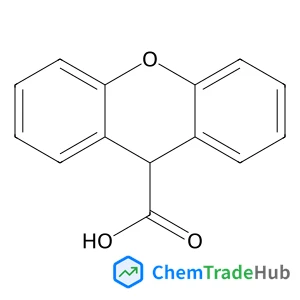
CAS Number
Related Products
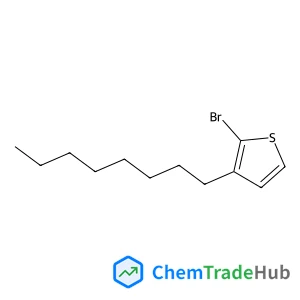
2-Bromo-3-octylthiophene
CAS Number: 145543-83-5
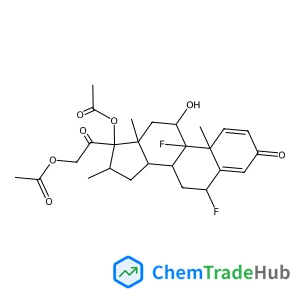
Diflorasone diacetate
CAS Number: 33564-31-7
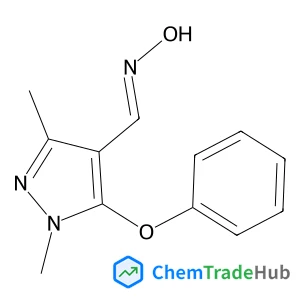
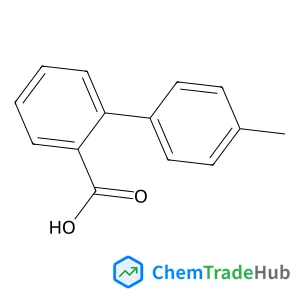
4'-Methyl-2-biphenylcarboxylic acid
CAS Number: 7148-03-0
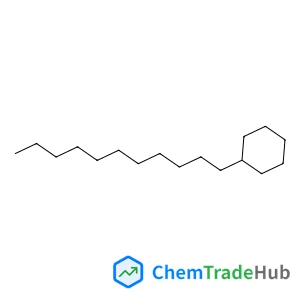
Undecylcyclohexane
CAS Number: 54105-66-7
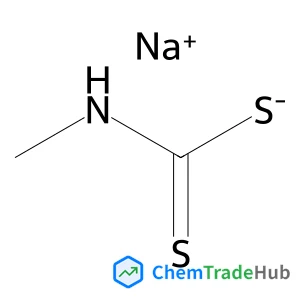
Metam Sodium
CAS Number: 137-42-8
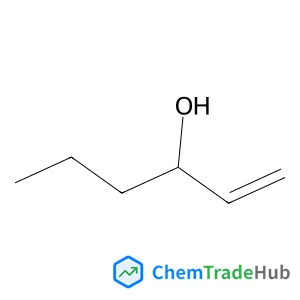
1-Hexen-3-ol
CAS Number: 4798-44-1
![(2S)-Amino[(5S)-3-chloro-4,5-dihydro-1,2-oxazol-5-yl]acetic acid](https://static.chemtradehub.com/structs/422/42228-92-2-8448.webp)
Other Suppliers for 9H-Xanthene-9-carboxylic acid




Basic Information
Molecular Formula
C14H10O3
Molecular Weight
226.23 g/mol
Physical Properties
Melting Point
221-225 °C (lit.)
Boiling Point
391.3 °C at 760 mmHg
Density
1.335
Flash Point
153.1 °C
Water Solubility
Insoluble in water.
Chemical Identifiers
SMILES
C1=CC=C2C(=C1)C(C3=CC=CC=C3O2)C(=O)O
InChIKey
VSBFNCXKYIEYIS-UHFFFAOYSA-N
Database References
MDL Number
MFCD00005059
Beilstein Registry Number
174414
FAQ
9H-Xanthene-9-carboxylic acid is a crystalline solid with a white or off-white appearance. It has a molecular weight of 184.17 g/mol. The compound is soluble in water and organic solvents. It is moderately reactive, particularly in carboxylic acid chemistry, and shows limited reactivity towards nucleophiles and electrophiles. It is stable under normal conditions but may degrade under strongly acidic or basic conditions.
9H-Xanthene-9-carboxylic acid is typically synthesized from xanthone via carboxylation. Common methods include the use of acetyl chloride or acetic anhydride in the presence of a base like pyridine. The reaction is usually carried out under mild conditions, with a high yield (up to 95%) and good selectivity. The process is straightforward and widely used in laboratories and industry.
9H-Xanthene-9-carboxylic acid is used in various industries. It is a key intermediate in the synthesis of dyes and pigments, and it also finds applications in pharmaceuticals, where it is used as a building block for drug development. Additionally, it is used in polymer synthesis and in the production of electronic materials such as organic light-emitting diodes (OLEDs) and sensors.
When handling 9H-Xanthene-9-carboxylic acid, it is important to use appropriate personal protective equipment (PPE) such as gloves, goggles, and a lab coat. Work should be carried out in a fume hood to minimize inhalation risks. Spills should be cleaned up using appropriate absorbent materials and disposed of according to local regulations. Always consult the Safety Data Sheet (SDS) for detailed handling and disposal instructions.
Safety Notice
Please verify product specifications and safety data before use. Contact the supplier for detailed safety information.
Always follow proper handling procedures
Contact Information
Contact Person
Jiang Kun
1273554466@qq.com