



AD
Poly(3-hexylthiophene)(CAS: 104934-50-1)
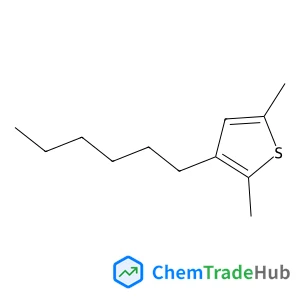
CAS Number
Related Products
![(9Z,18Z,26Z,35Z)-9,18,27,36,37,39,40,41-Octaaza-38-siladecacyclo[17.17.3.1~10,17~.1~28,35~.0~2,7~.0~8,37~.0~11,16~.0~20,25~.0~26,39~.0~29,34~]hentetraconta-1,3,5,7,9,11,13,15,17(41),18,20,22,24,26,28(
40),29,31,33,35-nonadecaene-38,38-diol](https://static.chemtradehub.com/structs/193/19333-15-4-80d0.webp)
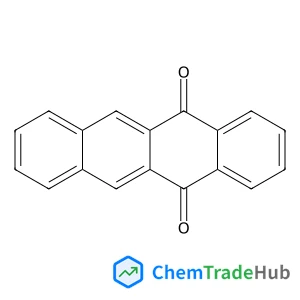
5,12-Tetracenedione
CAS Number: 1090-13-7
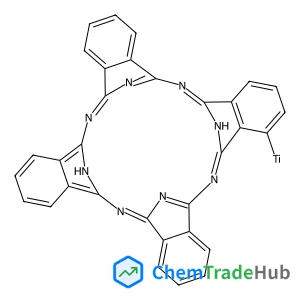
Titanyl phthalocyanine
CAS Number: 26201-32-1
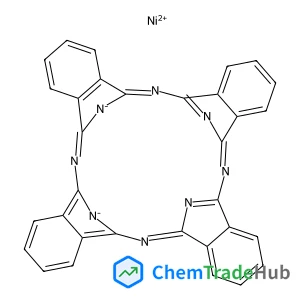
NICKEL PHTHALOCYANINE
CAS Number: 14055-02-8
Naphthacene
CAS Number: 92-24-0
![(9Z,18Z,26Z,35Z)-38,38-Dichloro-9,18,27,36,37,39,40,41-octaaza-38-siladecacyclo[17.17.3.1~10,17~.1~28,35~.0~2,7~.0~8,37~.0~11,16~.0~20,25~.0~26,39~.0~29,34~]hentetraconta-1,3,5,7,9,11,13,15,17(41),18,
20,22,24,26,28(40),29,31,33,35-nonadecaene](https://static.chemtradehub.com/structs/193/19333-10-9-00e4.webp)
Other Suppliers for Poly(3-hexylthiophene)




Basic Information
Molecular Formula
C12H20S
Molecular Weight
168.31 g/mol
Physical Properties
Melting Point
238 °C
Chemical Identifiers
SMILES
CCCCCCC1=C(SC(=C1)C)C
InChIKey
JEDHEMYZURJGRQ-UHFFFAOYSA-N
Database References
MDL Number
MFCD26958730
FAQ
Poly(3-hexylthiophene) (P3HT) falls under the scope of the REACH regulations for chemical substances. It is classified as a hazardous substance according to the Globally Harmonized System of Classification and Labeling of Chemicals (GHS), specifically as a substance that is toxic to aquatic organisms. Additionally, the FDA and EPA have specific requirements for the handling and disposal of such substances, particularly in the context of environmental protection and health safety.
Several alternatives to Poly(3-hexylthiophene) (P3HT) are available in synthesis, including other conjugated polymers such as Poly(4-hexylthiophene) (P4HT) and Poly(2,5-thienylene vinylene) (PTV). These alternatives offer different properties and can be chosen based on specific application requirements such as solubility, processability, and electronic properties.
The market for Poly(3-hexylthiophene) (P3HT) is growing due to its applications in organic electronics, particularly in organic photovoltaics (OPVs) and organic field-effect transistors (OFETs). Research trends are focusing on improving its performance, such as increasing efficiency and stability, as well as exploring new applications in emerging technologies like flexible electronics and wearable devices.
Waste containing Poly(3-hexylthiophene) (P3HT) should be collected in appropriate containers and disposed of according to local hazardous waste regulations. Incineration is a common method for disposal, and professional waste disposal services can handle this process. Environmental protection precautions must be taken to ensure that the waste does not contaminate soil or water bodies, and appropriate measures should be followed to minimize environmental impact.
Safety Notice
Please verify product specifications and safety data before use. Contact the supplier for detailed safety information.
Always follow proper handling procedures