



AD
Palladium(2+) acetate triphenylphosphine (1:2:2)(CAS: 14588-08-0)
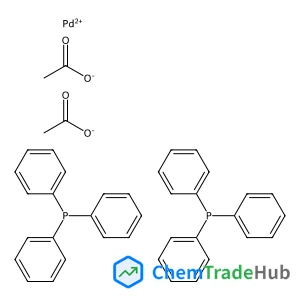
CAS Number
Related Products

2H-Tetrazole
CAS Number: 288-94-8

Collagen(cattle skin) (9CI)
CAS Number: 9064-67-9
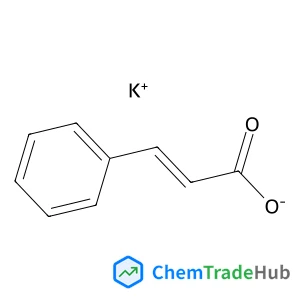
Potassium (2E)-3-phenylacrylate
CAS Number: 16089-48-8

Chloro(methyl)magnesium
CAS Number: 676-58-4
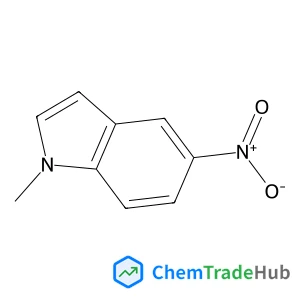
1-Methyl-5-nitro-1H-indole
CAS Number: 29906-67-0

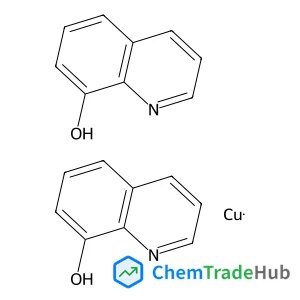
Bis(8-quinolinolato)copper(II)
CAS Number: 10380-28-6
![2-[4-(1-Hydroxy-4-{4-[hydroxy(diphenyl)methyl]-1-piperidinyl}butyl)phenyl]-2-methylpropanoic acid hydrochloride (1:1)](https://static.chemtradehub.com/structs/153/153439-40-8-f2bf.webp)
Other Suppliers for Palladium(2+) acetate triphenylphosphine (1:2:2)






Basic Information
Molecular Formula
C40H36O4P2Pd
Molecular Weight
751.11 g/mol
Physical Properties
Melting Point
136 °C (dec.) (lit.)
Chemical Identifiers
SMILES
CC(=O)[O-].CC(=O)[O-].C1=CC=C(C=C1)P(C2=CC=CC=C2)C3=CC=CC=C3.C1=CC=C(C=C1)P(C2=CC=CC=C2)C3=CC=CC=C3.[Pd+2]
InChIKey
UVBXZOISXNZBLY-UHFFFAOYSA-L
Database References
MDL Number
MFCD00010013
FAQ
Palladium(2+) acetate triphenylphosphine (CAS: 14588-08-0) is a crystalline compound with a molecular weight of approximately 541.28. It is sparingly soluble in water but highly soluble in organic solvents such as ethanol and acetone. This compound exhibits high reactivity towards carbon-hydrogen bonds, making it an excellent catalyst in cross-coupling reactions. It is often used in palladium-catalyzed C-H activation reactions.
Palladium(2+) acetate triphenylphosphine is typically synthesized by reacting palladium acetate with triphenylphosphine in an inert solvent like toluene or ethyl acetate. The process involves careful control of temperature and stirring rate to achieve good yield and selectivity. Catalysts like Pd(PPh3)4 are commonly used to enhance the reaction efficiency.
Palladium(2+) acetate triphenylphosphine (CAS: 14588-08-0) is widely used in the pharmaceuticals industry for the synthesis of complex molecules and in the polymer industry for the preparation of functional polymers. It also finds applications in the electronics industry for semiconductor fabrication and in sensor technology for detecting various chemical species.
When handling Palladium(2+) acetate triphenylphosphine (CAS: 14588-08-0), it is essential to wear appropriate personal protective equipment (PPE) including gloves, safety goggles, and a laboratory coat. Work should be conducted in a well-ventilated area or a fume hood to avoid inhalation. Spills should be cleaned up immediately using appropriate absorbent materials and proper disposal methods. Always refer to the safety data sheet (SDS) for detailed guidelines on handling and storage.
Safety Notice
Please verify product specifications and safety data before use. Contact the supplier for detailed safety information.
Always follow proper handling procedures