



AD
Coronene(CAS: 191-07-1)
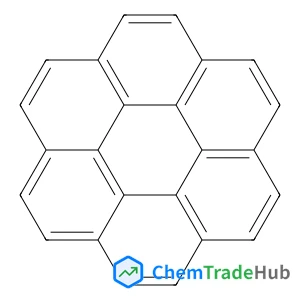
CAS Number
Related Products
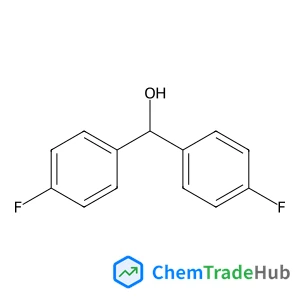
Bis(4-fluorophenyl)methanol
CAS Number: 365-24-2
![(2R,3R,4R,5R)-2-(4-Aminopyrrolo[2,1-f][1,2,4]triazin-7-yl)-3,4-bis(benzyloxy)-5-[(benzyloxy)methyl]tetrahydro-2-furancarbonitrile (non-preferred name)](https://static.chemtradehub.com/structs/135/1355357-49-1-fb2c.webp)
![7'-Benzyl-6'-methyl-3',4'-dihydro-8'h-spiro[cyclohexane-1,2'-pyrano[3,2-g]chromen]-8'-one oxime](https://static.chemtradehub.com/structs/101/1014086-04-4-1f9d.webp)
![(4S)-3-{(2R,5S)-5-(4-Fluorophenyl)-2-[(S)-[(4-fluorophenyl)amino]{4-[(trimethylsilyl)oxy]phenyl}methyl]-5-[(trimethylsilyl)oxy]pentanoyl}-4-phenyl-1,3-oxazolidin-2-one](https://static.chemtradehub.com/structs/272/272778-12-8-869d.webp)
![Benzyl {(1S)-2-[(3R)-3-hydroxy-1-pyrrolidinyl]-2-oxo-1-phenylethyl}carbamate](https://static.chemtradehub.com/structs/164/1643682-74-9-e86a.webp)
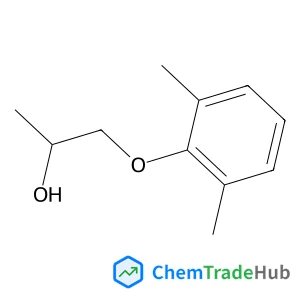
1-(2,6-Dimethylphenoxy)-2-propanol
CAS Number: 61102-09-8
Other Suppliers for Coronene



Basic Information
Molecular Formula
C24H12
Molecular Weight
300.36 g/mol
Physical Properties
Melting Point
428 °C (lit.)
Boiling Point
525 °C(lit.)
Flash Point
6 °C
Chemical Identifiers
SMILES
C1=CC2=C3C4=C1C=CC5=C4C6=C(C=C5)C=CC7=C6C3=C(C=C2)C=C7
InChIKey
VPUGDVKSAQVFFS-UHFFFAOYSA-N
Database References
MDL Number
MFCD00004134
FAQ
Coronene (CAS: 191-07-1) falls under the scope of the Globally Harmonized System of Classification and Labelling of Chemicals (GHS), which requires specific hazard communication elements such as signal words, pictograms, and hazard statements. In Europe, it must comply with REACH regulations, ensuring that all information regarding its properties, risks, and safety data sheets are available. Additionally, the U.S. FDA and EPA have specific requirements related to the registration, reporting, and handling of hazardous chemicals.
Coronene (CAS: 191-07-1) can be synthesized using various alternative reagents and procedures. For example, naphthalene and other polycyclic aromatic hydrocarbons can serve as precursors. Researchers often explore alternatives like anthracene or other coronoid compounds, which may offer similar properties with potentially lower toxicity and better handling characteristics.
The market trend for Coronene (CAS: 191-07-1) reflects a growing interest in its application within research, particularly in materials science and photophysics. Recent studies focus on its use in organic electronics, solar cells, and as a model compound for studying molecular structure and electronic properties. The increasing demand is driven by its unique optical and electronic properties, although its high reactivity and potential toxicity remain challenges.
Waste containing Coronene (CAS: 191-07-1) should be managed by collecting it in appropriate containers with lined liners to prevent leaks. Incineration is a common method for disposal, as it ensures complete destruction of the compound. For larger quantities or when incineration is not feasible, professional waste disposal services should be utilized. Environmental precautions include ensuring all containment measures are in place to avoid contamination of soil and water sources, and proper documentation of waste handling procedures should be maintained.
Safety Notice
Please verify product specifications and safety data before use. Contact the supplier for detailed safety information.
Always follow proper handling procedures

Contact Information
Contact Person
Manager Chen
2885409035@qq.com
Mobile
18186386804
Telephone
0714-5333089
Visit Website
https://www.yongstandards.com/Address
No. 176 Hangzhou West Road, Huangshi City, Hubei Province