



AD
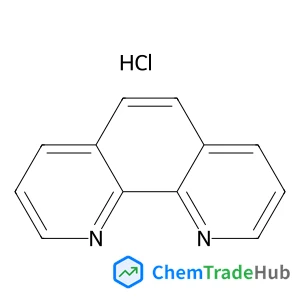
1,10-phenanthroline hydrochloride(CAS: 3829-86-5)
CAS Number
Related Products
![1-Methoxy-2-[(1-methoxy-2-propanyl)oxy]propane](https://static.chemtradehub.com/structs/111/111109-77-4-77bd.webp)
![N,N''''-1,6-Hexanediylbis[N'-(4-chlorophenyl)(imidodicarbonimidic diamide)] - D-gluconic acid (1:2)](https://static.chemtradehub.com/structs/184/18472-51-0-b380.webp)
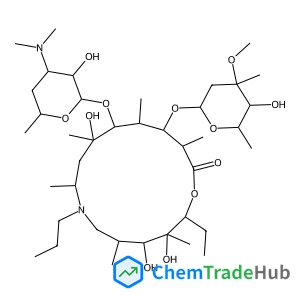
Gamithromycin
CAS Number: 145435-72-9
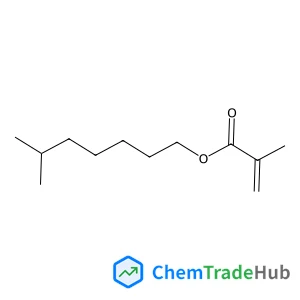
Isooctyl Methacrylate
CAS Number: 28675-80-1
![(2R)-2,5,7,8-Tetramethyl-2-[(4R,8R)-4,8,12-trimethyltridecyl]-3,4-dihydro-2H-chromen-6-yl acetate](https://static.chemtradehub.com/structs/58-/58-95-7-ee21.webp)
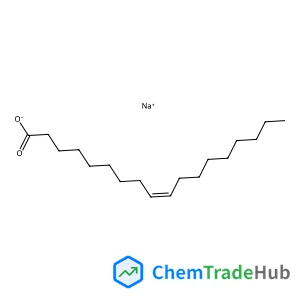
Sodium (9Z)-9-octadecenoate
CAS Number: 143-19-1
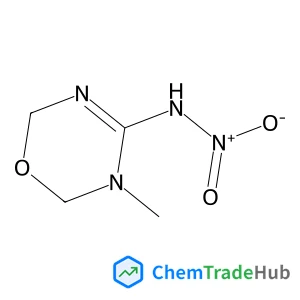
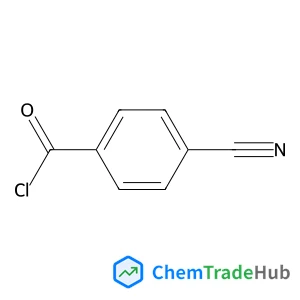
4-cyanobenzoyl chloride
CAS Number: 6068-72-0
Other Suppliers for 1,10-phenanthroline hydrochloride








Basic Information
Molecular Formula
C12H9ClN2
Molecular Weight
216.67 g/mol
Physical State
Powder
Physical Properties
Melting Point
224-226 ºC
Boiling Point
365.1 °C at 760 mmHg
Density
1.3850
Flash Point
164.8 °C
Chemical Identifiers
SMILES
Cl.c1cnc2c(c1)ccc3cccnc32
InChIKey
QPXDKQBBJCTNOY-UHFFFAOYSA-N
Database References
MDL Number
MFCD00012644
Beilstein Registry Number
4007967
FAQ
1,10-Phenanthroline hydrochloride (CAS: 3829-86-5) may be subject to the Globally Harmonized System of Classification and Labelling of Chemicals (GHS), which includes health, environmental, and physical hazard classifications. In the European Union, it is regulated under the REACH (Registration, Evaluation, Authorization and Restriction of Chemicals) directive. The United States Food and Drug Administration (FDA) and Environmental Protection Agency (EPA) may also have specific requirements for its use, storage, and disposal. Users should consult the material safety data sheet (MSDS) and local regulations for detailed guidance.
Alternatives to 1,10-phenanthroline hydrochloride (CAS: 3829-86-5) in synthesis include other ligands such as 2,9-dimethyl-1,10-phenanthroline (DMP) and 1,10-phenanthroline (phen). These alternatives can offer similar coordination properties for metal complex formation. However, the choice of alternative depends on the specific reactivity and solubility requirements of the synthesis.
The market for 1,10-phenanthroline hydrochloride (CAS: 3829-86-5) is driven by its use in metal complex chemistry, particularly in catalysis and spectroscopy. Research trends include its application in developing new materials, such as metal-organic frameworks, and its use as a chelating agent in environmental analysis. The market is expected to grow due to advancements in materials science and analytical techniques.
Waste containing 1,10-phenanthroline hydrochloride (CAS: 3829-86-5) should be collected in appropriate containers and stored in a well-ventilated area away from heat and ignition sources. The waste should be disposed of via incineration or professional waste disposal services that comply with local regulations. Users should follow all safety precautions, including proper personal protective equipment (PPE), during handling and disposal to prevent exposure and environmental contamination.
Safety Notice
Please verify product specifications and safety data before use. Contact the supplier for detailed safety information.
Always follow proper handling procedures
Contact Information
Contact Person
Zhang Manager
1609147400@qq.com