



AD
Telluric acid (H2TeO4), disodium salt, dihydrate (8CI,9CI)(CAS: 26006-71-3)
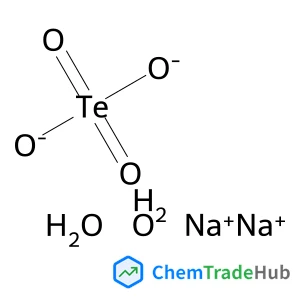
CAS Number
Related Products
![(2R)-2,7,8-Trimethyl-2-[(4R,8R)-4,8,12-trimethyltridecyl]-6-chromanol](https://static.chemtradehub.com/structs/54-/54-28-4-155c.webp)
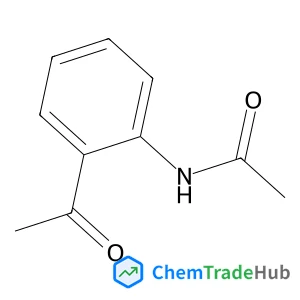
N-(2-Acetylphenyl)acetamide
CAS Number: 5234-26-4
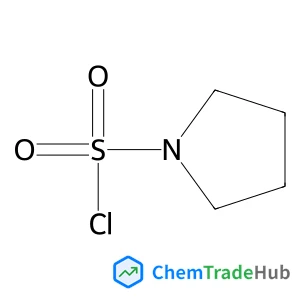
1-Pyrrolidinesulfonyl chloride
CAS Number: 1689-02-7
![3-Hexyl-2-[3-(3-hexyl-1,3-benzoxazol-2(3H)-ylidene)-1-propen-1-yl]-1,3-benzoxazol-3-ium iodide](https://static.chemtradehub.com/structs/532/53213-82-4-e483.webp)
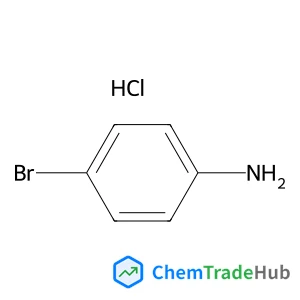
4-Bromoaniline hydrochloride (1:1)
CAS Number: 624-19-1
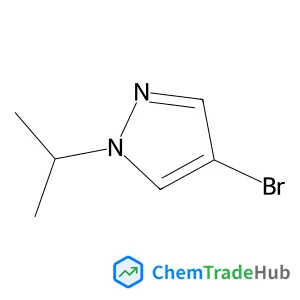
4-Bromo-1-isopropyl-1H-pyrazole
CAS Number: 313735-62-5
Other Suppliers for Telluric acid (H2TeO4), disodium salt, dihydrate (8CI,9CI)






Basic Information
Molecular Formula
H4Na2O6Te
Molecular Weight
273.6 g/mol
Chemical Identifiers
SMILES
O.O.[O-][Te](=O)(=O)[O-].[Na+].[Na+]
InChIKey
LVKNVMJQFQNCLG-UHFFFAOYSA-L
Database References
MDL Number
MFCD00150190
FAQ
Telluric acid (disodium salt, dihydrate) (CAS: 26006-71-3) is subject to various regulatory guidelines. Under the GHS (Global Harmonized System of Classification and Labelling of Chemicals), it is classified as a skin and eye irritant. Manufacturers and importers must follow the REACH regulations for the registration, evaluation, authorization, and restriction of chemicals in the European Union. In the United States, FDA and EPA have specific requirements for the handling, storage, and disposal of this compound to ensure safety and environmental protection.
Telluric acid (disodium salt, dihydrate) (CAS: 26006-71-3) is not commonly used in synthesis due to its reactivity and limited availability. However, other tellurium-containing compounds such as tellurium dioxide (TeO2) or tellurous acid (H2TeO3) can sometimes serve as alternatives. These alternatives are less reactive and more readily available, making them preferable in many synthetic processes.
What is the market or research trend for telluric acid (disodium salt, dihydrate) (CAS: 26006-71-3)?
The market for telluric acid (disodium salt, dihydrate) (CAS: 26006-71-3) is niche, primarily driven by its use in specialized research and industrial applications. Recent research trends include the exploration of tellurium compounds in electronics, catalysis, and materials science. The global market is expected to grow due to increasing demand from emerging fields, although the growth rate is expected to be moderate due to the limited number of applications.
Waste containing telluric acid (disodium salt, dihydrate) (CAS: 26006-71-3) should be handled with caution. Firstly, it should be collected in a closed container and labeled appropriately. For disposal, professional waste disposal services are recommended due to its hazardous nature. Incineration is a viable method, but it must be conducted in an enclosed system to prevent the release of tellurium into the environment. Environmental protection measures, such as ground and air monitoring, should be implemented to ensure compliance with local regulations and environmental safety.
Safety Notice
Please verify product specifications and safety data before use. Contact the supplier for detailed safety information.
Always follow proper handling procedures
