



AD
4-Dibenzofurancarboxaldehyde(CAS: 96706-46-6)
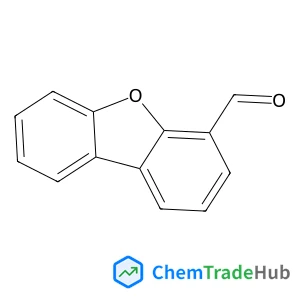
CAS Number
Related Products
![(2R)-2,7,8-Trimethyl-2-[(4R,8R)-4,8,12-trimethyltridecyl]-6-chromanol](https://static.chemtradehub.com/structs/54-/54-28-4-155c.webp)
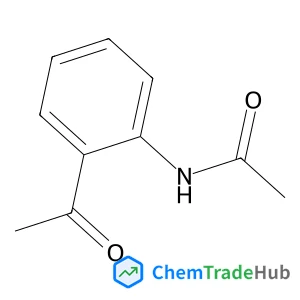
N-(2-Acetylphenyl)acetamide
CAS Number: 5234-26-4
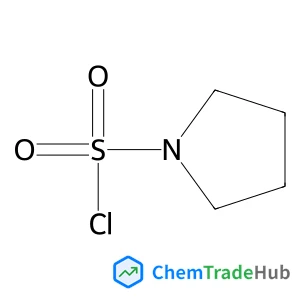
1-Pyrrolidinesulfonyl chloride
CAS Number: 1689-02-7
![3-Hexyl-2-[3-(3-hexyl-1,3-benzoxazol-2(3H)-ylidene)-1-propen-1-yl]-1,3-benzoxazol-3-ium iodide](https://static.chemtradehub.com/structs/532/53213-82-4-e483.webp)
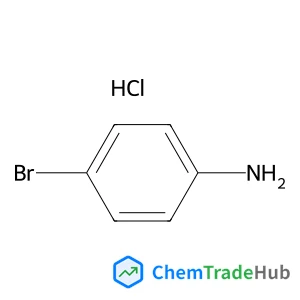
4-Bromoaniline hydrochloride (1:1)
CAS Number: 624-19-1
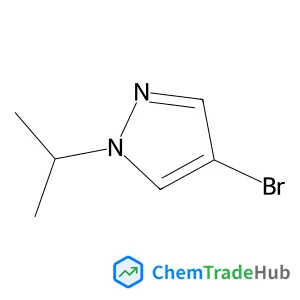
4-Bromo-1-isopropyl-1H-pyrazole
CAS Number: 313735-62-5
Other Suppliers for 4-Dibenzofurancarboxaldehyde




Basic Information
Molecular Formula
C13H8O2
Molecular Weight
196.2 g/mol
Physical Properties
Melting Point
95.0 to 99.0 deg-C
Boiling Point
360.5°Cat760mmHg
Density
1.289±0.06 g/cm3 (20 ºC 760 Torr),
Flash Point
170.2°C
Chemical Identifiers
SMILES
C1=CC=C2C(=C1)C3=CC=CC(=C3O2)C=O
InChIKey
GQYTWBPRZFRASB-UHFFFAOYSA-N
Database References
MDL Number
MFCD03306027
FAQ
4-Dibenzofurancarboxaldehyde (CAS: 96706-46-6) falls under several regulatory frameworks. It is classified under the Globally Harmonized System of Classification and Labeling of Chemicals (GHS) as harmful to the aquatic environment. In the European Union, it is regulated under REACH (Registration, Evaluation, Authorization, and Restriction of Chemicals) for potential health and environmental risks. Additionally, the U.S. EPA and FDA have specific guidelines for handling and disposing of such compounds, emphasizing the need for proper labeling and storage to prevent accidental exposure and environmental contamination.
There are several alternatives to 4-Dibenzofurancarboxaldehyde (CAS: 96706-46-6) that can be used in synthesis. Common alternatives include dibenzofurans, other carboxaldehyde derivatives, and related aromatic compounds. These alternatives can offer similar structural features and may be more readily available or cost-effective. For instance, 3-dibenzofurancarboxaldehyde and 2-dibenzofurancarboxaldehyde are often used as substitutes, depending on the specific needs of the synthesis.
The market and research trend for 4-Dibenzofurancarboxaldehyde (CAS: 96706-46-6) is currently focused on its applications in the development of new materials, specifically in the areas of organic electronics and functional polymers. Recent research has highlighted its potential as a precursor for synthesizing advanced materials with unique electronic and optical properties. Moreover, its use in flavor and fragrance industries is also increasing, driven by the demand for natural and sustainable alternatives. However, due to safety concerns and regulatory issues, there is a growing emphasis on identifying and developing safer and more sustainable alternatives.
Waste containing 4-Dibenzofurancarboxaldehyde (CAS: 96706-46-6) should be handled with caution to minimize environmental impact and ensure safety. Proper waste management involves segregating the waste from hazardous materials and storing it in sealed containers labeled appropriately. For liquid waste, it should be collected in a well-ventilated area and neutralized if necessary before disposal. Incineration is a common method for disposing of this waste, but it must be done in compliance with local regulations. Professional waste disposal services are recommended to ensure all disposal procedures are followed correctly and to meet environmental protection standards.
Safety Notice
Please verify product specifications and safety data before use. Contact the supplier for detailed safety information.
Always follow proper handling procedures
