












p-block doped semi-metallic xenes as highly selective and efficient transition-metal free single atom catalysts for electrochemical CO reduction
Literature Information
Publication Date
2023-12-15
DOI
10.1039/D3TA05155B
Impact Factor
12.732
Authors
Huong T. D. Bui, Tore Brinck
View Original
Abstract
The development of robust and inexpensive catalysts for the electrochemical CO reduction reaction (CORR) is key for sustainable production of valuable chemicals, yet it remains a long-standing challenge. Herein, we conduct a systematic theoretical investigation on p-block doping of semi-metallic xene monolayers to afford transition metal free catalysts for the CORR. Silicene (Si) and germanene (Ge) are suitable platforms for capturing the dopant (B/Al) to ensure high stability. Our single atom catalysts (SACs) are promising candidates for CORR due to their favorable initial CO adsorption and the selectivity of CO reduction over H2 evolution. B@Si, Al@Si, Al@Ge and B@Ge exhibit superior CORR catalytic activity with a limiting potential UL of 0.04, −0.39, −0.40, and −0.40 V, respectively. Notably, B@Si is identified as the best CORR electrocatalyst with an overpotential of less than 0.1 V. B@Si, Al@Si, Al@Ge exhibit high CORR selectivity towards CH3OH production, whereas B@Ge is predicted to form mainly CH4. The fundamental principles behind the outstanding CORR catalytic enhancement are disclosed by analyzing the structural and electronic configurations of two key intermediates, CO* and CHO*. CO* binds the dopant with moderate strength through a combination of σ-donation and π-backdonation unique for a transition metal free catalyst, whereas CHO* adsorbs strongly to the surface by the simultaneous binding to two neighboring atomic sites; consequently, the binding of the two intermediates breaks the scaling relation that limits the CORR activity of conventional catalysts. The optimal adsorption behaviors are attributed to the surface charge modulation induced by the substitutional doping. Hence, these findings may facilitate rational design of xene-based SACs for CORR and advance other catalytic applications.
Related Literature
Effects of the alkyl-chain length on the mixing state of imidazolium-based ionic liquid–methanol solutions
Takuya Shimomura, Kenta Fujii, Toshiyuki Takamuku
2010-08-19
Paper
DOI: 10.1039/C0CP00614A
Time-resolved single molecule fluorescence spectroscopy of Cy5-dCTP: influence of the immobilization strategy
Manoj K. Singh
2009-06-09
Paper
DOI: 10.1039/B821632K
Mechanosynthesized nanocrystalline BaLiF3: The impact of grain boundaries and structural disorder on ionic transport
Reinhard Uecker, Sebastian Wegner
2010-08-16
Paper
DOI: 10.1039/C004530F
Intermediate motions and dipolar couplings as studied by Lee–Goldburg cross-polarization NMR: Hartmann–Hahn matching profiles
Marcio Fernando Cobo, Kateřina Maliňáková, Detlef Reichert, Kay Saalwächter, Eduardo Ribeiro deAzevedo
2009-07-14
Paper
DOI: 10.1039/B907674C
The effect of the NH2 substituent on NH3: hydrazine as an alternative for ammonia in hydrogen release in the presence of boranes and alanes
Saartje Swinnen, Myrna H. Matus, David A. Dixon
2009-05-29
Paper
DOI: 10.1039/B823358F
Hot plasmonic interactions: a new look at the photothermal efficacy of gold nanoparticles
Ekaterina Y. Lukianova-Hleb, Lindsey J. E. Anderson, Seunghyun Lee
2010-08-16
Paper
DOI: 10.1039/C0CP00499E
Exchangeable oxygens in the vicinity of the molybdenum center of the high-pH form of sulfite oxidase and sulfite dehydrogenase
Andrei V. Astashkin, Eric L. Klein, Dmitry Ganyushin, Kayunta Johnson-Winters, Frank Neese, Ulrike Kappler, John H. Enemark
2009-07-13
Paper
DOI: 10.1039/B907029J
Properties of non-IPR fullerene films versus size of the building blocks
Daniel Löffler, Seyithan Ulas, Stefan-Sven Jester, Patrick Weis, Artur Böttcher
2010-08-20
Perspective
DOI: 10.1039/C0CP00137F
Tandem extraction strategy for separation of metallic and semiconducting SWCNTs using condensed benzenoid molecules: effects of molecular morphology and solvent
Cai-Hong Liu, Yi-Yang Liu, Yong-Hui Zhang, Rui-Rui Wei, Hao-Li Zhang
2009-06-10
Paper
DOI: 10.1039/B901517E
Structure of the hydrated Ca2+ and Cl−: Combined X-ray absorption measurements and QM/MM MD simulations study
Anan Tongraar
2010-07-29
Paper
DOI: 10.1039/C0CP00136H
You might also like
Compound Q&A
What precautions should be taken when handling 2-Chloro-1,2-bis(4-methylphenyl)ethanone (CAS: 71193-32-3)?
When handling 2-Chloro-1,2-bis(4-methylphenyl)ethanone (CAS: 71193-32-3), it is ...
71193-32-32-Chloro-1,2-bis(4-m...
Compound Q&A
What industries use 4-Ethoxy-3-(5-methyl-4-oxo-7-propyl-1,4-dihydroimidazo[5,1-f][1,2,4]triazin-2-yl)benzenesulfonyl chloride (CAS: 224789-26-8)?
4-Ethoxy-3-(5-methyl-4-oxo-7-propyl-1,4-dihydroimidazo[5,1-f][1,2,4]triazin-2-yl...
224789-26-84-Ethoxy-3-(5-methyl...
Compound Q&A
How should Methyl 3-Oxo-4-Androsten-17-Carboxylate (CAS: 2681-55-2) be stored?
Methyl 3-Oxo-4-Androsten-17-Carboxylate (CAS: 2681-55-2) should be stored in a c...
2681-55-2Methyl 3-Oxo-4-Andro...
Compound Q&A
What are the main uses of (R)-3-Amino-4-(3-hexylphenylamino)-4-oxobutylphosphonic acid (CAS: 909725-61-7)?
(R)-3-Amino-4-(3-hexylphenylamino)-4-oxobutylphosphonic acid is primarily used i...
909725-61-7(R)-3-Amino-4-(3-hex...
Compound Q&A
What regulatory guidelines apply to 2-Methyl-2-propanyl 3-amino-3-carbamoyl-1-azetidinecarboxylate (CAS: 1254120-14-3)?
2-Methyl-2-propanyl 3-amino-3-carbamoyl-1-azetidinecarboxylate (CAS: 1254120-14-...
1254120-14-32-Methyl-2-propanyl ...
Compound Q&A
Are there alternatives to (E)-4-(tert-Butoxy)-4-oxobut-2-enoic acid (CAS: 135355-96-3) in synthesis?
There are alternative reagents that can be used in synthesis instead of (E)-4-(t...
135355-96-3(E)-4-(tert-Butoxy)-...
Compound Q&A
What are the physical and chemical properties of [2-(3-Chlorophenyl)-1,3-thiazol-4-yl]methanol (CAS: 121202-20-8)?
[2-(3-Chlorophenyl)-1,3-thiazol-4-yl]methanol (CAS: 121202-20-8) is a crystallin...
121202-20-8[2-(3-Chlorophenyl)-...
Compound Q&A
What is the market or research trend for Methyl (2S)-[(4S)-2,2-dimethyl-1,3-dioxolan-4-yl]{[(4-methylphenyl)sulfonyl]oxy}acetate (CAS: 166249-17-8)?
The market and research trends for Methyl (2S)-[(4S)-2,2-dimethyl-1,3-dioxolan-4...
166249-17-8Methyl (2S)-[(4S)-2,...
Compound Q&A
What is the market or research trend for 1-Bromo-2-isocyanatoethane (CAS: 42865-19-0)?
The market for 1-Bromo-2-isocyanatoethane (CAS: 42865-19-0) is driven by its use...
42865-19-01-Bromo-2-isocyanato...
Compound Q&A
What are the main uses of 4-Nitro-D-phenylalanine hydrochloride (CAS: 147065-06-3)?
4-Nitro-D-phenylalanine hydrochloride (CAS: 147065-06-3) is primarily used in re...
147065-06-34-Nitro-D-phenylalan...
Source Journal
Journal of Materials Chemistry A

CiteScore:
19.5
Self-citation Rate:
4.7%
Articles per Year:
2211
Journal of Materials Chemistry A, B & C cover high quality studies across all fields of materials chemistry. The journals focus on those theoretical or experimental studies that report new understanding, applications, properties and synthesis of materials. The journals have a strong history of publishing quality reports of interest to interdisciplinary communities and providing an efficient and rigorous service through peer review and publication. The journals are led by an international team of Editors-in-Chief and Associate Editors who are all active researchers in their fields. Journal of Materials Chemistry A, B & C are separated by the intended application of the material studied. Broadly, applications in energy and sustainability are of interest to Journal of Materials Chemistry A, applications in biology and medicine are of interest to Journal of Materials Chemistry B, and applications in optical, magnetic and electronic devices are of interest to Journal of Materials Chemistry C. More than one Journal of Materials Chemistry journal may be suitable for certain fields and researchers are encouraged to submit their paper to the journal that they feel best fits for their particular article. Example topic areas within the scope of Journal of Materials Chemistry A are listed below. This list is neither exhaustive nor exclusive. Artificial photosynthesis Batteries Carbon dioxide conversion Catalysis Fuel cells Gas capture/separation/storage Green/sustainable materials Hydrogen generation Hydrogen storage Photocatalysis Photovoltaics Self-cleaning materials Self-healing materials Sensors Supercapacitors Thermoelectrics Water splitting Water treatment
Recommended Compounds
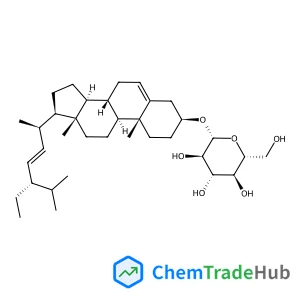
(3beta,22E)-Stigmasta-5,22-dien-3-yl beta-D-glucopyranoside
CAS Number:
19716-26-8
Molecular Formula:
C35H58O6
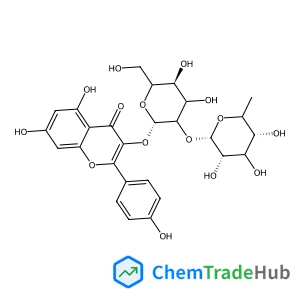
5,7-Dihydroxy-2-(4-hydroxyphenyl)-4-oxo-4H-chromen-3-yl 2-O-(6-deoxy-alpha-L-mannopyranosyl)-beta-D-glucopyranoside
CAS Number:
32602-81-6
Molecular Formula:
C27H30O15
Recommended Suppliers






Disclaimer
This page provides academic journal information for reference and research purposes only. We are not affiliated with any journal publishers and do not handle publication submissions. For publication-related inquiries, please contact the respective journal publishers directly.
If you notice any inaccuracies in the information displayed, please contact us at support@chemtradehub.com. We will promptly review and address your concerns.