













Triboelectric junction: a model for dynamic metal–semiconductor contacts
Literature Information
Publication Date
2023-11-15
DOI
10.1039/D3EE02870D
Impact Factor
38.532
Authors
View Original
Abstract
Static metal–semiconductor contacts are classified into Ohmic contacts and Schottky contacts. As for dynamic metal–semiconductor contacts, the in-depth mechanism remains to be studied. We here define a “triboelectric junction” model for analyzing dynamic metal–semiconductor contacts, where a space charge region induced by the triboelectric effect dominates the electron–hole separation process. Through theoretical analysis and experiments, we conclude that the triboelectric junction influences the electric output in two aspects: (1) the junction direction determines the output polarity; (2) the junction strength determines the output magnitude. Both the junction direction and junction strength are closely related to the electron-affinity difference between the contact metal and semiconductor.
Related Literature
Operating mechanisms of electrolytes in magnesium ion batteries: chemical equilibrium, magnesium deposition, and electrolyte oxidation
Dong Young Kim, Younhee Lim, Basab Roy, Young-Gyoon Ryu, Seok-Soo Lee
2014-05-08
Paper
DOI: 10.1039/C4CP01259C
Spectroscopic and viscometric elucidation of the interaction between a potential chloride channel blocker and calf-thymus DNA: the effect of medium ionic strength on the binding mode
Aniruddha Ganguly, Soumen Ghosh, Nikhil Guchhait
2014-11-05
Paper
DOI: 10.1039/C4CP04175E
Switching magnetic interactions in the NiFe Prussian Blue Analogue: an ab initio inspection
Tim Krah, Nadia Ben Amor, Vincent Robert
2014-04-03
Paper
DOI: 10.1039/C4CP00662C
Interfacial processes studied by coupling electrochemistry at the polarised liquid–liquid interface with in situ confocal Raman spectroscopy
Lukasz Poltorak, Manuel Dossot, Grégoire Herzog, Alain Walcarius
2014-10-28
Paper
DOI: 10.1039/C4CP03254C
Electronic structure of positive and negative polarons in functionalized dithienylthiazolo[5,4-d]thiazoles: a combined EPR and DFT study
Yun Ling, Sarah Van Mierloo, Alexander Schnegg, Matthias Fehr, Peter Adriaensens, Laurence Lutsen, Dirk Vanderzande, Wouter Maes, Etienne Goovaerts, Sabine Van Doorslaer
2014-01-23
Paper
DOI: 10.1039/C3CP54635G
Role of the nano amorphous interface in the crystallization of Sb2Te3 towards non-volatile phase change memory: insights from first principles
Xue-Peng Wang, Nian-Ke Chen, Xian-Bin Li, Yan Cheng, X. Q. Liu, Meng-Jiao Xia, Z. T. Song, X. D. Han, Hong-Bo Sun
2014-04-24
Paper
DOI: 10.1039/C3CP55476G
Dimeric phenanthroimidazole for blue electroluminescent materials: the effect of substituted position attached to biphenyl center
Zhiming Wang, Ying Feng, Hui Li, Zhao Gao, Xiaojuan Zhang, Ping Lu, Ping Chen, Yuguang Ma, Shiyong Liu
2014-03-07
Paper
DOI: 10.1039/C4CP00209A
Electronic structure at nanocontacts of surface passivated CdSe nanorods with gold clusters
Deepashri Saraf, Anjali Kshirsagar
2014-02-27
Paper
DOI: 10.1039/C4CP00069B
The mechanism of NaFePO4 (de)sodiation determined by in situ X-ray diffraction
Montserrat Galceran, Damien Saurel, Begoña Acebedo, Vladimir V. Roddatis, Egoitz Martin, Montse Casas-Cabanas
2014-03-20
Paper
DOI: 10.1039/C4CP01089B
You might also like
Compound Q&A
What are the main uses of 1H-Indazole-6-carbonitrile (CAS: 141290-59-7)?
1H-Indazole-6-carbonitrile finds applications in pharmaceuticals, where it serve...
141290-59-71H-Indazole-6-carbon...
Compound Q&A
How should waste containing Dioctyl (2E)-2-butenedioate (CAS: 2997-85-5) be handled?
Waste containing Dioctyl (2E)-2-butenedioate (CAS: 2997-85-5) should be collecte...
2997-85-5Dioctyl (2E)-2-buten...
Compound Q&A
What industries use Sodium [(1,2-benzoxazol-3-ylmethyl)sulfonyl]azanide (CAS: 68291-98-5)?
Sodium [(1,2-benzoxazol-3-ylmethyl)sulfonyl]azanide is primarily used in pharmac...
68291-98-5Sodium [(1,2-benzoxa...
Compound Q&A
Are there alternatives to Dimethyl 4-(4,4,5,5-tetramethyl-1,3,2-dioxaborolan-2-yl)-2,6-pyridinedicarboxylate (CAS: 741709-66-0) in synthesis?
Dimethyl 4-(4,4,5,5-tetramethyl-1,3,2-dioxaborolan-2-yl)-2,6-pyridinedicarboxyla...
741709-66-0Dimethyl 4-(4,4,5,5-...
Compound Q&A
How should waste containing 2-Fluoro-6-hydrazinopyridine (CAS: 80714-39-2) be handled?
Waste containing 2-Fluoro-6-hydrazinopyridine (CAS: 80714-39-2) should be manage...
80714-39-22-Fluoro-6-hydrazino...
Compound Q&A
What is 6-Formyl-2-pyridinecarboxylic acid (CAS: 499214-11-8)?
6-Formyl-2-pyridinecarboxylic acid is an organic compound with the molecular for...
499214-11-86-Formyl-2-pyridinec...
Compound Q&A
What is the market or research trend for 3-(3,4-dimethoxyphenyl)-2,5-dimethyl-N-(2-morpholin-4-ylethyl)pyrazolo[1,5-a]pyrimidin-7-amine (CAS: 900874-91-1)?
Research trends for this compound indicate a focus on its potential applications...
900874-91-13-(3,4-dimethoxyphen...
Compound Q&A
How is 9H-Tribenzo[b,d,f]azepine (CAS: 29875-73-8) typically synthesized?
9H-Tribenzo[b,d,f]azepine is typically synthesized via a multi-step process invo...
29875-73-89H-Tribenzo[b,d,f]az...
Compound Q&A
How is 1-Cyclopropyl-7-ethoxy-6-fluoro-8-methoxy-4-oxo-1,4-dihydro-3-quinolinecarboxylic acid (CAS: 1797982-51-4) typically synthesized?
1-Cyclopropyl-7-ethoxy-6-fluoro-8-methoxy-4-oxo-1,4-dihydro-3-quinolinecarboxyli...
1797982-51-41-Cyclopropyl-7-etho...
Compound Q&A
How should waste containing Methyl 3-oxo-1,2,3,4-tetrahydro-6-quinoxalinecarboxylate (CAS: 671820-52-3) be handled?
Waste containing Methyl 3-oxo-1,2,3,4-tetrahydro-6-quinoxalinecarboxylate (CAS: ...
671820-52-3Methyl 3-oxo-1,2,3,4...
Source Journal
Energy & Environmental Science

CiteScore:
32.34
Self-citation Rate:
3.4%
Articles per Year:
481
Energy & Environmental Science is an international journal dedicated to publishing exceptionally important and high quality, agenda-setting research tackling the key global and societal challenges of ensuring the provision of energy and protecting our environment for the future. The scope is intentionally broad and the journal recognises the complexity of issues and challenges relating to energy conversion and storage, alternative fuel technologies and environmental science. For work to be published it must be linked to the energy-environment nexus and be of significant general interest to our community-spanning readership. All scales of studies and analysis, from impactful fundamental advances, to interdisciplinary research across the (bio)chemical, (bio/geo)physical sciences and chemical engineering disciplines are welcomed. Topics include, but are not limited to, the following: Solar energy conversion and photovoltaics Solar fuels and artificial photosynthesis Fuel cells Hydrogen storage and (bio) hydrogen production Materials for energy systems Capture, storage and fate of CO2, including chemicals and fuels from CO2 Catalysis for a variety of feedstocks (for example, oil, gas, coal, biomass and synthesis gas) Biofuels and biorefineries Materials in extreme environments Environmental impacts of energy technologies Global atmospheric chemistry and climate change as related to energy systems Water-energy nexus Energy systems and networks Globally applicable principles of energy policy and techno-economics
Recommended Compounds
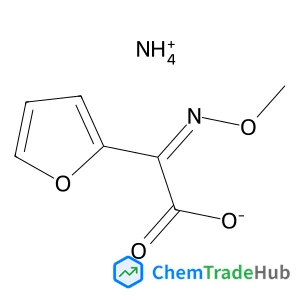
Ammonium (Z)-2-(furan-2-yl)-2-(methoxyimino)acetate
CAS Number:
97148-39-5
Molecular Formula:
C7H10N2O4


Recommended Suppliers




Disclaimer
This page provides academic journal information for reference and research purposes only. We are not affiliated with any journal publishers and do not handle publication submissions. For publication-related inquiries, please contact the respective journal publishers directly.
If you notice any inaccuracies in the information displayed, please contact us at support@chemtradehub.com. We will promptly review and address your concerns.