


Back cover
Literature Information
Publication Date
2023-03-15
DOI
10.1039/D3CP90074F
Impact Factor
3.676
Authors
View Original
Abstract
A graphical abstract is available for this content
Recommended Journals

Journal of Catalysis

Fibre Chemistry

Organic Preparations and Procedures International

European Journal of Wood and Wood Products

Science

Molecular Pharmacology

Science Progress

Israel Journal of Chemistry

Proceedings of the National Academy of Sciences of the United States of America

Journal of Organometallic Chemistry
Related Literature
UV-Vis spectrophotometry of quinone flow battery electrolyte for in situ monitoring and improved electrochemical modeling of potential and quinhydrone formation
Liuchuan Tong, Qing Chen, Andrew A. Wong, Rafael Gómez-Bombarelli, Alán Aspuru-Guzik, Roy G. Gordon, Michael J. Aziz
2017-11-15
Paper
DOI: 10.1039/C7CP05881K
Vesicle to micelle transition in the ternary mixture of L121/SDS/D2O: NMR, EPR and SANS studies
G. K. S. Prameela, B. V. N. Phani Kumar, R. Ravikanth Reddy, A. Pan, J. Subramanian, Sugam Kumar, V. K. Aswal, Joachim Kohlbrecher, A. B. Mandal, S. P. Moulik
2017-11-10
Paper
DOI: 10.1039/C7CP06796H
Solvatochromism in perylene diimides; experiment and theory
C. A. Fuller, C. E. Finlayson
2017-11-16
Paper
DOI: 10.1039/C7CP05039A
Carbon adsorption on doped cementite surfaces for effective catalytic growth of diamond-like carbon: a first-principles study
Juan Cui, Lei Li, Hao Lu, D. Y. Li, M. F. Yan
2017-11-15
Paper
DOI: 10.1039/C7CP06598A
The effect of structural modifications on the thermal stability, melting points and ion interactions for a series of tetraaryl-phosphonium-based mesothermal ionic liquids‡
Cody A. Cassity, Benjamin Siu, Mohammad Soltani, Jimmy L. McGeehee, Katie J. Strickland, Matt Vo, E. Alan Salter, Alexandra C. Stenson, Andrzej Wierzbicki, Kevin N. West, Brooks D. Rabideau, James H. Davis, Jr.
2017-11-10
Paper
DOI: 10.1039/C7CP06278H
Influences of polarity and hydration cycles on imbibition hysteresis in silica nanochannels
Carlos Torres-Verdín, Matthew T. Balhoff
2017-11-14
Paper
DOI: 10.1039/C7CP05833K
Thermally reversible nanoparticle gels with tuneable porosity showing structural colour
P. Cloetens, T. O’Neill, C. P. Grey, E. Eiser
2017-11-28
Paper
DOI: 10.1039/C7CP04835A
Adsorption and diffusion of hydrogen and oxygen in FCC-Co: a first-principles study
Wusong Liu, Jian Zhou
2017-11-20
Paper
DOI: 10.1039/C7CP07208B
Theoretical study of the photothermal behaviour of self-assembled magnetic–plasmonic chain structures
Kai Liu, Amir Mokhtare, Xiaozheng Xue
2017-11-15
Paper
DOI: 10.1039/C7CP05323A
Computational investigations of electronic structure modifications of ferrocene-terminated self-assembled monolayers: effects of electron donating/withdrawing functional groups attached on the ferrocene moiety
Yasuyuki Yokota, Sumito Akiyama, Yukio Kaneda, Akihito Imanishi, Kouji Inagaki, Ken-ichi Fukui
2017-11-24
Paper
DOI: 10.1039/C7CP07279A
You might also like
Compound Q&A
What are the main uses of 1H-Indazole-6-carbonitrile (CAS: 141290-59-7)?
1H-Indazole-6-carbonitrile finds applications in pharmaceuticals, where it serve...
141290-59-71H-Indazole-6-carbon...
Compound Q&A
How should waste containing Dioctyl (2E)-2-butenedioate (CAS: 2997-85-5) be handled?
Waste containing Dioctyl (2E)-2-butenedioate (CAS: 2997-85-5) should be collecte...
2997-85-5Dioctyl (2E)-2-buten...
Compound Q&A
What industries use Sodium [(1,2-benzoxazol-3-ylmethyl)sulfonyl]azanide (CAS: 68291-98-5)?
Sodium [(1,2-benzoxazol-3-ylmethyl)sulfonyl]azanide is primarily used in pharmac...
68291-98-5Sodium [(1,2-benzoxa...
Compound Q&A
Are there alternatives to Dimethyl 4-(4,4,5,5-tetramethyl-1,3,2-dioxaborolan-2-yl)-2,6-pyridinedicarboxylate (CAS: 741709-66-0) in synthesis?
Dimethyl 4-(4,4,5,5-tetramethyl-1,3,2-dioxaborolan-2-yl)-2,6-pyridinedicarboxyla...
741709-66-0Dimethyl 4-(4,4,5,5-...
Compound Q&A
How should waste containing 2-Fluoro-6-hydrazinopyridine (CAS: 80714-39-2) be handled?
Waste containing 2-Fluoro-6-hydrazinopyridine (CAS: 80714-39-2) should be manage...
80714-39-22-Fluoro-6-hydrazino...
Compound Q&A
What is 6-Formyl-2-pyridinecarboxylic acid (CAS: 499214-11-8)?
6-Formyl-2-pyridinecarboxylic acid is an organic compound with the molecular for...
499214-11-86-Formyl-2-pyridinec...
Compound Q&A
What is the market or research trend for 3-(3,4-dimethoxyphenyl)-2,5-dimethyl-N-(2-morpholin-4-ylethyl)pyrazolo[1,5-a]pyrimidin-7-amine (CAS: 900874-91-1)?
Research trends for this compound indicate a focus on its potential applications...
900874-91-13-(3,4-dimethoxyphen...
Compound Q&A
How is 9H-Tribenzo[b,d,f]azepine (CAS: 29875-73-8) typically synthesized?
9H-Tribenzo[b,d,f]azepine is typically synthesized via a multi-step process invo...
29875-73-89H-Tribenzo[b,d,f]az...
Compound Q&A
How is 1-Cyclopropyl-7-ethoxy-6-fluoro-8-methoxy-4-oxo-1,4-dihydro-3-quinolinecarboxylic acid (CAS: 1797982-51-4) typically synthesized?
1-Cyclopropyl-7-ethoxy-6-fluoro-8-methoxy-4-oxo-1,4-dihydro-3-quinolinecarboxyli...
1797982-51-41-Cyclopropyl-7-etho...
Compound Q&A
How should waste containing Methyl 3-oxo-1,2,3,4-tetrahydro-6-quinoxalinecarboxylate (CAS: 671820-52-3) be handled?
Waste containing Methyl 3-oxo-1,2,3,4-tetrahydro-6-quinoxalinecarboxylate (CAS: ...
671820-52-3Methyl 3-oxo-1,2,3,4...
Source Journal
Physical Chemistry Chemical Physics

CiteScore:
5.5
Self-citation Rate:
10.3%
Articles per Year:
3036
Physical Chemistry Chemical Physics (PCCP) is an international journal co-owned by 19 physical chemistry and physics societies from around the world. This journal publishes original, cutting-edge research in physical chemistry, chemical physics and biophysical chemistry. To be suitable for publication in PCCP, articles must include significant innovation and/or insight into physical chemistry; this is the most important criterion that reviewers and Editors will judge against when evaluating submissions. The journal has a broad scope and welcomes contributions spanning experiment, theory, computation and data science. Topical coverage includes spectroscopy, dynamics, kinetics, statistical mechanics, thermodynamics, electrochemistry, catalysis, surface science, quantum mechanics, quantum computing and machine learning. Interdisciplinary research areas such as polymers and soft matter, materials, nanoscience, energy, surfaces/interfaces, and biophysical chemistry are welcomed if they demonstrate significant innovation and/or insight into physical chemistry. Joined experimental/theoretical studies are particularly appreciated when complementary and based on up-to-date approaches.
Recommended Compounds
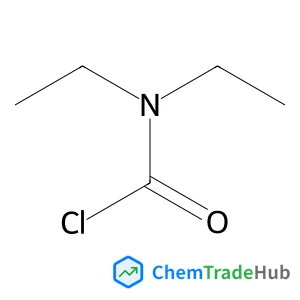
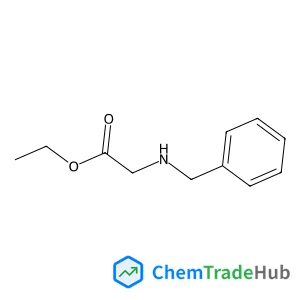
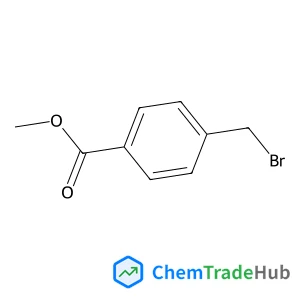
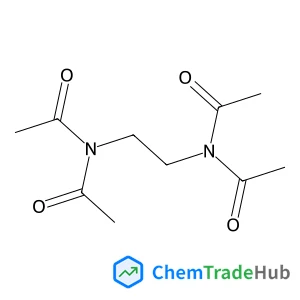
Recommended Suppliers





Disclaimer
This page provides academic journal information for reference and research purposes only. We are not affiliated with any journal publishers and do not handle publication submissions. For publication-related inquiries, please contact the respective journal publishers directly.
If you notice any inaccuracies in the information displayed, please contact us at support@chemtradehub.com. We will promptly review and address your concerns.