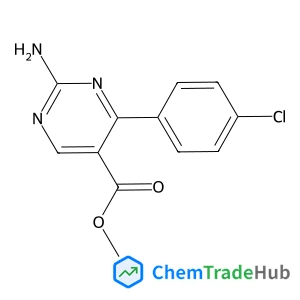
Methyl 2-amino-4-(4-chlorophenyl)-5-pyrimidinecarboxylate
CAS Number:
1133115-56-6
Molecular Formula:
C12H10ClN3O2
Ji Tao, Can Li, Shixian Xiong, Zhiqiang Xu, Jingyao Shao, Lei Cao, Ying Zhang, Kejun Dong, Ling-Ling Wang
In this study, the photocatalytic properties of AlN/TMO heterojunctions formed by coupling MoO2 and WO2 of transition metal oxides with AlN are studied in detail using first-principles calculations with the aim of finding efficient and low-cost photocatalysts for water splitting to produce hydrogen to reduce environmental pollution. The AIMD, phonon spectrum, and elastic constants demonstrated the thermodynamic, kinetic, and mechanical stabilities of the AlN/TMO heterojunction. The results showed that the AlN/MoO2 (1.55 eV) and AlN/WO2 (1.99 eV) heterojunctions have typical type-II energy band arrangements, which can effectively promote the separation of photogenerated electrons and hole pairs. Meanwhile, the AlN/MoO2 heterojunction showed excellent carrier mobilities (electron, 250.05 cm2 V−1 S−1 and hole, 45 467.07 cm2 V−1 S−1), which greatly exceeded those of each component. The AlN/WO2 heterojunction showed an excellent HER (−0.07 eV) performance, which was close to the expected value. For the AlN/WO2 heterojunction, a suitable band gap value, excellent HER, and other properties indicated that it has the potential to become a new candidate for photocatalytic water splitting. Our study enriches the theoretical research of transition metal oxide materials and wide-band gap materials by providing a reference direction for the design of reasonably high-quality photocatalysts.
Mi Rang Son, Yang-Jin Cho, So-Yeon Kim, Ho-Jin Son, Sang Ook Kang
DOI: 10.1039/C7CP04505K
Pingyun Li, Qingqing Wang, Guodong Deng, Xiaode Guo, Wei Jiang, Hongying Liu, Fengsheng Li
DOI: 10.1039/C7CP04097K
Samiyara Begum, Ranga Subramanian
DOI: 10.1039/C7CP03936K
Luuk J. G. W. van Wilderen, Daniela Kern-Michler, Henrike M. Müller-Werkmeister, Jens Bredenbeck
DOI: 10.1039/C7CP90063E
DOI: 10.1039/C7CP01594A
José Pedro Cerón-Carrasco
DOI: 10.1039/C7CP01034F
Xiangchao Ma, Xin Wu, Xunwang Zhao, Hao Sun
DOI: 10.1039/C7CP05416E
Manjusha Boda, G. Naresh Patwari
DOI: 10.1039/C6CP08870H
Xi Yuan, Xuemin Hou, Ji Li, Chaoqun Qu, Wenjin Zhang, Haibo Li
DOI: 10.1039/C6CP08824D
2-Methylbenzene-1,4-diamine dihydrochloride (CAS: 615-45-2) should be stored in ...
(1S,4S)-2,5-Diazabicyclo[2.2.1]heptane dihydrobromide is generally considered sa...
(6-Chloropyridazin-3-YL)methanamine finds applications in the pharmaceutical ind...
2-Fluoro-3-methylphenol is primarily used in the synthesis of pharmaceuticals, p...
When handling 3-Methoxy-4-nitrobenzonitrile, it is important to wear appropriate...
When handling 1,3-Oxazolo[4,5-b]pyridine-2(3H)-thione (CAS: 211949-57-4), it is ...
4-Ethynylbenzamide (CAS: 90347-86-7) falls under various regulatory guidelines i...
3-(2-Ethylphenyl)-2-thioxo-4-imidazolidinone is primarily used as an intermediat...
(2-Fluoro-6-methoxyphenyl)acetic acid, also known as 4-fluoro-3-methoxybenzoic a...
Market trends for 2-[4-(Hydroxymethyl)phenoxy]ethanol (CAS: 102196-18-9) indicat...

Physical Chemistry Chemical Physics (PCCP) is an international journal co-owned by 19 physical chemistry and physics societies from around the world. This journal publishes original, cutting-edge research in physical chemistry, chemical physics and biophysical chemistry. To be suitable for publication in PCCP, articles must include significant innovation and/or insight into physical chemistry; this is the most important criterion that reviewers and Editors will judge against when evaluating submissions. The journal has a broad scope and welcomes contributions spanning experiment, theory, computation and data science. Topical coverage includes spectroscopy, dynamics, kinetics, statistical mechanics, thermodynamics, electrochemistry, catalysis, surface science, quantum mechanics, quantum computing and machine learning. Interdisciplinary research areas such as polymers and soft matter, materials, nanoscience, energy, surfaces/interfaces, and biophysical chemistry are welcomed if they demonstrate significant innovation and/or insight into physical chemistry. Joined experimental/theoretical studies are particularly appreciated when complementary and based on up-to-date approaches.
![trans-2-{[(Tert-butoxy)carbonyl]amino}cyclobutane-1-carboxylic acid structure](https://static.chemtradehub.com/structs/951/951173-25-4-27cd.webp "trans-2-{[(Tert-butoxy)carbonyl]amino}cyclobutane-1-carboxylic acid structure")