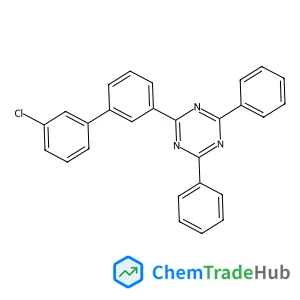
2-(3'-Chlorobiphenyl-3-yl)-4,6-diphenyl-1,3,5-triazine
CAS Number:
1443049-83-9
Molecular Formula:
C27H18ClN3
Shasha Zhu, Junde Fan, Zongbao Li, Jun Wu, Mengqin Xiao, Pengxuan Du, Xin Wang, Lichao Jia
Solid oxide fuel cells (SOFCs) are highly efficient and environmentally friendly devices for converting fuel into electrical energy. In this regard, metal nanoparticles (NPs) loaded onto the anode oxide play a crucial role due to their exceptional catalytic activity. NPs synthesized through exsolution exhibit excellent dispersion and stability, garnering significant attention for comprehending the exsolution process mechanism and consequently improving synthesis effectiveness. This review presents recent advancements in the exsolution process, focusing on the influence of oxygen vacancies, A-site defects, lattice strain, and phase transformation on the variation of the octahedral crystal field in perovskites. Moreover, we offer insights into future research directions to further enhance our understanding of the mechanism and achieve significant exsolution of NPs on perovskites.
Cai-Hong Liu, Yi-Yang Liu, Yong-Hui Zhang, Rui-Rui Wei, Hao-Li Zhang
DOI: 10.1039/B901517E
Irena Danielewicz-Ferchmin, A. Ryszard Ferchmin
DOI: 10.1039/C002897E
J. Lawrence, E.-C. Yang, D. N. Hendrickson, S. Hill
DOI: 10.1039/B908460F
Konstantin Chingin, Roman M. Balabin, Konstantin Barylyuk, Huanwen Chen, Vladimir Frankevich, Renato Zenobi
DOI: 10.1039/C000807A
Christian Teutloff, Susanne Pudollek, Sven Keßen, Matthias Broser, Athina Zouni, Robert Bittl
DOI: 10.1039/B908093G
Manoj K. Singh
DOI: 10.1039/B821632K
Maria Waechtler, Martin Sellin, Annegret Stark, Dilek Akcakayiran, Gerhard Findenegg, Anna Gruenberg, Hergen Breitzke, Gerd Buntkowsky
DOI: 10.1039/B926836G
Núria González-García, Matthias Olzmann
DOI: 10.1039/C0CP00284D
M. Fittipaldi, L. Sorace, A.-L. Barra, C. Sangregorio, R. Sessoli, D. Gatteschi
DOI: 10.1039/B905880J
Meng-Sheng Liao, John D. Watts, Ming-Ju Huang
DOI: 10.1039/B904782D
When handling 2-Chloro-1,2-bis(4-methylphenyl)ethanone (CAS: 71193-32-3), it is ...
4-Ethoxy-3-(5-methyl-4-oxo-7-propyl-1,4-dihydroimidazo[5,1-f][1,2,4]triazin-2-yl...
Methyl 3-Oxo-4-Androsten-17-Carboxylate (CAS: 2681-55-2) should be stored in a c...
(R)-3-Amino-4-(3-hexylphenylamino)-4-oxobutylphosphonic acid is primarily used i...
2-Methyl-2-propanyl 3-amino-3-carbamoyl-1-azetidinecarboxylate (CAS: 1254120-14-...
There are alternative reagents that can be used in synthesis instead of (E)-4-(t...
[2-(3-Chlorophenyl)-1,3-thiazol-4-yl]methanol (CAS: 121202-20-8) is a crystallin...
The market and research trends for Methyl (2S)-[(4S)-2,2-dimethyl-1,3-dioxolan-4...
The market for 1-Bromo-2-isocyanatoethane (CAS: 42865-19-0) is driven by its use...
4-Nitro-D-phenylalanine hydrochloride (CAS: 147065-06-3) is primarily used in re...

ChemComm publishes urgent research which is of outstanding significance and interest to experts in the field, while also appealing to the journal’s broad chemistry readership. Our communication format is ideally suited to short, urgent studies that are of such importance that they require accelerated publication. Our scope covers all topics in chemistry, and research at the interface of chemistry and other disciplines (such as materials science, nanoscience, physics, engineering and biology) where there is a significant novelty in the chemistry aspects. Major topic areas covered include: Analytical Chemistry Catalysis Chemical Biology and medicinal chemistry Computational Chemistry and Machine Learning Energy and sustainable chemistry Environmental Chemistry Green Chemistry Inorganic Chemistry Materials Chemistry Nanoscience Organic Chemistry Physical Chemistry Polymer Chemistry Supramolecular Chemistry