












A well-fabricated Ru@C material derived from Ru/Zn-MOF with high activity and stability in the hydrogenation of 4-chloronitrobenzene
Literature Information
Publication Date
2023-02-24
DOI
10.1039/D2CP05986J
Impact Factor
3.676
Authors
Zijian Wang, Jiaxin Zhang, Lele Yan, Bo Zhao, Lin Zheng, Haoran Guo, Yuxue Yue, Deman Han, Xianlang Chen, Rongrong Li
View Original
Abstract
4-Chloroaniline (4-CAN) plays an important role in chemical and industrial production. However, it remains a challenge to avoid the hydrogenation of the C–Cl bond in the synthesis process to improve selectivity under high activity conditions. In this study, we in situ fabricated ruthenium nanoparticles (Ru NPs) containing vacancies inserted into porous carbon (Ru@C-2) as a highly efficient catalyst for the catalytic hydrogenation of 4-chloronitrobenzene (4-CNB) with remarkable conversion (99.9%), selectivity (99.9%), and stability. Experiments and theoretical calculations indicate that the appropriate Ru vacancies affect the charge distribution of the Ru@C-2 catalyst, promote the electron transfer between the Ru metal and support, and increase the active sites of the Ru metal, thus facilitating the adsorption of 4-CNB and the desorption of 4-CAN to improve the activity and stability of the catalyst. This study can provide some enlightenment for the development of new 4-CNB hydrogenation catalysts.
Related Literature
Analytical solution of the PELDOR inverse problem using the integral Mellin transform
Alexander G. Maryasov
2017-11-16
Paper
DOI: 10.1039/C7CP04059H
Theoretical identification of seven C80 fullerene isomers by XPS and NEXAFS spectroscopy
Xiu-Neng Song, Jing Hu, Sheng-Yu Wang, Yong Ma, Yong Zhou, Chuan-Kui Wang
2017-11-24
Paper
DOI: 10.1039/C7CP06543D
Characterising the evaporation kinetics of water and semi-volatile organic compounds from viscous multicomponent organic aerosol particles
Stephen Ingram, Chen Cai, Young-Chul Song, David O. Topping, Simon O’Meara, Jonathan P. Reid
2017-11-13
Paper
DOI: 10.1039/C7CP05172G
Molecular dynamics simulations of propane in slit shaped silica nano-pores: direct comparison with quasielastic neutron scattering experiments
Siddharth Gautam, Thu Le, Alberto Striolo, David Cole
2017-11-21
Paper
DOI: 10.1039/C7CP05715F
Molecular dynamics simulation of geminal dicationic ionic liquids [Cn(mim)2][NTf2]2 – structural and dynamical properties
Majid Moosavi, Fatemeh Khashei, Elaheh Sedghamiz
2017-11-29
Paper
DOI: 10.1039/C7CP05681H
The shape of the electronic circular dichroism spectrum of (2,6-dimethylphenyl)(phenyl)methanol: interplay between conformational equilibria and vibronic effects
Daniele Padula, Javier Cerezo, Gennaro Pescitelli, Fabrizio Santoro
2017-11-16
Paper
DOI: 10.1039/C7CP06369E
Supramolecular organization of a H-bonded perylene bisimide organogelator determined by transmission electron microscopy, grazing incidence X-ray diffraction and polarized infra-red spectroscopy
Alexandru Sarbu, David Maurin, David Djurado, Laure Biniek, Morgane Diebold, Jean-Louis Bantignies, Philippe Mésini, Martin Brinkmann
2017-11-20
Paper
DOI: 10.1039/C7CP06761E
The benchmark of 31P NMR parameters in phosphate: a case study on structurally constrained and flexible phosphate
Jiří Fukal, Ondřej Páv, Miloš Buděšínský, Jakub Šebera
2017-11-13
Paper
DOI: 10.1039/C7CP06969C
Reaction mechanism of hydrogen evolution catalysed by Co and Fe complexes containing a tetra-dentate phosphine ligand – a DFT study
Ya-Qiong Zhang, Rong-Zhen Liao
2017-11-21
Paper
DOI: 10.1039/C7CP06222B
What regulates the catalytic activities in AGE catalysis? An answer from quantum mechanics/molecular mechanics simulations
Yulai Zhang, Hongxing Zhang
2017-11-10
Paper
DOI: 10.1039/C7CP07079A
You might also like
Compound Q&A
What are the main uses of 1H-Indazole-6-carbonitrile (CAS: 141290-59-7)?
1H-Indazole-6-carbonitrile finds applications in pharmaceuticals, where it serve...
141290-59-71H-Indazole-6-carbon...
Compound Q&A
How should waste containing Dioctyl (2E)-2-butenedioate (CAS: 2997-85-5) be handled?
Waste containing Dioctyl (2E)-2-butenedioate (CAS: 2997-85-5) should be collecte...
2997-85-5Dioctyl (2E)-2-buten...
Compound Q&A
What industries use Sodium [(1,2-benzoxazol-3-ylmethyl)sulfonyl]azanide (CAS: 68291-98-5)?
Sodium [(1,2-benzoxazol-3-ylmethyl)sulfonyl]azanide is primarily used in pharmac...
68291-98-5Sodium [(1,2-benzoxa...
Compound Q&A
Are there alternatives to Dimethyl 4-(4,4,5,5-tetramethyl-1,3,2-dioxaborolan-2-yl)-2,6-pyridinedicarboxylate (CAS: 741709-66-0) in synthesis?
Dimethyl 4-(4,4,5,5-tetramethyl-1,3,2-dioxaborolan-2-yl)-2,6-pyridinedicarboxyla...
741709-66-0Dimethyl 4-(4,4,5,5-...
Compound Q&A
How should waste containing 2-Fluoro-6-hydrazinopyridine (CAS: 80714-39-2) be handled?
Waste containing 2-Fluoro-6-hydrazinopyridine (CAS: 80714-39-2) should be manage...
80714-39-22-Fluoro-6-hydrazino...
Compound Q&A
What is 6-Formyl-2-pyridinecarboxylic acid (CAS: 499214-11-8)?
6-Formyl-2-pyridinecarboxylic acid is an organic compound with the molecular for...
499214-11-86-Formyl-2-pyridinec...
Compound Q&A
What is the market or research trend for 3-(3,4-dimethoxyphenyl)-2,5-dimethyl-N-(2-morpholin-4-ylethyl)pyrazolo[1,5-a]pyrimidin-7-amine (CAS: 900874-91-1)?
Research trends for this compound indicate a focus on its potential applications...
900874-91-13-(3,4-dimethoxyphen...
Compound Q&A
How is 9H-Tribenzo[b,d,f]azepine (CAS: 29875-73-8) typically synthesized?
9H-Tribenzo[b,d,f]azepine is typically synthesized via a multi-step process invo...
29875-73-89H-Tribenzo[b,d,f]az...
Compound Q&A
How is 1-Cyclopropyl-7-ethoxy-6-fluoro-8-methoxy-4-oxo-1,4-dihydro-3-quinolinecarboxylic acid (CAS: 1797982-51-4) typically synthesized?
1-Cyclopropyl-7-ethoxy-6-fluoro-8-methoxy-4-oxo-1,4-dihydro-3-quinolinecarboxyli...
1797982-51-41-Cyclopropyl-7-etho...
Compound Q&A
How should waste containing Methyl 3-oxo-1,2,3,4-tetrahydro-6-quinoxalinecarboxylate (CAS: 671820-52-3) be handled?
Waste containing Methyl 3-oxo-1,2,3,4-tetrahydro-6-quinoxalinecarboxylate (CAS: ...
671820-52-3Methyl 3-oxo-1,2,3,4...
Source Journal
Physical Chemistry Chemical Physics

CiteScore:
5.5
Self-citation Rate:
10.3%
Articles per Year:
3036
Physical Chemistry Chemical Physics (PCCP) is an international journal co-owned by 19 physical chemistry and physics societies from around the world. This journal publishes original, cutting-edge research in physical chemistry, chemical physics and biophysical chemistry. To be suitable for publication in PCCP, articles must include significant innovation and/or insight into physical chemistry; this is the most important criterion that reviewers and Editors will judge against when evaluating submissions. The journal has a broad scope and welcomes contributions spanning experiment, theory, computation and data science. Topical coverage includes spectroscopy, dynamics, kinetics, statistical mechanics, thermodynamics, electrochemistry, catalysis, surface science, quantum mechanics, quantum computing and machine learning. Interdisciplinary research areas such as polymers and soft matter, materials, nanoscience, energy, surfaces/interfaces, and biophysical chemistry are welcomed if they demonstrate significant innovation and/or insight into physical chemistry. Joined experimental/theoretical studies are particularly appreciated when complementary and based on up-to-date approaches.
Recommended Compounds
![Sodium 3-[(E)-(4-anilinophenyl)diazenyl]benzenesulfonate structure](https://static.chemtradehub.com/structs/587/587-98-4-035f.webp "Sodium 3-[(E)-(4-anilinophenyl)diazenyl]benzenesulfonate structure")
Sodium 3-[(E)-(4-anilinophenyl)diazenyl]benzenesulfonate
CAS Number:
587-98-4
Molecular Formula:
C18H14N3NaO3S
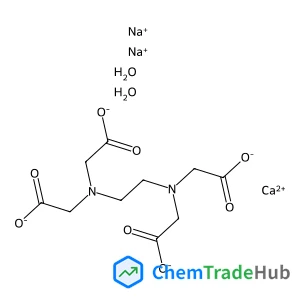
EthylenediaminetetraaceticacidcalciumDisodiumsalthydrate
CAS Number:
23411-34-9
Molecular Formula:
C10H16CaN2Na2O10
![(1S)-1,5-Anhydro-1-[3-(1-benzothiophen-2-ylmethyl)-4-fluorophenyl]-D-glucitol structure](https://static.chemtradehub.com/structs/761/761423-87-4-dbeb.webp "(1S)-1,5-Anhydro-1-[3-(1-benzothiophen-2-ylmethyl)-4-fluorophenyl]-D-glucitol structure")
(1S)-1,5-Anhydro-1-[3-(1-benzothiophen-2-ylmethyl)-4-fluorophenyl]-D-glucitol
CAS Number:
761423-87-4
Molecular Formula:
C21H21FO5S
Recommended Suppliers





Disclaimer
This page provides academic journal information for reference and research purposes only. We are not affiliated with any journal publishers and do not handle publication submissions. For publication-related inquiries, please contact the respective journal publishers directly.
If you notice any inaccuracies in the information displayed, please contact us at support@chemtradehub.com. We will promptly review and address your concerns.