













A theoretical study on the photochemical generation of phenylborylene from phenyldiazidoborane
Literature Information
Publication Date
2023-02-15
DOI
10.1039/D2CP05349G
Impact Factor
3.676
Authors
Di Mu, Quan-Song Li
View Original
Abstract
Organic borylenes are a kind of highly reactive species, which play important roles in a lot of reactions as vigorous intermediates. In this work, we investigated the photochemical generation mechanisms of phenylborylene (PhB) together with the side product N-phenylnitrenoiminoborane (PhNBN) from phenyldiazidoborane (PhBN6) by extrusion of dinitrogen in the two lowest electronic singlet states (S0 and S1) based on the complete active space self-consistent field (CASSCF) and its second-order perturbation (CASPT2) methods combined with time-dependent density functional theory (TD-DFT) calculations. Our results show that the reaction PhBN6 → PhB + 3N2 involves stepwise N2 extrusion three times and the azido region rearrangement. Moreover, we found that the studied photo-induced processes are kinetically feasible because the highest energy barrier is only 0.36 eV and excitation with light of wavelength 254 nm can provide enough excess energy to overcome these energy barriers. Importantly, we revealed that several conical intersections between S1 and S0 states participate and facilitate the studied photochemical processes. Our results not only clarify the experimental observations, (H. F. Bettinger, J. Am. Chem. Soc. 2006, 128, 2534), but also provide valuable insights into borylene chemistry.
Recommended Journals
Related Literature
What regulates the catalytic activities in AGE catalysis? An answer from quantum mechanics/molecular mechanics simulations
Yulai Zhang, Hongxing Zhang
2017-11-10
Paper
DOI: 10.1039/C7CP07079A
Controlling the H to T′ structural phase transition via chalcogen substitution in MoTe2 monolayers
Joshua Young, Thomas L. Reinecke
2017-11-16
Paper
DOI: 10.1039/C7CP05634F
Escape of anions from geminate recombination in THF due to charge delocalization
Hung-Cheng Chen, Andrew R. Cook, Sadayuki Asaoka, Jeffery S. Boschen, Theresa L. Windus, John R. Miller
2017-11-24
Paper
DOI: 10.1039/C7CP05880B
Probing halogen–halogen interactions in solution
V. Ayzac, M. Raynal, B. Isare, J. Idé, P. Brocorens, R. Lazzaroni, T. Etienne, A. Monari, X. Assfeld, L. Bouteiller
2017-11-22
Paper
DOI: 10.1039/C7CP06996K
Steering on-surface reactions with self-assembly strategy
Jingxin Dai, Kai Wu
2017-11-13
Perspective
DOI: 10.1039/C7CP06177C
Detection of a weak ring current in a nonaromatic porphyrin nanoring using magnetic circular dichroism
Patrycja Kowalska, Martin D. Peeks, Tomasz Roliński, Harry L. Anderson
2017-11-22
Paper
DOI: 10.1039/C7CP07348H
Spin-polarized transport properties in some transition metal dithiolene complexes
Vu Thi Thu Huong, Truong Ba Tai, Jyh-Chiang Jiang
2017-11-17
Paper
DOI: 10.1039/C7CP05962K
Amplification or cancellation of Fano resonance and quantum confinement induced asymmetries in Raman line-shapes
Shailendra K. Saxena, Priyanka Yogi, Suryakant Mishra, Hari Mohan Rai, Vikash Mishra, M. Kamal Warshi, Swarup Roy, Puspen Mondal, Pankaj R. Sagdeo, Rajesh Kumar
2017-11-13
Paper
DOI: 10.1039/C7CP04836J
The promoting effect of tetravalent cerium on the oxygen evolution activity of copper oxide catalysts
Zhu Chen, Coleman X. Kronawitter, Xiaofang Yang, Yao-wen Yeh, Nan Yao, Bruce E. Koel
2017-10-18
Paper
DOI: 10.1039/C7CP05248K
Molecular dynamics simulations of propane in slit shaped silica nano-pores: direct comparison with quasielastic neutron scattering experiments
Siddharth Gautam, Thu Le, Alberto Striolo, David Cole
2017-11-21
Paper
DOI: 10.1039/C7CP05715F
You might also like
Compound Q&A
What are the main uses of 1H-Indazole-6-carbonitrile (CAS: 141290-59-7)?
1H-Indazole-6-carbonitrile finds applications in pharmaceuticals, where it serve...
141290-59-71H-Indazole-6-carbon...
Compound Q&A
How should waste containing Dioctyl (2E)-2-butenedioate (CAS: 2997-85-5) be handled?
Waste containing Dioctyl (2E)-2-butenedioate (CAS: 2997-85-5) should be collecte...
2997-85-5Dioctyl (2E)-2-buten...
Compound Q&A
What industries use Sodium [(1,2-benzoxazol-3-ylmethyl)sulfonyl]azanide (CAS: 68291-98-5)?
Sodium [(1,2-benzoxazol-3-ylmethyl)sulfonyl]azanide is primarily used in pharmac...
68291-98-5Sodium [(1,2-benzoxa...
Compound Q&A
Are there alternatives to Dimethyl 4-(4,4,5,5-tetramethyl-1,3,2-dioxaborolan-2-yl)-2,6-pyridinedicarboxylate (CAS: 741709-66-0) in synthesis?
Dimethyl 4-(4,4,5,5-tetramethyl-1,3,2-dioxaborolan-2-yl)-2,6-pyridinedicarboxyla...
741709-66-0Dimethyl 4-(4,4,5,5-...
Compound Q&A
How should waste containing 2-Fluoro-6-hydrazinopyridine (CAS: 80714-39-2) be handled?
Waste containing 2-Fluoro-6-hydrazinopyridine (CAS: 80714-39-2) should be manage...
80714-39-22-Fluoro-6-hydrazino...
Compound Q&A
What is 6-Formyl-2-pyridinecarboxylic acid (CAS: 499214-11-8)?
6-Formyl-2-pyridinecarboxylic acid is an organic compound with the molecular for...
499214-11-86-Formyl-2-pyridinec...
Compound Q&A
What is the market or research trend for 3-(3,4-dimethoxyphenyl)-2,5-dimethyl-N-(2-morpholin-4-ylethyl)pyrazolo[1,5-a]pyrimidin-7-amine (CAS: 900874-91-1)?
Research trends for this compound indicate a focus on its potential applications...
900874-91-13-(3,4-dimethoxyphen...
Compound Q&A
How is 9H-Tribenzo[b,d,f]azepine (CAS: 29875-73-8) typically synthesized?
9H-Tribenzo[b,d,f]azepine is typically synthesized via a multi-step process invo...
29875-73-89H-Tribenzo[b,d,f]az...
Compound Q&A
How is 1-Cyclopropyl-7-ethoxy-6-fluoro-8-methoxy-4-oxo-1,4-dihydro-3-quinolinecarboxylic acid (CAS: 1797982-51-4) typically synthesized?
1-Cyclopropyl-7-ethoxy-6-fluoro-8-methoxy-4-oxo-1,4-dihydro-3-quinolinecarboxyli...
1797982-51-41-Cyclopropyl-7-etho...
Compound Q&A
How should waste containing Methyl 3-oxo-1,2,3,4-tetrahydro-6-quinoxalinecarboxylate (CAS: 671820-52-3) be handled?
Waste containing Methyl 3-oxo-1,2,3,4-tetrahydro-6-quinoxalinecarboxylate (CAS: ...
671820-52-3Methyl 3-oxo-1,2,3,4...
Source Journal
Physical Chemistry Chemical Physics

CiteScore:
5.5
Self-citation Rate:
10.3%
Articles per Year:
3036
Physical Chemistry Chemical Physics (PCCP) is an international journal co-owned by 19 physical chemistry and physics societies from around the world. This journal publishes original, cutting-edge research in physical chemistry, chemical physics and biophysical chemistry. To be suitable for publication in PCCP, articles must include significant innovation and/or insight into physical chemistry; this is the most important criterion that reviewers and Editors will judge against when evaluating submissions. The journal has a broad scope and welcomes contributions spanning experiment, theory, computation and data science. Topical coverage includes spectroscopy, dynamics, kinetics, statistical mechanics, thermodynamics, electrochemistry, catalysis, surface science, quantum mechanics, quantum computing and machine learning. Interdisciplinary research areas such as polymers and soft matter, materials, nanoscience, energy, surfaces/interfaces, and biophysical chemistry are welcomed if they demonstrate significant innovation and/or insight into physical chemistry. Joined experimental/theoretical studies are particularly appreciated when complementary and based on up-to-date approaches.
Recommended Compounds
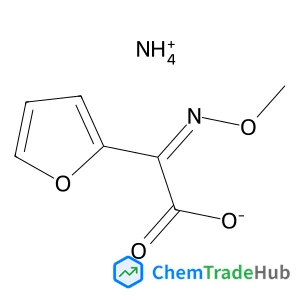
Ammonium (Z)-2-(furan-2-yl)-2-(methoxyimino)acetate
CAS Number:
97148-39-5
Molecular Formula:
C7H10N2O4

Trichloro(3,3,4,4,5,5,6,6,7,7,8,8,8-tridecafluorooctyl)silane
CAS Number:
78560-45-9
Molecular Formula:
C8H4Cl3F13Si
![(1S)-1,5-Anhydro-1-[3-(1-benzothiophen-2-ylmethyl)-4-fluorophenyl]-D-glucitol structure](https://static.chemtradehub.com/structs/761/761423-87-4-dbeb.webp "(1S)-1,5-Anhydro-1-[3-(1-benzothiophen-2-ylmethyl)-4-fluorophenyl]-D-glucitol structure")
(1S)-1,5-Anhydro-1-[3-(1-benzothiophen-2-ylmethyl)-4-fluorophenyl]-D-glucitol
CAS Number:
761423-87-4
Molecular Formula:
C21H21FO5S
Recommended Suppliers





Disclaimer
This page provides academic journal information for reference and research purposes only. We are not affiliated with any journal publishers and do not handle publication submissions. For publication-related inquiries, please contact the respective journal publishers directly.
If you notice any inaccuracies in the information displayed, please contact us at support@chemtradehub.com. We will promptly review and address your concerns.