












A direct dynamics study of the exotic photochemistry of the simplest Criegee intermediate, CH2OO
Literature Information
Publication Date
2022-06-17
DOI
10.1039/D2CP01860H
Impact Factor
3.676
Authors
Ernest Antwi, Rachel E. Bush, Barbara Marchetti, Tolga N. V. Karsili
View Original
Abstract
Criegee intermediates are amongst the most fascinating molecules in modern-day chemistry. They are highly reactive intermediates that find vital roles that range from atmospheric chemistry to organic synthesis. Their excited state chemistry is exotic and complicated, and a myriad of electronic states can contribute to their photodissociation dynamics. This article reports a multi-state direct dynamics (full-dimensional) study of the photoinduced fragmentation of the simplest Criegee intermediate, CH2OO, using state-of-the-art MS-CASPT2 trajectory surface hopping. Following vertical excitation to the strongly absorbing S2(1ππ*) state, internal conversion, and thus changes in the electronic state character of the separating O + CH2O fragments, is observed between parent electronic states at separations that, traditionally, might be viewed as the classically asymptotic region of the potential energy surface. We suggest that such long-range internal conversion may account for the unusual and non-intuitive total kinetic energy distribution in the O(1D) + CH2O(S0) products observed following photoexcitation of CH2OO. The present results also reveal the interplay between seven singlet electronic states and dissociation to yield the experimentally observed O(1D) + CH2O(S0) and O(3P) + CH2O(T1) products. The former (singlet) products are favored, with a branching ratio of ca. 80%, quantifying the hitherto unknown product branching ratios observed in velocity map imaging experiments. To the best of our knowledge, such long-range internal conversions that lead to changes in the electronic state character of the fragment pairs originating from a common parent – at classically asymptotic separations – have not been recognized hitherto in the case of a molecular photodissociation.
Related Literature
α-Zirconium phosphonates: versatile supports for N-heterocyclic carbenes
Simona Chessa, Nigel J. Clayden, Manfred Bochmann, Joseph A. Wright
2009-01-13
Communication
DOI: 10.1039/B821301A
Expansion of the sortase-mediated labeling method for site-specific N-terminal labeling of cell surfaceproteins on living cells
Teruyasu Yamamoto
2009-01-07
Communication
DOI: 10.1039/B818792D
Reaction energies computed with density functional theory correspond with a whole organism effect; modelling the Ames test for mutagenicity‡
Andrew G. Leach, Rebecca Cann, Simone Tomasi
2009-01-06
Communication
DOI: 10.1039/B818744D
Novel defluorinative alkylation of trifluoroacetaldehyde N,O-acetal derivatives and its application to multi-component reaction
Hikaru Yanai, Takeo Taguchi
2008-12-01
Communication
DOI: 10.1039/B817599C
The biomimeticmineralization of double-stranded and cylindrical helical BaCO3nanofibres
Jian-Hua Zhu, Shu-Hong Yu, An-Wu Xu, Helmut Cölfen
2009-01-08
Communication
DOI: 10.1039/B817048G
Enantiopure imidazolinium-dithiocarboxylates as highly selective novel organocatalysts
Oksana Sereda, Amélie Blanrue, René Wilhelm
2008-12-24
Communication
DOI: 10.1039/B817991C
Degradable dendrimers divergently synthesized via click chemistry
Richie E. Kohman, Steven C. Zimmerman
2009-01-13
Communication
DOI: 10.1039/B818183G
Glucose sensing via polyanion formation and induced pyrene excimer emission
Cong Yu, Vivian Wing-Wah Yam
2009-02-10
Communication
DOI: 10.1039/B820397K
The importance of surface chemistry in mesoporous materials: lessons from porous silicon biosensors
Kristopher A. Kilian, Till Böcking, J. Justin Gooding
2008-10-30
Feature Article
DOI: 10.1039/B815449J
You might also like
Compound Q&A
What precautions should be taken when handling 2-Methyl-2-propanyl 5-amino-2-thiophenecarboxylate (CAS: 1498311-57-1)?
When handling 2-Methyl-2-propanyl 5-amino-2-thiophenecarboxylate (CAS: 1498311-5...
1498311-57-12-Methyl-2-propanyl ...
Compound Q&A
What are the physical and chemical properties of 5-Bromo-1,2-dichloro-3-fluorobenzene (CAS: 1000572-93-9)?
5-Bromo-1,2-dichloro-3-fluorobenzene (CAS: 1000572-93-9) is a crystalline solid ...
1000572-93-95-Bromo-1,2-dichloro...
Compound Q&A
How should (2R)-2-Amino-2-(4-bromophenyl)ethanol (CAS: 354153-64-3) be stored?
(2R)-2-Amino-2-(4-bromophenyl)ethanol (CAS: 354153-64-3) should be stored in a c...
354153-64-3(2R)-2-Amino-2-(4-br...
Compound Q&A
What regulatory guidelines apply to Methyl 4-(aminomethyl)tetrahydro-2H-pyran-4-carboxylate hydrochloride (CAS: 362707-24-2)?
Methyl 4-(aminomethyl)tetrahydro-2H-pyran-4-carboxylate hydrochloride (CAS: 3627...
362707-24-2Methyl 4-(aminomethy...
Compound Q&A
What are the main uses of 1,4-dimethyl-1H-pyrazole-5-sulfonyl chloride (CAS: 1174834-52-6)?
1,4-Dimethyl-1H-pyrazole-5-sulfonyl chloride is primarily used as an intermediat...
1174834-52-61,4-dimethyl-1H-pyra...
Compound Q&A
Is Dinaphtho[1,2-b:2',1'-d]furan (CAS: 239-69-0) safe?
Dinaphtho[1,2-b:2',1'-d]furan is generally safe when handled with appropriate pe...
239-69-0Dinaphtho[1,2-b:2',1...
Compound Q&A
What is the market or research trend for 7-Methyl-7,9-dihydro-1H-purine-2,6,8(3H)-trione (CAS: 612-37-3)?
The market for 7-Methyl-7,9-dihydro-1H-purine-2,6,8(3H)-trione (CAS: 612-37-3) i...
612-37-37-Methyl-7,9-dihydro...
Compound Q&A
What are the physical and chemical properties of 2-(4-Chlorophenyl)malonaldehyde (CAS: 205676-17-1)?
2-(4-Chlorophenyl)malonaldehyde (CAS: 205676-17-1) is a colorless or light yello...
205676-17-12-(4-Chlorophenyl)ma...
Compound Q&A
How is 2-Methylchrysene (CAS: 3351-32-4) typically synthesized?
2-Methylchrysene (CAS: 3351-32-4) is typically synthesized via the reaction of c...
3351-32-42-Methylchrysene
Compound Q&A
Is N-(6-aminopyrimidin-4-yl)acetamide (CAS: 89533-23-3) safe?
N-(6-aminopyrimidin-4-yl)acetamide (CAS: 89533-23-3) is generally considered saf...
89533-23-3N-(6-aminopyrimidin-...
Source Journal
Physical Chemistry Chemical Physics

CiteScore:
5.5
Self-citation Rate:
10.3%
Articles per Year:
3036
Physical Chemistry Chemical Physics (PCCP) is an international journal co-owned by 19 physical chemistry and physics societies from around the world. This journal publishes original, cutting-edge research in physical chemistry, chemical physics and biophysical chemistry. To be suitable for publication in PCCP, articles must include significant innovation and/or insight into physical chemistry; this is the most important criterion that reviewers and Editors will judge against when evaluating submissions. The journal has a broad scope and welcomes contributions spanning experiment, theory, computation and data science. Topical coverage includes spectroscopy, dynamics, kinetics, statistical mechanics, thermodynamics, electrochemistry, catalysis, surface science, quantum mechanics, quantum computing and machine learning. Interdisciplinary research areas such as polymers and soft matter, materials, nanoscience, energy, surfaces/interfaces, and biophysical chemistry are welcomed if they demonstrate significant innovation and/or insight into physical chemistry. Joined experimental/theoretical studies are particularly appreciated when complementary and based on up-to-date approaches.
Recommended Compounds
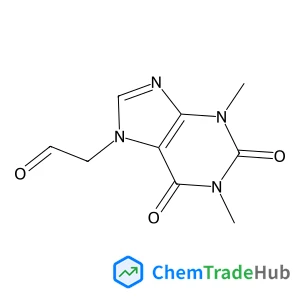
(1,3-Dimethyl-2,6-dioxo-1,2,3,6-tetrahydro-7H-purin-7-yl)acetaldehyde
CAS Number:
5614-53-9
Molecular Formula:
C9H10N4O3
![methyl 6-amino-1H-pyrrolo[2,3-b]pyridine-4-carboxylate structure](https://static.chemtradehub.com/structs/119/1190315-60-6-9d9a.webp "methyl 6-amino-1H-pyrrolo[2,3-b]pyridine-4-carboxylate structure")
methyl 6-amino-1H-pyrrolo[2,3-b]pyridine-4-carboxylate
CAS Number:
1190315-60-6
Molecular Formula:
C9H9N3O2
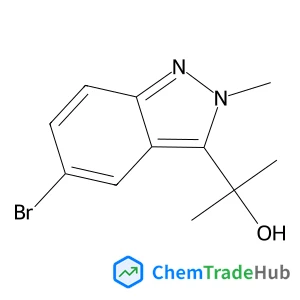
2-(5-Bromo-2-methyl-2H-indazol-3-yl)-2-propanol
CAS Number:
1823787-20-7
Molecular Formula:
C11H13BrN2O
Recommended Suppliers





Disclaimer
This page provides academic journal information for reference and research purposes only. We are not affiliated with any journal publishers and do not handle publication submissions. For publication-related inquiries, please contact the respective journal publishers directly.
If you notice any inaccuracies in the information displayed, please contact us at support@chemtradehub.com. We will promptly review and address your concerns.